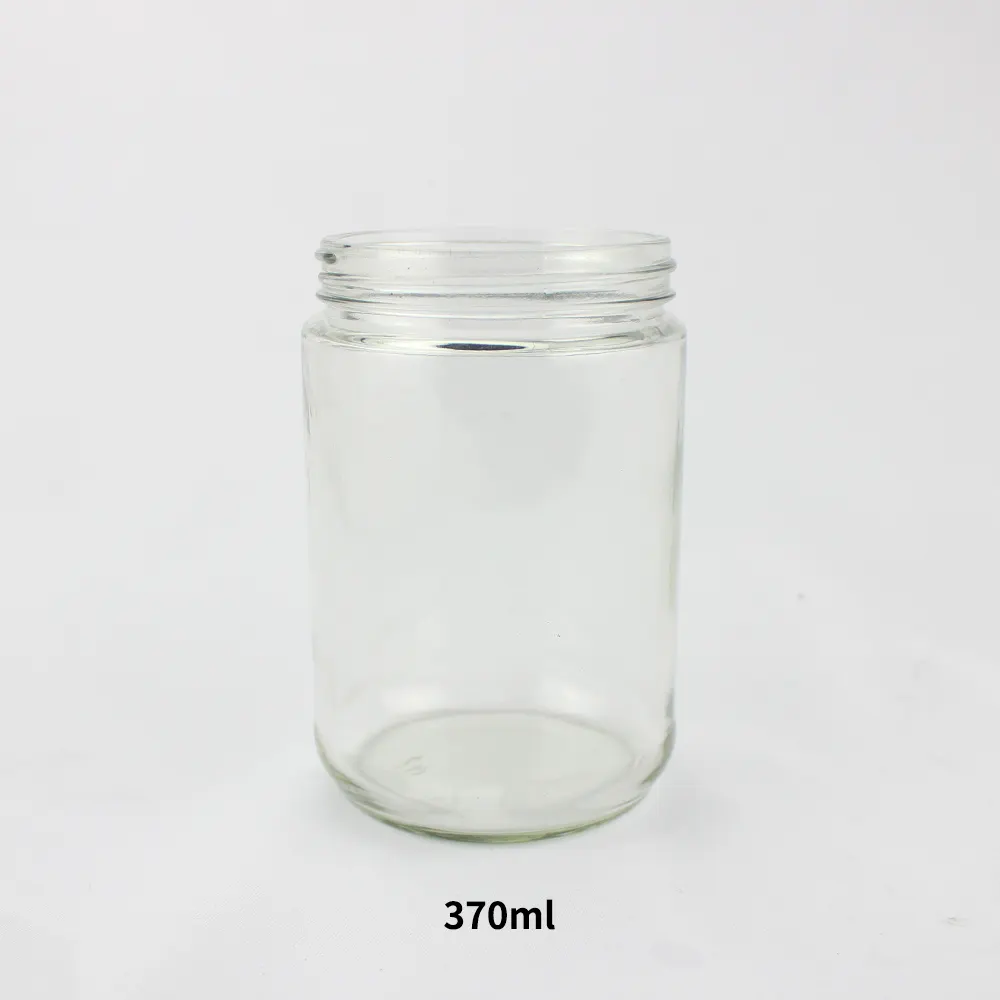
Part of our bulk glass jars range; the stock moulds are pictured at the end of this guide.
A candle jar is the only packaging that has to survive its own product being on fire. Sourcing glass candle jars wholesale is therefore a safety specification before it is a design decision: the glass must handle repeated thermal cycling from the flame pool, the wall thickness must stay consistent so heat distributes evenly, and the finish must accept the lid system your brand ships with. This guide is written for candle brands and private-label buyers comparing vessels for a real production run — covering standard sizes and specifications, heat-resistance requirements, lid and finish compatibility, decoration routes that survive heat, and realistic wholesale economics.
Key Takeaways
- Thermal shock is the non-negotiable. Candle glass must be verified for thermal-shock resistance (ISO 7459 methods) and properly annealed (ASTM C148) — a jar that checks at the third burn is a liability claim, not a defect.
- Wall consistency beats wall thickness. Even walls distribute flame-pool heat predictably; a thick-but-variable wall creates hot spots and cracks.
- Match the vessel to the wax fill weight, not the other way around. An 8 oz candle needs roughly 210-240 ml of usable volume plus headspace for the melt pool — declare fill weight first, then pick the jar.
- The finish picks your lid. Continuous-thread (CT) screw finishes take metal and wooden lids; lug finishes take twist-offs; some vessels run lid-free with dust covers — decide the lid system with the jar.
- Decoration must survive heat too. Spray coatings and prints near the flame zone need heat-stable specifications; inside-the-jar decoration is generally a mistake.
Standard Candle Jar Sizes and Specifications
Candles are sold by wax weight (oz/g), so jar selection starts from your fill weight and wax density (typically 0.86-0.95 g/ml for soy and paraffin blends). The table below maps common candle sizes to glass capacity across our running wholesale programs; brimful capacity and headspace are confirmed against your wax formula on the project drawing.
| Common Candle Size | Typical Glass Capacity | Typical Vessel Styles | Common Finishes |
|---|---|---|---|
| 2-4 oz (votive/travel) | 60-120 ml | Small tumbler, mini straight jar | CT 53/58, lid-free |
| 6-8 oz (the retail workhorse) | 185-250 ml | Straight tumbler, ribbed round, apothecary | CT 63/70, wooden lid seats |
| 10-14 oz (premium single/double wick) | 300-420 ml | Straight-sided round, square, status jars | CT 70/89 |
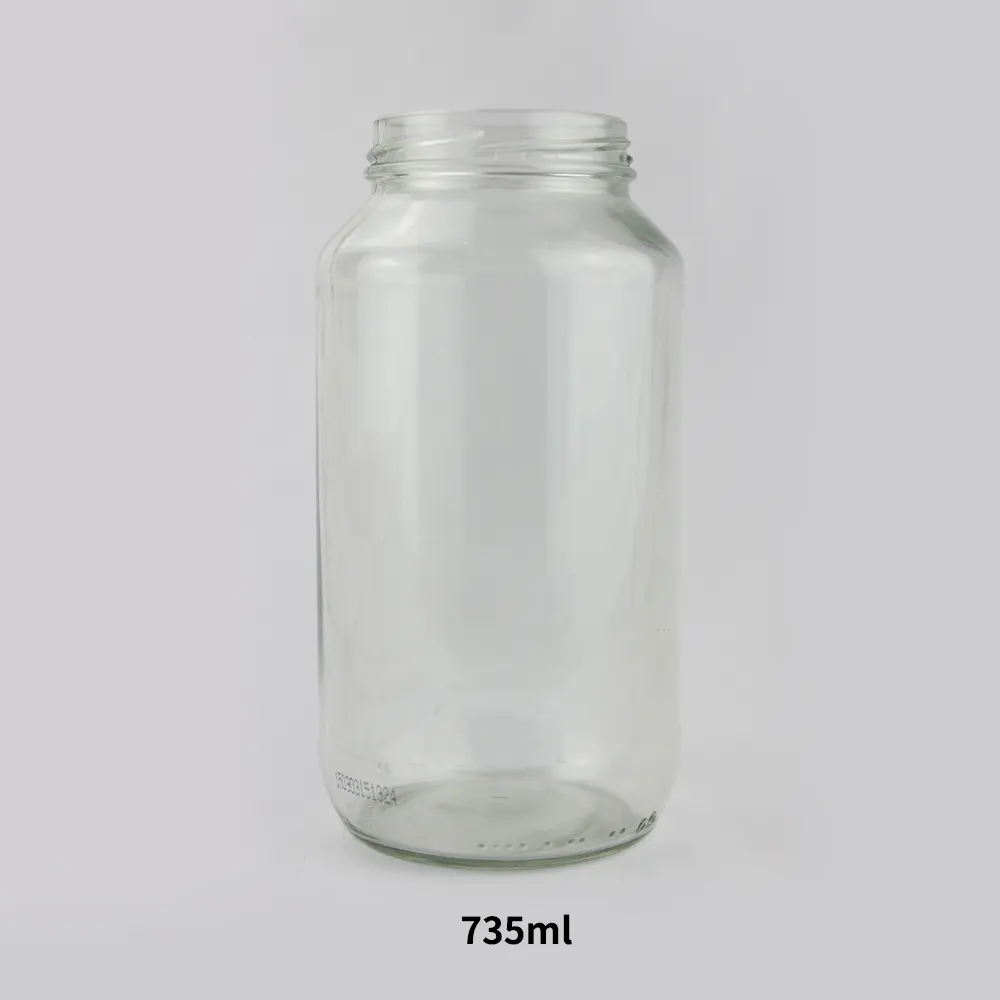
| 16-26 oz (multi-wick statement) | 500-735 ml | Large round, apothecary with lid | CT 89/100 |
Values are typical ranges from current production programs, provided for planning. Wall-thickness targets (typically 3-5 mm for candle vessels), base stability and brimful capacity are fixed per model on the drawing; unpublished model data is marked “to be confirmed per project” rather than left blank.
Heat Resistance: The Safety Engineering
Three checks separate a candle vessel from a food jar with ambitions:
- Annealing quality (ASTM C148): residual stress from forming must be relieved in the lehr; poorly annealed glass holds stress that releases as a crack during thermal cycling — often weeks after filling, in the customer’s home.
- Thermal-shock verification (ISO 7459): the vessel must survive the temperature delta between the melt-pool zone and the outer wall, burn after burn. We specify thermal-shock testing on candle programs and can share test method documentation with your QA.
- Wall-distribution control: press-and-blow forming gives the most consistent wall distribution for wide-mouth vessels; during first-article inspection we record wall thickness at multiple body points so the run is held to the approved distribution, not just the approved look.
One more practical note: the base. A candle jar sits on furniture for its entire life — base flatness and stability are checked on first articles, because a rocking candle is a fire hazard regardless of glass quality.
Lids and Finishes: Selling the Whole Package
Lid choice shapes both the unboxing and the burn hygiene (a lid snuffs the flame and keeps dust off the wax):
- Metal screw lids (tinplate/aluminum) — the workhorse; custom colors and embossing from moderate volumes; interior lacquer specified for wax contact
- Wooden lids with silicone seal — the premium default for 8-14 oz vessels; bamboo, beech, acacia; the silicone ring does the actual sealing
- Glass lids — apothecary style; beautiful but heavy; check total package weight for freight
- Cork and ceramic tops — niche artisan positioning
Finish compatibility is fixed at the mold: CT (continuous-thread) sizes like 63/70/89 must match your lid supplier’s range. We quote jar and lid as one assembly and verify fit and seal on first articles.
Decoration That Survives the Burn
Outside-the-vessel decoration is safe territory: spray coating (matte, gloss, gradient), screen printing, hot stamping, and electroplated effects all work — with heat-stable inks and coatings specified for the upper third near the flame zone. Inside decoration (inner electroplating, inner printing) is where buyers get burned twice: first by the price, then by adhesion and heat issues at the melt line. Our default recommendation: invest in the exterior finish and the lid, and let the wax color do the interior work.
Wholesale Economics: What a Candle Jar Program Costs
Candle vessels are heavier than food jars of the same volume (thicker walls for heat), and weight is money in freight. A realistic landed budget for a wholesale candle-jar program at container volume:
- Glass vessel (ex-works): 50-65% of landed cost — wall weight and size drive this line
- Lids: 10-20% — wooden lids with seals sit at the top of the range
- Packing and inland: 3-5% — divider cartons; lids often packed separately to avoid scuffing
- Sea freight, insurance, duties: 10-20% — a 20 ft container holds roughly 18,000-25,000 vessels in the 8 oz range depending on wall weight
Frequently Asked Questions
What is the MOQ for wholesale glass candle jars?
Minimum quantities are quoted per project, because they depend on the mould and the line it runs on.
How do I know a candle jar is actually heat-safe?
Ask for three things: annealing verification (ASTM C148 method), thermal-shock testing (ISO 7459 method) on the vessel, and wall-thickness records from first-article inspection at multiple body points. A jar without this documentation is a food jar with ambitions, not a candle vessel.
What size jar do I need for an 8 oz candle?
Start from your wax, not the jar: 8 oz (about 227 g) of typical soy/paraffin blend occupies roughly 240-265 ml, so a vessel in the 250-300 ml range with headspace for the melt pool is the right neighborhood. We confirm brimful capacity against your wax density and fill weight on the project drawing before you commit.
Can you supply lids matched to the jars?
Yes — jars and lids are quoted as one assembly: metal screw lids, wooden lids with silicone seals, glass lids or cork tops, matched to the finish (CT 63/70/89 and others). Fit and seal are verified on first articles, and lids are packed to avoid scuffing in transit.
Is inside electroplating or inside printing a good idea for candles?
Usually not. Interior decoration faces adhesion and heat stress exactly at the melt line, and costs significantly more. Exterior spray coating, printing or hot stamping with heat-stable specifications delivers the premium look without the failure mode — and lets the wax color work for you inside.
How are candle jars packed for export, and what about breakage?
Divider cartons in 5-ply corrugated board, palletized and shrink-wrapped, with lids typically packed separately. Properly packed sea freight normally sees breakage well under 1%. We photograph every loading and can provide drop-test reports or third-party inspection on request.
Start Your Candle Jar Order
Four details get you a usable quote in one round: wax fill weight per candle (oz or g), vessel style preference (straight tumbler, ribbed, apothecary, square), lid system (metal, wood, glass or lid-free), and decoration direction. Quotes are answered in one to two business days.
Request candle jar pricing with the details above.
- Food-side sister range: glass honey jars wholesale
- Program economics: glass bottles wholesale
- Production capability: glass bottle manufacturers