Part of our series on glass sauce bottles — read the overview first if the format is new to you.
A custom hot sauce bottle works best when it stays inside the woozy format, with its 24 mm finish, and changes only what the shopper sees: shoulder, neck, lower panel and embossing. The mould then has to be engineered for hot fill at 82 to 93 degrees Celsius, which means walls of 2.5 to 3.2 mm, and the closure liner has to be matched to a sauce at pH 3.2 to 3.8. Glass is not attacked by the acid; the cap and the fill line are where problems appear.
When a private mould makes sense
A stock woozy with a paper label is hard to tell apart from every other stock woozy beside it. A private mould gives the brand an outline people recognise from arm's length, branding in the glass that outlasts a wet label, and a block of shelf that reads as one brand.
The moment brands usually raise the question is their second round of talks with a co-packer. Once volume is high enough to negotiate filling rates, the bottle shows up as its own cost line, and looking generic starts to seem like the bigger risk. If you are not there yet, stock hot sauce bottles in bulk are the sensible place to begin.
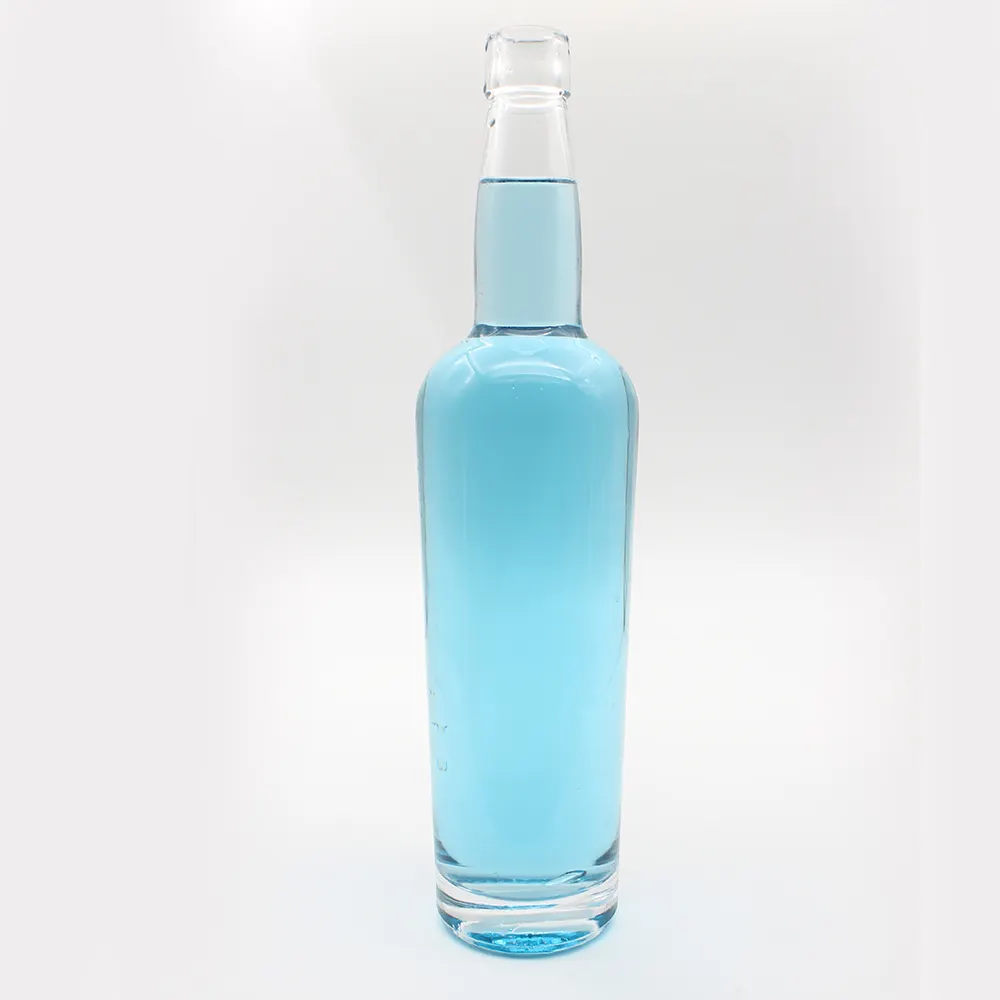
Shapes that still run on a co-packer line
The tall, narrow woozy runs on any co-packer's line without change parts. Keeping that height, diameter class and finish is what lets a custom bottle go straight onto the filler. Within those limits there is plenty to change:
- Shoulder radius and neck length, for a profile of your own
- A hexagonal or fluted lower panel, which adds grip and catches the eye
- An embossed brand name or pattern band around the shoulder
- Capacity, for example 5.5 oz or 148 ml instead of the commodity 5 oz, which makes price-per-ounce comparison harder
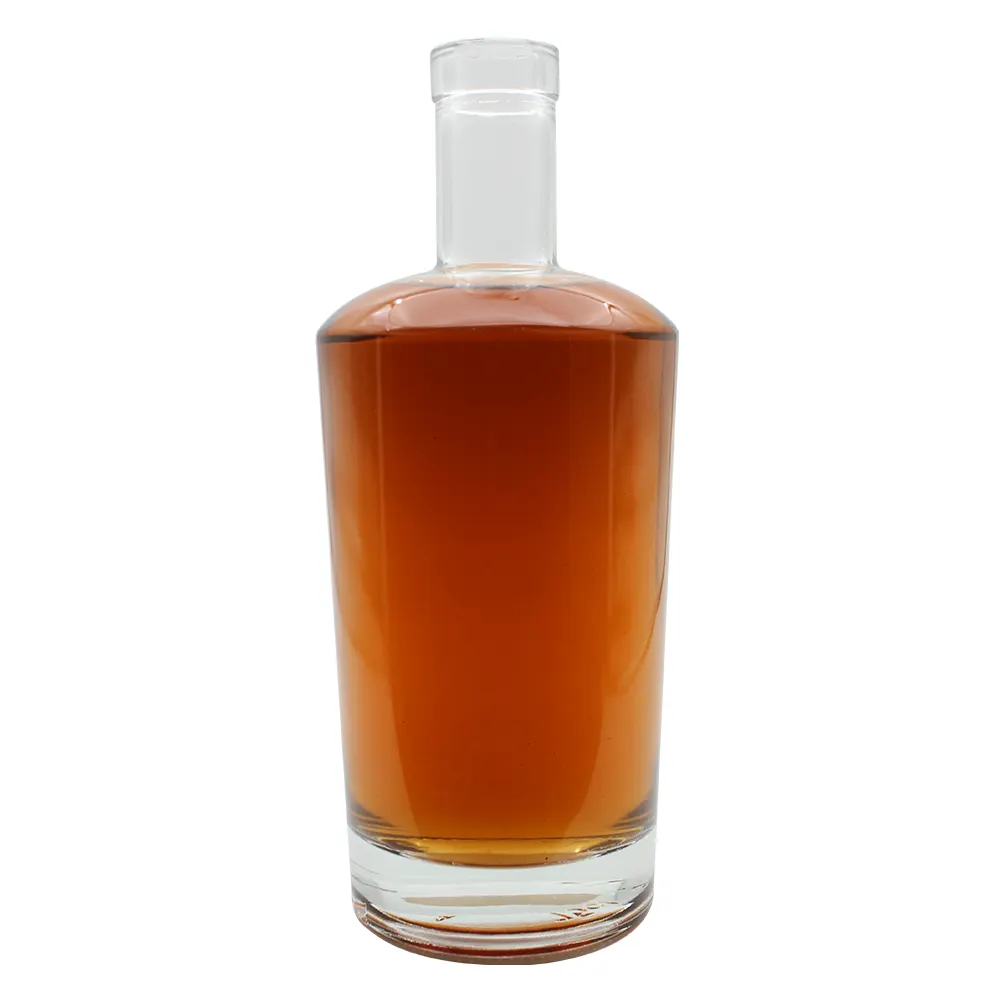
Square woozies, flasks and stubby bottles for thick, chunky sauces are all possible, but each needs its line compatibility checked first. Our advice is to keep a first mould within the woozy envelope and save a radical shape for a second SKU, when volume gives you leverage with the co-packer. Reference drawings are on the sauce bottle range page, and the general mould process is described under custom glass bottles.
Hot-fill specification
The bottle meets heat twice: once at filling and again at cap inversion or tunnel pasteurization. Thermal shock resistance is the controlling property. Annealed soda-lime glass withstands an instantaneous difference of 42 degrees Celsius. Filling at 88 degrees into a bottle from a 20-degree warehouse is a 68-degree gap on paper, but the fill takes seconds and is not instantaneous, so a properly designed bottle copes.
Three things are designed into the mould to make that reliable: walls of 2.5 to 3.2 mm with no sharp transitions on the inside, a base push-up that spreads stress, and annealing checked on every lot.
Before a co-packer approves a new bottle, expect a request for these figures:
| Figure | Requirement | Why it is asked |
|---|---|---|
| Thermal shock | Test results per ASTM C149 | Confirms the bottle survives filling and pasteurization |
| Internal pressure | Typically 4 bar minimum as a safety margin | Needed if the sauce is carbonated or may referment |
| Top load | Above 40 kg | Cases palletized five high must not push failure loads through the closures into the necks |
Acid, closures and the fill-line haze
Soda-lime glass is chemically untouched by hot sauce. The acid work is in three other places.
Closure and liner
Vinegar attacks metal without pause, so the choice narrows to PP caps with acid-resistant liners or tin-plated lug caps whose plastisol is formulated for acidic product. A generic liner softens and weeps within months. We have the liner compound validated against your actual pH and vinegar ratio.
Headspace
If any yeast survives in a sauce with residual sugar, fermentation continues in the bottle and CO2 pressure builds against the cap. A headspace of 6 to 10 percent and a proper hot-fill kill step are both required.
Haze at the sauce surface
Acid, heat and time together draw alkali out of the glass surface. After six months on a shelf this can show as a faint hazy band at the fill line. It is cosmetic and harmless, but it bothers brands that sell on appearance. The remedy is a dealkalization treatment, and it has to be requested by name.
Embossing rules for sauce bottles
Sauce bottles get wet and greasy and are sometimes relabelled, which is why embossing suits them so well. It is permanent, and its cost sits in the mould, not in each bottle.
- Size: letters at least 2.5 mm high with 0.4 mm of relief. Smaller than that, the eye reads texture instead of words.
- Position: shoulder or heel. A mid-panel emboss ends up under the label.
- Clearance: 15 mm away from the parting line, where seam flash ruins fine detail.
- Pattern over text: at small scale, fluting and patterns come out cleaner than lettering, and they improve grip for wet hands.
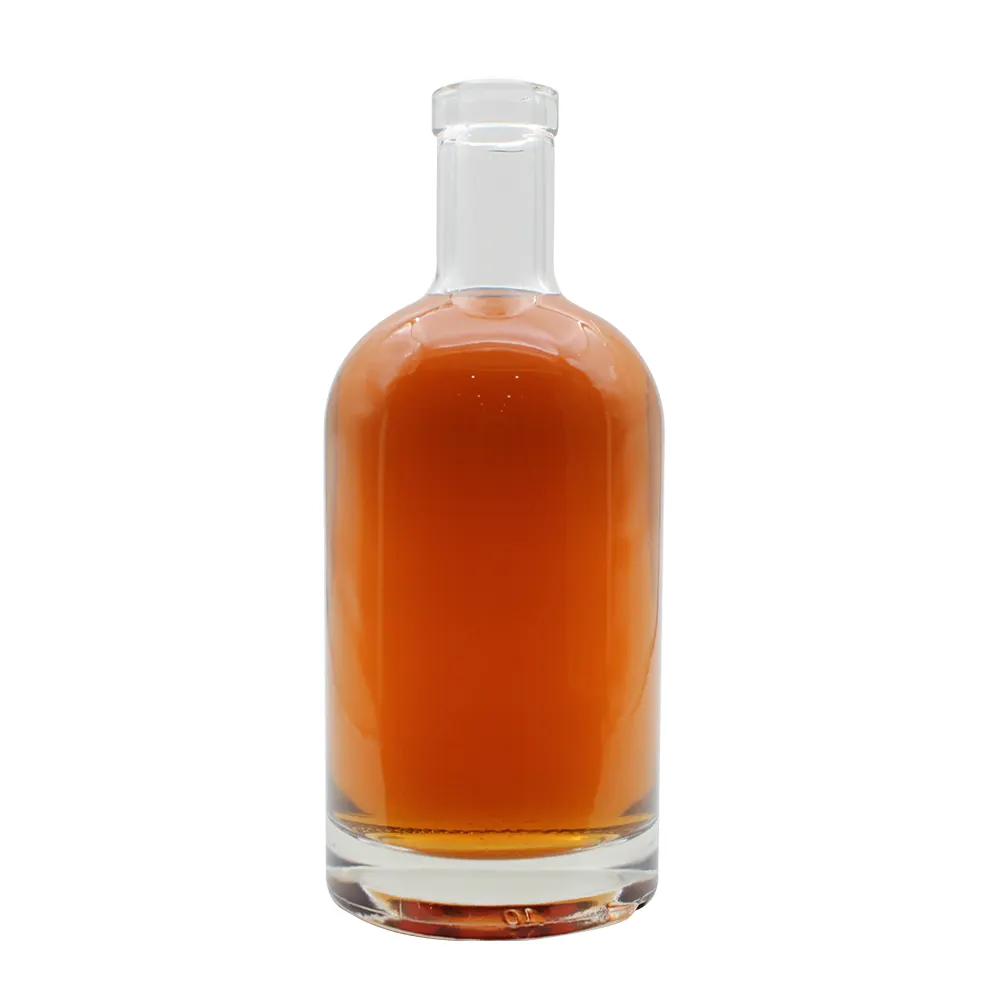
Embossing also takes up space inside the bottle. On a 5 oz woozy a heavy pattern can displace 2 to 4 ml, while the label still declares net contents. The displacement is measured on the sample mould and the cavity is corrected so that both brimful capacity and declared fill are met. More on the tooling is on our mould development page; if you are comparing embossing with screen print or coating, see the decoration options.
Planning the order
Cost and minimum quantity are quoted per project and depend on the mould, the decoration, the quantity and the freight terms. Timing is where brands most often lose a season: a holiday launch needs the project opened in January, not in spring.
For volume planning, a 40HQ container holds 260,000 to 300,000 bottles of 5 oz, which is a year of supply for most craft brands. Smaller quantities travel as LCL freight. Miniature sampler bottles to sell beside the main one are available from stock, and the stock woozy specifications and closures are a useful baseline to compare a custom drawing against.
FAQ
What is the MOQ for custom hot sauce bottles?
It is set per project. The mould and the line it is scheduled on decide it, so the number comes with the quotation.
Will a custom bottle need change parts at my co-packer?
Not if it keeps the woozy height, diameter class and finish.
Does hot sauce damage glass?
No. The points to manage are the liner and the cosmetic haze described above.
Will small embossed lettering be legible?
Only if it meets the height and relief minimums. Below them, choose a pattern or move the text to the label.
How long does a custom sauce mould take from design to filled bottles?
The schedule is confirmed per project once the mould, decoration and line slot are fixed.