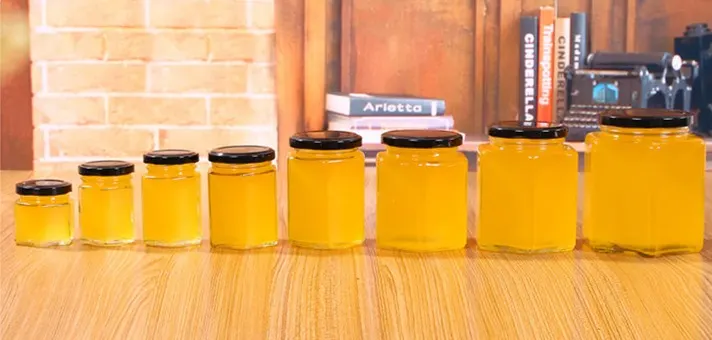
Part of our wholesale glass jars range; the stock moulds are pictured at the end of this guide.
A glass jar becomes "fancy" through a non-standard shape, a decorative finish, or detailing such as a glass lid or cork-fit mouth, and each of those adds forming cost and work on the filling line. Pick the one or two features that carry the brand and keep the rest plain. For durability, acid etching with a one-colour screen print holds up best in real handling; for filling, expect a non-round jar to slow a standard rotary filler by 20 to 40 percent.
Shape families and what they suit
Decorative jars fall into four groups, and each has a market it speaks to.
- Geometric. Hexagonal, square and octagonal jars suggest artisan food such as honey, preserves and spice blends. Flat panels also take a label well.
- Faceted and diamond-cut. These refract light the way crystal does and are the mainstay of candle and home-fragrance ranges.
- Apothecary and heritage. Rounded shoulders, apothecary lips and ground-glass stoppers fit bath salts, teas and wellness brands built around ritual.
- Custom-embossed. A logo or pattern raised in the glass is the most permanent branding available and needs the most tooling.
The further a design moves from a round, straight-sided jar, the more it costs to form, the less efficiently it packs, and the more friction it usually causes at filling.
Decoration finishes compared
| Finish | Look | How it wears |
|---|---|---|
| Acid etching (frost) | Satin matte surface | Permanent, because it is cut into the glass |
| Spray frosting | Matte, tinted in any colour | Good, though abrasion can scratch it |
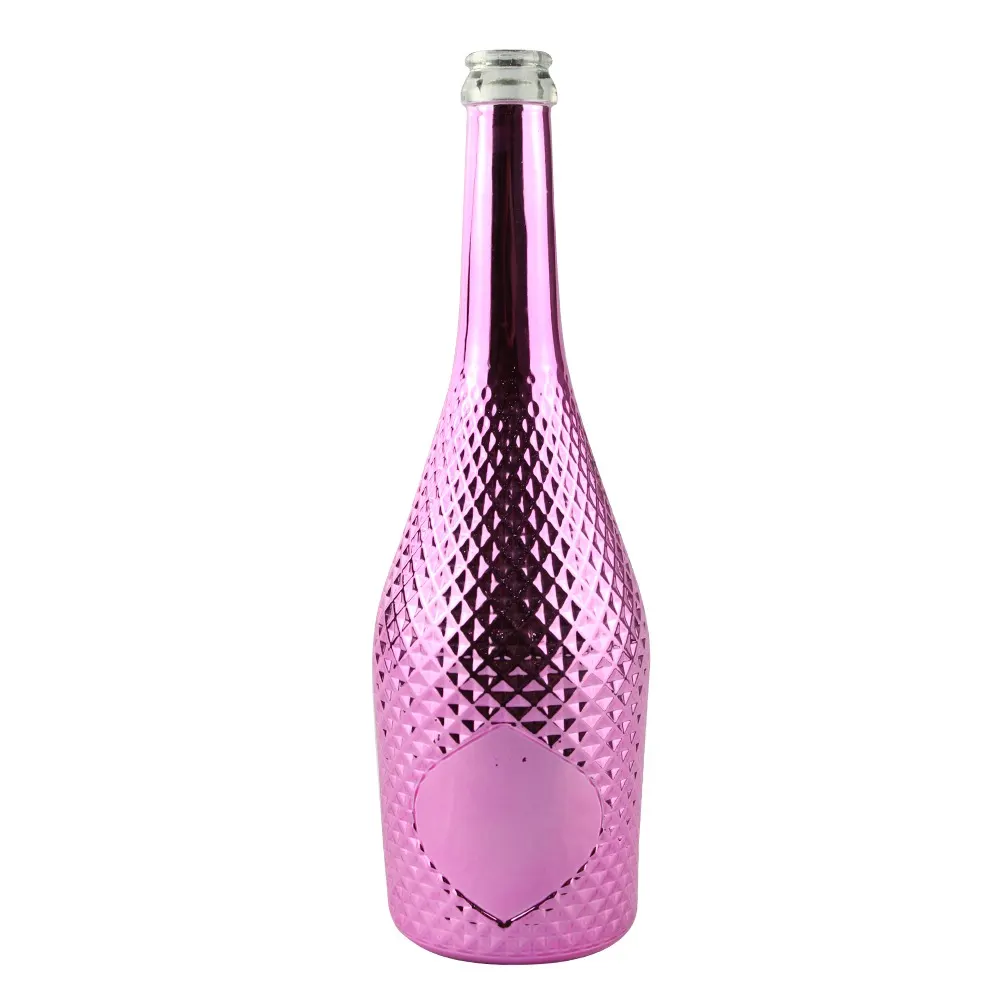
| Electroplating or metallizing | Mirror chrome, rose gold, iridescent | Moderate; keep it away from friction |
| Hot-stamped foil | Metallic logos and bands | Good when sealed under a clear lacquer topcoat |
| Decal firing | Full-colour ceramic imagery | Permanent, fused in the kiln |
| Silk screen, one or two colours | Sharp logos and ingredient text | Very good |
Fired decals and acid etching outlast the others: they stand up to dishwashers, bathrooms and years of handling. A frosted etched field with a single-colour screened logo looks restrained and survives ordinary use. Electroplating and fired decals give the strongest visual effect and suit gift and seasonal programmes, where the jar is part of the present.
What a decorative jar does to filling
On a standard rotary filler, star wheels and guides have to be re-tooled for a non-round jar, which is where the speed loss comes from. Heavy decoration can add a second limit, since some finishes must not touch metal contact points.
If a co-packer fills for you, confirm that their line accepts the shape before the jar design is final. A hex jar that can only be filled by hand may cancel the margin it was meant to create.
Lids and liners
Choose the closure to match the positioning, then test that it seals.
- Metal lug lids with a plastisol liner for vacuum-sealed food.
- Bamboo or acacia for wellness and candle ranges.
- Glass press lids with a silicone gasket for an apothecary look.
- Cork for small-batch spirits and bath salts.
Wooden and glass lids look the most upmarket and cost more than metal ones. Liner choice depends on the contents. Oils break down foam liners and acids attack unlined metal; foam or PE is fine for dry goods and candles. Torque-test any jar with a sprayed or plated finish as well, because those surfaces change the friction between lid and glass. Where a hex or square-shouldered jar comes with a matched lid programme, the closure only has to be decided once.
Checking the design under retail conditions
A shelf facing gets roughly three seconds of a shopper's attention. Decorative glass earns that look through light: facets throw highlights, frost diffuses, and metallic surfaces mirror the aisle. Two checks keep the effect from working against you.
First, heavy decoration hides the fill level, and shoppers distrust contents they cannot see. Leave a clear window, or on frosted designs keep the fill above the shoulder. Second, photograph the decorated jar under retail lighting before you approve it. A frost that glows under studio LEDs can turn a flat gray under supermarket fluorescents. We can coordinate decoration sample sets covering etch, screen, foil and plate so you can judge them in your own lighting.
Pricing and planning
Pricing is quoted per project and depends on the mould, the decoration, the quantity and the freight terms. If a standard food jar at volume would do the job, start with our bulk jar collections. Brands that want jars to sit alongside coloured bottles will find the palette options in our guide to frosted and coloured bottles. For a decorative project, send the target capacity and brand direction through the quote form.
Frequently asked questions
What MOQs apply to decorated fancy glass jars?
Minimums are quoted per project. The mould, the line it runs on and each added decoration step all affect the figure.
Can fancy glass jars be used for candles?
Yes, and candles are among the largest uses for decorative jars. State it at the start, because a burning candle sets up a steep temperature gradient in the wall and the jar needs verified thermal-shock resistance (ASTM C149). Frosted and electroplated finishes both tolerate candle use provided the base glass passes thermal testing.
Which lids are available for decorative jars?
Metal lug or screw lids, bamboo and acacia wood, glass press lids with silicone seals, and cork. The lid and its liner should be agreed together with the jar, not afterwards.