For wholesale kimchi packaging, specify a straight-sided, wide-mouth soda-lime glass jar and choose the lid by how the product is sold: an airlock or water-seal lid for live ferments, a plastisol-lined lug cap under vacuum for pasteurized, shelf-stable packs. The usual programme runs from 1 L to 3.8 L with 86 mm, 100 mm or 110 mm mouths. The glass is untouched by kimchi brine, so most of the specification work goes into the closure and the headspace.
Choosing the lid system by product type
Kimchi is an anaerobic ferment. Lactic acid bacteria give off CO2 that has to leave the jar, while oxygen has to stay out. Glass jars handle this in two ways, and a third option applies once the product is no longer alive.
| Lid system | How it works | Where it fits | What to watch |
|---|---|---|---|
| Water-seal channel | A moat runs around the mouth and the lid sits in it; gas bubbles out through the water and air cannot get back in | Retail display jars and gift sets, where the jar is also a table piece | Passive and silent, but the water level needs a weekly check |
| Airlock lid | A grommeted lid carries a three-piece or S-type airlock, a one-way water valve that vents on its own | Commercial kimchi production in 1-4 L jars; fermentation kits | Brine can overflow through the airlock if the jar is too small for the batch |
| Plastisol-lined lug cap | Product is hot-filled at 85-90°C and capped at once; the cooling fill pulls a vacuum | Pasteurized, shelf-stable retail kimchi | No fermentation hardware is needed; the system is the same one used on canning-style mason jars |
Two details decide whether a water-seal jar works in practice. The channel should hold at least 30 ml of brine without wicking into the jar mouth, and the lid needs a vent path that releases CO2 through the first active week, so nobody has to burp the jar every day.
Lid materials that survive brine
Finished kimchi brine sits at pH 3.8-4.2 with 2-3 percent salinity. Glass is immune to that; closure parts often are not. A plain tinplate cap corrodes at the score line within weeks once brine splashes or salt vapor reach it.
We specify one of three corrosion-safe routes:
- Plastisol-lined lug caps, where the liner keeps vapor away from the metal.
- Food-grade PP caps, the normal choice for fermentation kits.
- 316L stainless components, for the places where metal contact cannot be avoided.
For ferments running longer than two months, PP or a water-seal system holds up better than any metal closure.
Mouth width, wall shape and capacity
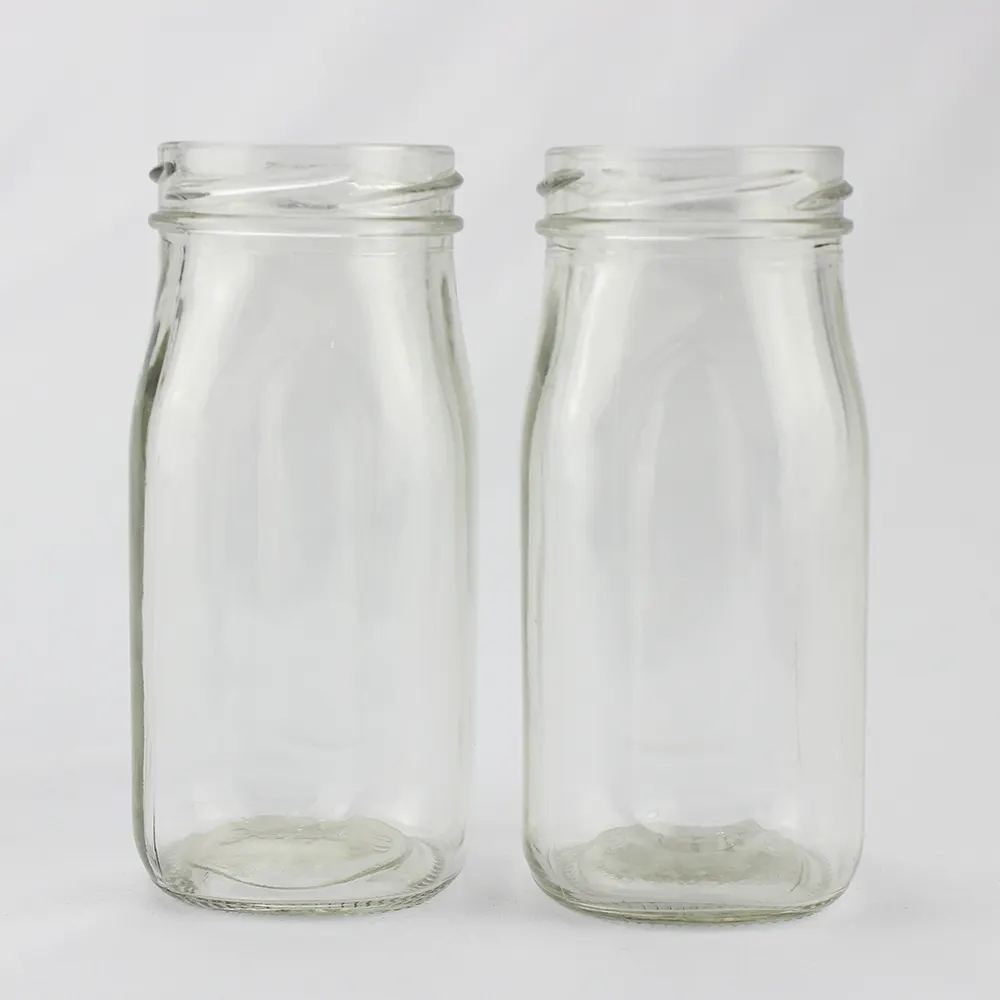
A 63 mm neck is too narrow for napa cabbage. The kimchi jars we source use 86 mm, 100 mm and 110 mm mouths, which do three jobs: quartered cabbage and daikon go in without tearing, a packer can press the vegetables under the brine line by hand to shut out oxygen, and tongs reach the product cleanly at serving.
Ask for straight sides rather than a shouldered profile. A flat weight or follower plate can then travel the full depth of the jar and keep everything submerged.
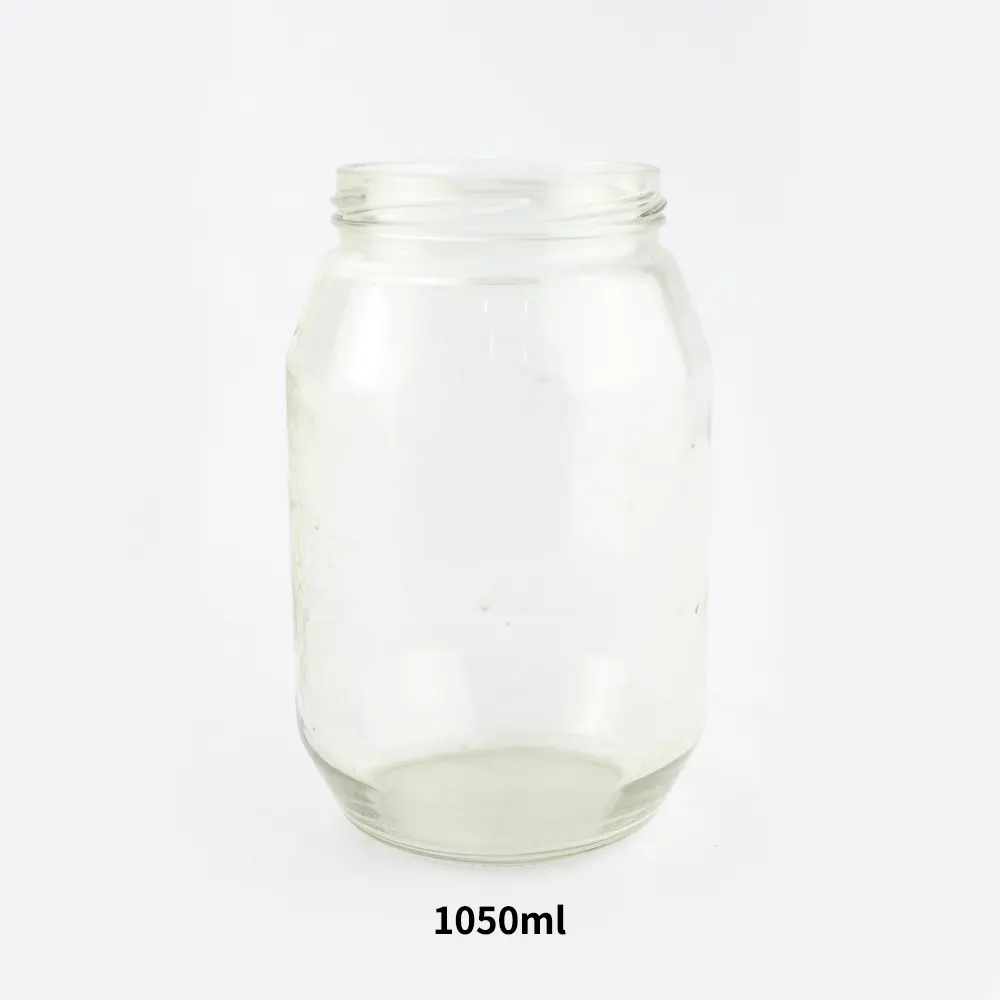
Size the jar from vegetable weight, not from volume. Properly pressed napa cabbage gives roughly 750 g of packed kimchi per liter of jar capacity.
| Capacity | Typical use |
|---|---|
| 1 L | Quart-scale home fermenting; a single-meal or gift format |
| 1.5 L | The standard retail fermentation-kit size, because the boxed kit stays under e-commerce dimensional-weight thresholds; also smaller home batches |
| 2 L | A single-head household batch, about 1.5 kg prepared, with 20 percent headspace |
| 3.8 L (one gallon) | A weekly restaurant prep of 4-5 kg; committed home fermenters |
Headspace and handling mistakes to avoid
Wrong jar size causes the two classic failures. Too small, and brine pushes out through the airlock. Too large, and the oxygen left above the batch invites surface yeast. Hold headspace at 15-20 percent for an active ferment and under 6 mm for a vacuum-sealed pasteurized pack. That discipline separates a clean ferment from a moldy one more reliably than any culture or salt ratio.
Soda-lime glass copes indefinitely with the fridge-to-counter cycling of normal kimchi service. The exception is a fermenting jar carried straight from a hot kitchen into a walk-in cooler: let it stand twenty minutes at room temperature first, so base and walls contract evenly.
Brands moving a recipe out of earthenware should re-validate the salt ratio. Glass is non-porous, evaporation is slower than in a traditional crock, and a recipe tuned for onggi can finish under-salted. We arrange samples with both water-seal and airlock lids so a food lab can run the two ferments side by side and fix the specification before production.
Glass compared with ceramic onggi and plastic
Onggi, Korea's microporous earthenware crocks, breathe well and make excellent kimchi. For an export programme they bring problems: they are heavy, fragile in a shipping container and opaque, and low-fired glazes can carry lead and cadmium migration risk that leads to failed FDA and EU food-contact tests. Glass does not face that risk.
Soda-lime glass is non-porous, chemically inert and dishwasher-safe at 75°C. A production manager can read bubble activity, brine clarity and vegetable color without opening the vessel. Weight matters too: an empty 3.8 L glass fermentation jar is about 1.6 kg, against 4-5 kg for an onggi of similar capacity.
Against plastic fermenters, the advantage is the surface. Plastic scratches, scratches shelter biofilm that survives sanitizing, and that biofilm can carry contamination from one batch to the next. The compliance paperwork that accompanies these jars is described in our guide to food-grade glass jars for wholesale buyers.
Export packing and label panel
Kimchi jars ship in two configurations. A fermentation kit, meaning jar, airlock lid, weights and instruction card, packs 6 sets per master carton with molded pulp or divider protection and is drop-tested to ISTA 2A. Retail food jars run 12 per case in the 1 L size and 6 per case above 1.5 L, at 700-900 jars per pallet depending on capacity.
The label panel is molded flat and takes a 90 x 120 mm retail label, which leaves room for the bilingual ingredient panel most export markets require.
For a wider range, the same brief can cover airtight glass storage jars, swing-top bottles for fermented drinks such as kimchi brine beverages, and 1100 ml jars with stainless steel lids for merchandising dry ingredients.
Kimchi jar questions from buyers
Is glass a better choice than an onggi crock?
For commercial and export work, yes. It carries no glaze migration risk, goes through a dishwasher, shows the ferment through the wall and weighs roughly one-third as much to ship as a comparable earthenware crock.
Which jar size suits home kimchi?
One head of napa cabbage with its brine fits a 2 L wide-mouth jar. Smaller batches go in the 1.5 L, and the gallon jar is for restaurants and people who ferment every week.
Do metal lids rust on a kimchi jar?
Plain tinplate does. For anything beyond a short ferment, use a plastisol-lined lug cap, a food-grade PP cap, or a water-seal or airlock lid.
Does pasteurized kimchi need an airlock?
No. Fermentation hardware is only for live, unpasteurized product. Shelf-stable kimchi is hot-filled into lug-finish jars and vacuum-sealed as it cools.
What is the minimum order for wholesale kimchi jars?
Minimums are quoted per project. They depend on the mould chosen and the line it runs on.