A wholesale storage jar range comes down to three choices: the sealing system (clamp lid, metal screw lid or PP lid), a capacity ladder from 0.5 to 2 liters, and a square or round body. Clamp lids with silicone gaskets suit coffee, metal screw lids suit pasta, rice and grains, and wide-mouth PP lids suit cereal and snacks. Keep every size on one diameter family so the range shares lids and packs neatly.
How storage jars differ from canning jars
Storage jars are made for daily access to dry goods, not for heat processing. They keep air and moisture out with a gasket or a lined lid, but they are not built or tested for a boiling water bath or pressure canning. Canning jars use two-piece vacuum lids and carry heavier thermal shock specifications.
That use sets the brief. The closure has to open and close thousands of times, ideally with one hand, the mouth has to accept a measuring cup, and the jar has to look good on a retail shelf.
Clamp, metal screw or PP lid
| System | How it seals | Strengths | Trade-offs | Best fit |
|---|---|---|---|---|
| Clamp lid (bail-and-trigger, swing-top style) | A hinged wire presses a rubber or silicone gasket onto the glass rim | Truly airtight, pleasant to use, the most upmarket look | Costs the most of the three; the gasket needs replacing after a few years of heavy use | Coffee beans, ground coffee, brown sugar |
| Metal screw lid | A 70, 82 or 86 mm twist-off or continuous-thread cap with a plastisol or foam liner | Dependable moisture barrier, simple induction sealing for tamper evidence, lowest closure cost | Plainer in use than a clamp | Pasta, rice, grains |
| Snap-on or screw PP lid | A sealing ring built into the lid | Quiet one-hand opening, dishwasher convenience | Sits between the other two on cost and performance | Cereal and snacks in wide-mouth jars of 86 to 100 mm |
Let the contents and the retail price point decide. With coffee, aroma retention is what the shopper is paying for, which justifies a clamp and silicone gasket. With pasta and grains the job is keeping pantry moths and humidity out as cheaply as possible per liter. Our page on airtight glass jars with gasket lids compares the gasket systems in more detail.
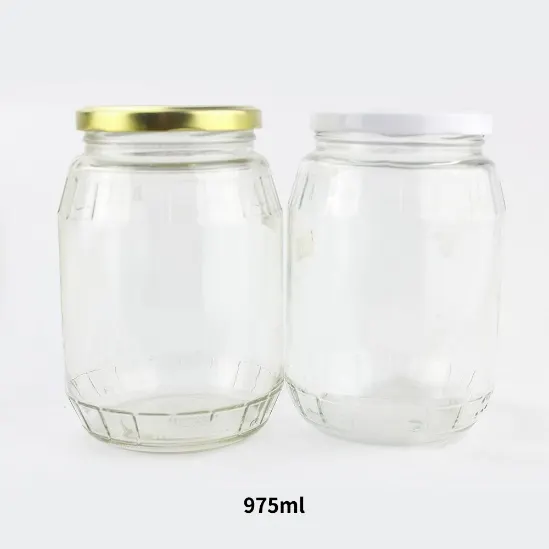
Capacities from 0.5 to 2 liters
Storage jars sell as families, and four rungs have proved themselves commercially:
- 0.5 liter, about 17 oz: coffee, tea and spices
- 0.75 to 1 liter, 25 to 34 oz: standard pasta shapes and a pound of beans
- 1.5 liters, about 51 oz: cereal and flour
- 2 liters, about 68 oz: bulk grains and family-size snacks
A well-planned family fixes the diameter at 100 to 110 mm and changes only the height. One mouth size then means one lid, one set of filling equipment at your copacker, a simpler case and pallet pattern, and a tidy nested look in store.
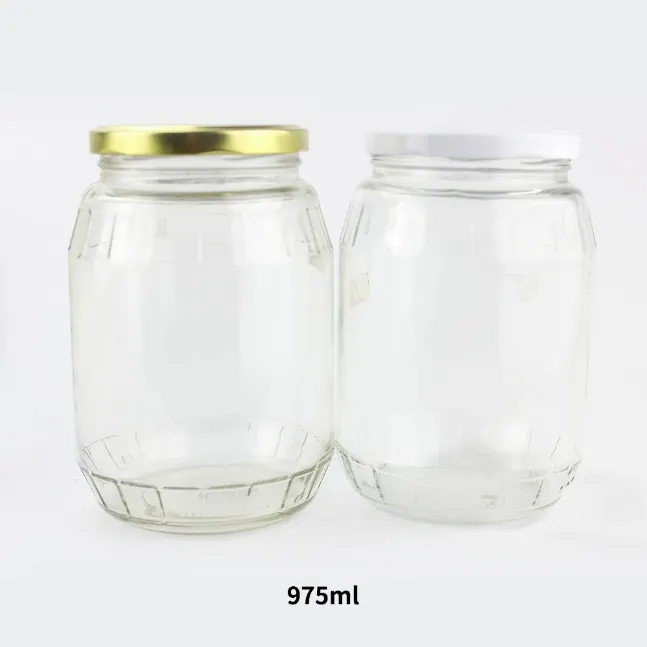
Glass weight should rise with capacity. A 1 liter clamp jar in soda-lime glass typically weighs 550 to 700 grams. The 2 liter size runs 850 to 1050 grams and has a base of 5 mm or more. Do not push lightweighting hard on this product: storage jars live on counter tops and get knocked over, and retail breakage costs far more than the glass saved.
Square or round bodies
Square and rectangular jars hold roughly 15 to 20 percent more product per linear meter of shelf than round jars with an equal footprint. They do not roll, and their flat fronts take large labels that can be read from the aisle. Round jars are slightly cheaper to make, spread impact stress better and look more traditional, which suits coffee and products close to preserves. Many distributors carry both, with square for a modern pantry line and round for a heritage line.
On either shape, ask for a flat label panel recessed by 1 to 2 mm. The label then sits below the points where jars touch each other and survives rubbing between cases in transit. The bulk glass jar collection shows the wider choice of bodies.
Glass, gaskets and food-contact documents
The glass is the simple part: food-contact soda-lime flint with documented heavy-metal migration testing to the standards of your market. The gasket needs more attention. Natural rubber is the traditional, economical choice but can pass an odor to coffee. Food-grade silicone costs more, has no odor, tolerates the dishwasher and is rated for a wider temperature band, so it is preferred for coffee and tea.
For the US, gaskets and lid liners should meet FDA food-contact requirements. In Europe, plastics and elastomers come under Regulation EU 10/2011, which sets overall and specific migration limits. Ask for current migration reports for each material batch instead of a single certificate issued years ago. The food grade glass jar guide goes further into the paperwork.
Spare gaskets are worth planning for on clamp jars. Distributors who stock them gain repeat aftermarket sales and noticeably better product reviews.
Case packs and container loading
Typical export packing is 12 jars per case for the 0.5 to 1 liter sizes and 6 per case for 1.5 to 2 liter sizes. Clamp-lid jars get dividers so the wire hardware never touches glass. A 40HQ container takes approximately 28,000 to 35,000 one-liter jars, depending on how bulky the closure is.
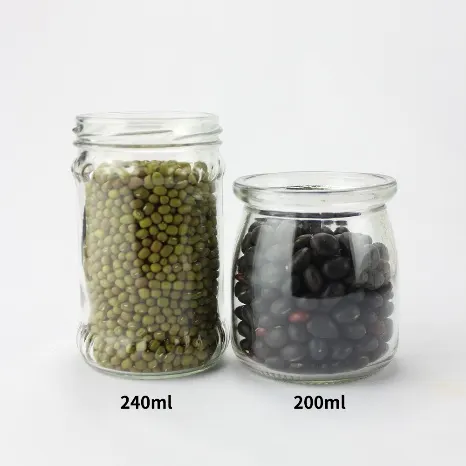
For reference points when briefing a range, see the square 275 ml storage jar with silver metal lid and the 1100 ml jar with stainless steel lid. Buyers who need child-resistant formats will find those in the cannabis packaging compliance guide and the cannabis jar buying guide.
Frequently asked questions
Which seal is best for coffee beans?
A clamp lid with a food-grade silicone gasket. It is airtight enough to hold aroma and stands up to constant opening. Avoid natural rubber here because of the odor risk.
Which capacities should a wholesale line include?
Start with 0.5 liter, 0.75 to 1 liter, 1.5 liters and 2 liters, all sharing a single mouth size.
Do square or round jars sell better at retail?
Neither wins outright. Square gives more product per shelf meter and bigger label faces; round costs a little less and handles knocks better. Stocking both across different price tiers is common.
What are the minimum order quantities?
They are quoted per project. The mould, the production line, the closure system and any decoration all affect the figure, as do freight terms for the landed cost.