An apothecary jar is a wide-mouth glass jar with a fitted lid, usually in clear flint glass, with a mouth of 70-110mm so a hand, scoop or wick-setting tool fits through. When buying in bulk, specify three things by end use: the capacity and mouth diameter, the lid and its seal, and the annealing or thermal-shock requirement, which is far stricter for a candle vessel than for a display jar.
Features that define an apothecary jar
The shape descends from the pharmacy display jars of the 18th and 19th centuries: broad shoulder, generous opening, lid that sits into or over the mouth. That history is the selling point. The same jar makes bath salts look like a spa product and a candle look like a gift.
The lid was once a ground-glass stopper and today ranges from a gasketed glass lid to a black metal twist-off. The proportions are meant to be viewed from the front, with flat or gently curved label panels and glass clear enough to show the contents. Flint glass dominates for that reason, and our page on flint glass bottles and jars explains how clarity and appearance are controlled in that material.
Sizes and typical uses
The range starts at 250ml mini display jars and runs through mid sizes to 2L and 4L counter jars. The table lists the formats we most often match to projects.
| Model | Capacity | Mouth diameter | Lid options | Typical use |
|---|---|---|---|---|
| AP-250 mini display | 250ml | 70mm | Glass lid or cork | Samples, spices |
| AP-500 candle and storage | 500ml | 85mm | Glass gasket lid or metal twist-off | Candles, bath salts |
| AP-735 (J52 series) | 735ml | 100mm screw | Metal twist-off | Candles, dry goods |
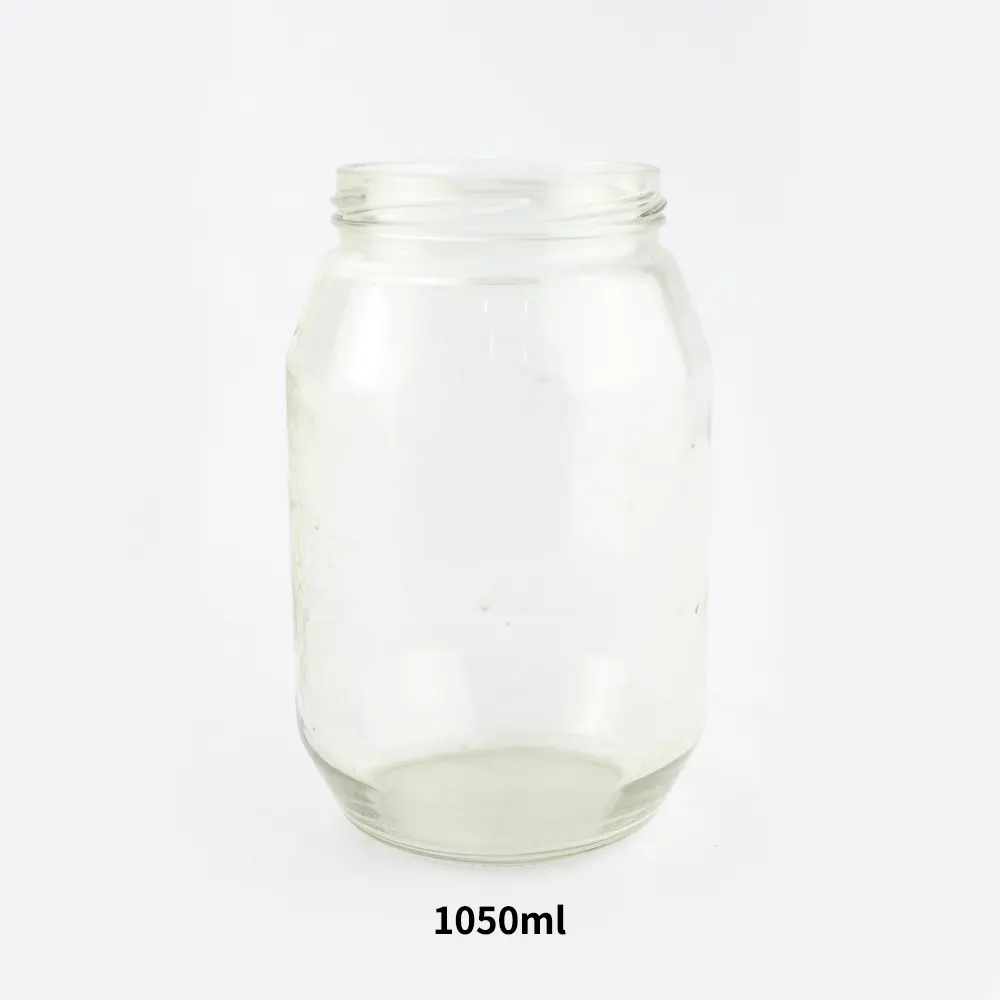
| AP-1000 classic apothecary | 1L | 100mm | Glass stopper or gasket lid | Display, candy |
| AP-2000 counter jar | 2L | 110mm | Glass lid | Dessert bar, retail |
| AP-X custom embossed | Per design | Per design | Per design | Branded programmes |
One jar can serve several markets, which lets a buyer consolidate SKUs across product lines. The 735ml wide-mouth jar, for example, works equally for a candle brand, a candy retailer and a bath-salt range.
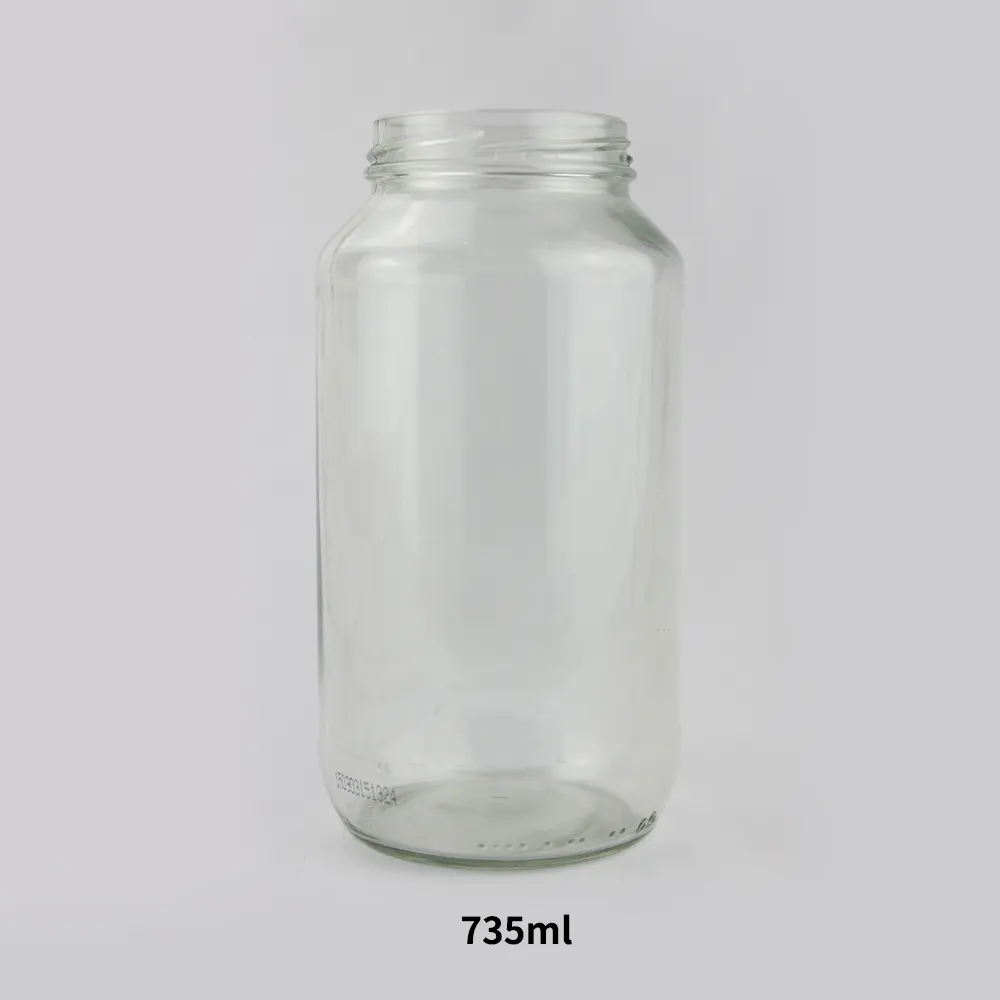
- Candles. A wide opening produces an even melt pool and makes wick centring easy; sizes of 1L and above leave room for three-wick pours.
- Bathroom and vanity storage. Cotton pads, soaps and bath salts sit behind a gasketed glass lid that keeps humidity out and suits open shelving.
- Candy and dessert-bar display. Counter jars of 2L-4L used with scoops, where the wide mouth is the reason for the purchase.
- Dry goods. Tea, coffee, spices and gourmet gifts, closed hermetically with a metal twist-off.
Buyers who also need bottles for the same range can compare formats in our wine glass bottle collection.
Choosing a lid and seal
| Lid type | Seal | Best suited to |
|---|---|---|
| Ground-glass stopper | Friction fit, not hermetic | The most authentic vintage look, display use |
| Glass lid with silicone gasket | Airtight | Storage with an all-glass appearance |
| Metal twist-off or lug, in black, gold or silver | Hermetic | Food and dry-goods packaging |
| Cork | Loose closure | Bath and spa lines |
Whichever lid is chosen, its finish has to be tolerance-matched to the jar's neck or mouth seat, so we check the two drawings against each other before samples are made. For food use, ask for gaskets in food-grade silicone that complies with FDA 21 CFR 177.2600 and EU food-contact rules.
Quality points to check on bulk jars
Wall thickness should be even all round, because thin patches show up on the shelf as waves in the glass. The lid seat must be ground or moulded flat, or a gasket will not seal against it.
Annealing has to suit the duty. Standard annealing is enough for display jars. Candle vessels must withstand repeated thermal cycles of 60-80 degree C, so specify glass tested for thermal shock to ISO 7459 / ASTM C149, and walls of at least 3mm for sizes above 500ml.
Decoration and colour
A stock jar can carry screen printing in up to six colours, decals, hot-stamp foil on the lid, or frosting for a satin apothecary look; the options are shown under frosted and coloured finishes. Embossing in the glass belongs to custom-mould programmes. Amber, green and blue tints are produced in scheduled colour campaigns, so timing for a tinted jar depends on when the plant next runs that colour.
Food-contact documents and ordering
For candy, tea, coffee or spices, request the food-contact paperwork with the order: EU Regulation (EC) No 1935/2004, FDA status, and the heavy-metal limits of Directive 94/62/EC. Flint soda-lime glass is an inert food-contact material; the lid and gasket are the parts that need their own declaration.
To start, send us your brief with the capacity range, preferred lid and end use (candle, food, display or bath). Price and minimum quantity are quoted per project, since they depend on the mould, the line it runs on, the decoration and the freight terms. If the jars are for a regulated product, our cannabis packaging guide covers child-resistance and opacity rules.
Frequently asked questions
Are glass apothecary jars suitable for candles?
Yes, and they are among the most popular candle vessels. Treat the jar as a candle container from the start by stating the thermal-shock requirement in the specification instead of buying a display-grade jar.
Are the jars safe for candy and dry goods?
The glass itself is inert. Paired with a gasketed glass lid or a metal lid, the jar is airtight and odour-free for candy, tea, coffee, spices and bath salts alike.
What is the minimum order for bulk apothecary jars?
It is quoted for each project. A stock mould and a custom embossed design sit at opposite ends, and lid choice and decoration shift the figure as well.