For coconut oil, specify a straight-sided glass jar with a 63 mm, 70 mm or 82 mm neck, because the oil sets into a firm white solid below roughly 24°C (76°F) and has to be scooped out, not poured. The stock sizes are 8 oz, 12 oz, 16 oz and 32 oz, closed with a twist-off lug cap that holds a vacuum after hot filling at 60–65°C. A 70 mm neck is the practical minimum for a jar the consumer scoops from every day.
Why coconut oil needs a wide, straight-sided glass jar
Coconut oil changes state around room temperature. Above its melting point it is a clear, thin liquid with a specific gravity near 0.92 at 25°C; below it, it is opaque and hard. Three packaging problems follow from that.
- Access. Through a 38mm or 43mm cosmetic neck, solid oil is almost impossible to reach with a fingertip or a 15mm spatula. Consumers gouge the sides, leave a hard ring at the bottom and send the jar back as faulty.
- Contact material. Coconut oil is strongly lipophilic and takes up low-molecular-weight plasticizers, styrene oligomers and phthalate residues from PET and PP containers. Natural-food buyers in the EU and North America now ask for inert glass by default.
- Display. In a chilled or air-conditioned aisle the oil turns solid and white. A narrow, tinted or heavily labelled pack hides the smooth, clean surface that a cold-pressed brand wants shoppers to see.
A wide mouth and a continuous straight wall deal with all three before anything changes on the filling line. With no shoulder taper below the neck, there is no ledge to catch a spatula, and the solid column of oil can be scraped down to the last gram.
Choosing between 63 mm, 70 mm and 82 mm necks
"Wide mouth" is a clearance measurement: the gap between the inside of the neck and the widest thing a user has to put through it. An adult thumb averages about 22 mm across at the tip, but comfortable scooping realistically needs a 35–45 mm clear opening. The clear opening is always smaller than the nominal finish, because the glass wall and sealing bead take up part of it.
| Neck finish | Clear opening | Jar sizes | What fits through | Best suited to |
|---|---|---|---|---|
| 63 mm | about 58 mm | 8 oz (227 g) | A 38 mm silicone spoon or a folded tablespoon | Single-use and travel sizes where the whole jar is melted |
| 70 mm | about 64 mm | 12 oz (340 g) and 16 oz (454 g) | An adult thumb laid flat, or a 15 mm spatula with room to angle it | Daily-spoonful products |
| 82 mm | about 75 mm | 32 oz (908 g) | A 40 mm ice-cream scoop or a bulk dispensing ladle | Bulk and foodservice packs |
Choose the 63 mm finish when shelf footprint and glass weight per unit count for more than fingertip access. It is too narrow for repeated scooping. The 82 mm jar has a further benefit after hot filling: its larger surface area lets the oil cool and set again more quickly.
The right neck depends on how the consumer will use the product, not only on how much oil the jar holds.
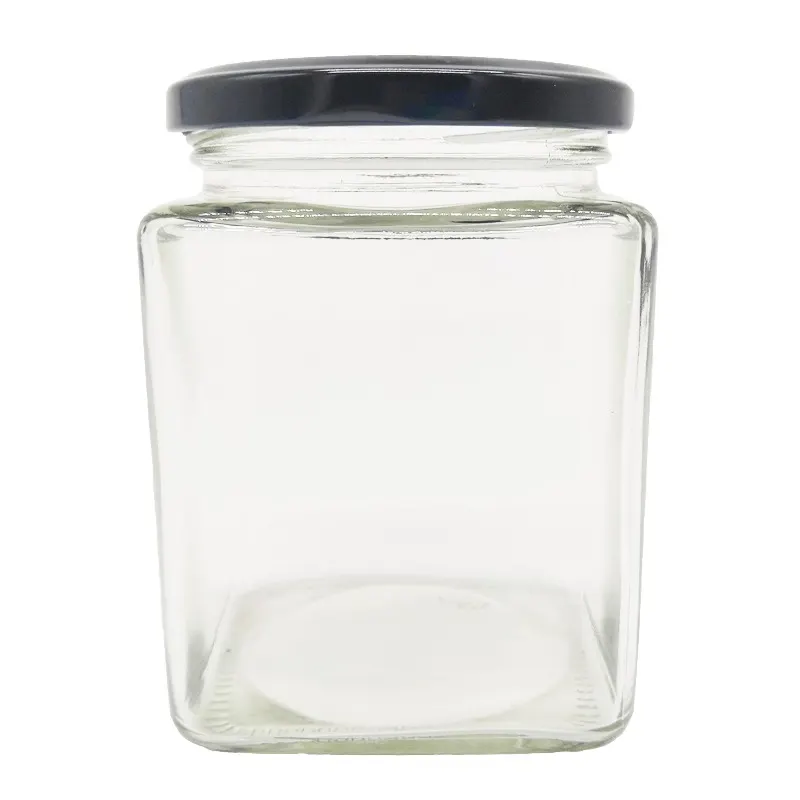
Dimensions of the four stock sizes
Heights below are nominal to the top of the finish (T.O.F.), measured with a caliper at 20°C. Glass weight is the empty jar. Cap weight is shown separately because it affects carton weight and, where glass and metal are assessed differently, the duty calculation.
| Capacity | Net oil (approx.) | Neck finish | Clear opening | Body dia. | Height T.O.F. | Glass wt. | Cap wt. (tinplate / aluminum) |
|---|---|---|---|---|---|---|---|
| 8 oz | 227 g | 63 mm | 58 mm | 72 mm | 95 mm | 180 g | 14 g / 11 g |
| 12 oz | 340 g | 70 mm | 64 mm | 84 mm | 110 mm | 240 g | 16 g / 12 g |
| 16 oz | 454 g | 70 mm | 64 mm | 90 mm | 125 mm | 300 g | 16 g / 12 g |
| 32 oz | 908 g | 82 mm | 75 mm | 108 mm | 160 mm | 480 g | 22 g / 18 g |
All four take either a tinplate twist-off cap or an aluminum lug cap. An in-between capacity such as 10 oz or 24 oz can be made on the same mold base with a height change of ±15 mm, which is a tooling adjustment and not a full new mold.
Do not assume a general pantry jar is interchangeable. Many storage jars sold for dry goods are not made with the 63/70/82 food-neck finishes listed here, so the caps and capper tooling described below may not fit them.
How a wide mouth behaves on the filling line
A wider opening changes the filler setup in three ways, and all three help a co-packer.
Nozzle centering becomes less critical. On a 38 mm neck, a sideways misalignment of 1.5 mm sends drips down the shoulder; at 70 mm the same error does not matter. Line speeds on a piston filler rise by roughly 12–18% before splashing becomes the limit.
Hot filling is easier on the glass. At the rim of a wide jar there is less hot product relative to cool glass than in a narrow-neck bottle, so the neck sees less thermal stress. Coconut oil is filled into these jars at 60–65°C with the jar at ambient line temperature. Stay below 70°C: above that, the liner takes more compression set and the cap holds less torque.
Capping is simpler. On a straight wall, a vacuum closing machine with a standard 63/70/82 chuck seats the lid consistently and needs no centering cup. That is one fewer changeover part for a contract filler running several SKUs.
Caps, liners and closing torque
The closure decides whether a jar of coconut oil arrives sealed. Two lid families are available.
| Lid | Material | Liner options | When to choose it |
|---|---|---|---|
| Tinplate twist-off lug cap | Electrolytic tin-coated steel, T2.5 temper, 0.20 mm substrate | Plastisol, or PET/foam | The usual choice for food |
| Aluminum lug cap | 8011-H16, 0.22 mm | The same liners, plus an optional silicone gasket ring | Humid distribution, and refillable or repeat-use cosmetic jars |
Aluminum resists corrosion in humid tropical warehouses, where tinplate can develop rust bloom at the lid edge over a 24-month shelf life. The silicone gasket version is for a lid that will be opened, washed and reused; it has held its seal through 30+ open-close cycles in torque testing.
What the liner and the vacuum do
The cap engages three or four lugs and, when the jar is sealed at filling temperature and left to cool, draws a vacuum of 18–25 inHg at the closing head. Coconut oil contracts as it cools, and the vacuum keeps the liner pressed against the glass sealing land.
That matters for shelf life. Coconut oil is about 6–8% unsaturated, which is enough for visible oxidation at the surface if headspace oxygen goes above about 2%. The standard liner is a 1.2 mm compression-molded compound rated from −20°C to +120°C continuous, so it covers cold-chain storage as well as hot fill. Where a market restricts PVC, a PET/foam liner is the alternative.
Torque and transit temperatures
A container loaded at 30°C in Qingdao can sit at 55–65°C in the hold for days and then meet 5°C in a European winter warehouse. The oil cushions some of this, because melting and setting at 24°C absorbs latent heat. The closure still has to come through without the liner creeping or the lugs losing grip.
Minimum application torque is specified at 12 in-lb for the 63 mm cap, 15 in-lb for 70 mm and 22 in-lb for 82 mm. Production lots are validated on a 72-hour thermal-cycle rack (−10°C / +50°C, 6 cycles) and with a carton drop test from 1.2 m. If your filler runs a different capper, send the chuck drawing so the lug pitch can be matched and the line needs no retrofit.
Buyers who prefer jar, cap and liner on one purchase order can source them together as glass jars with airtight lids.
Food and personal-care compliance for the same jar
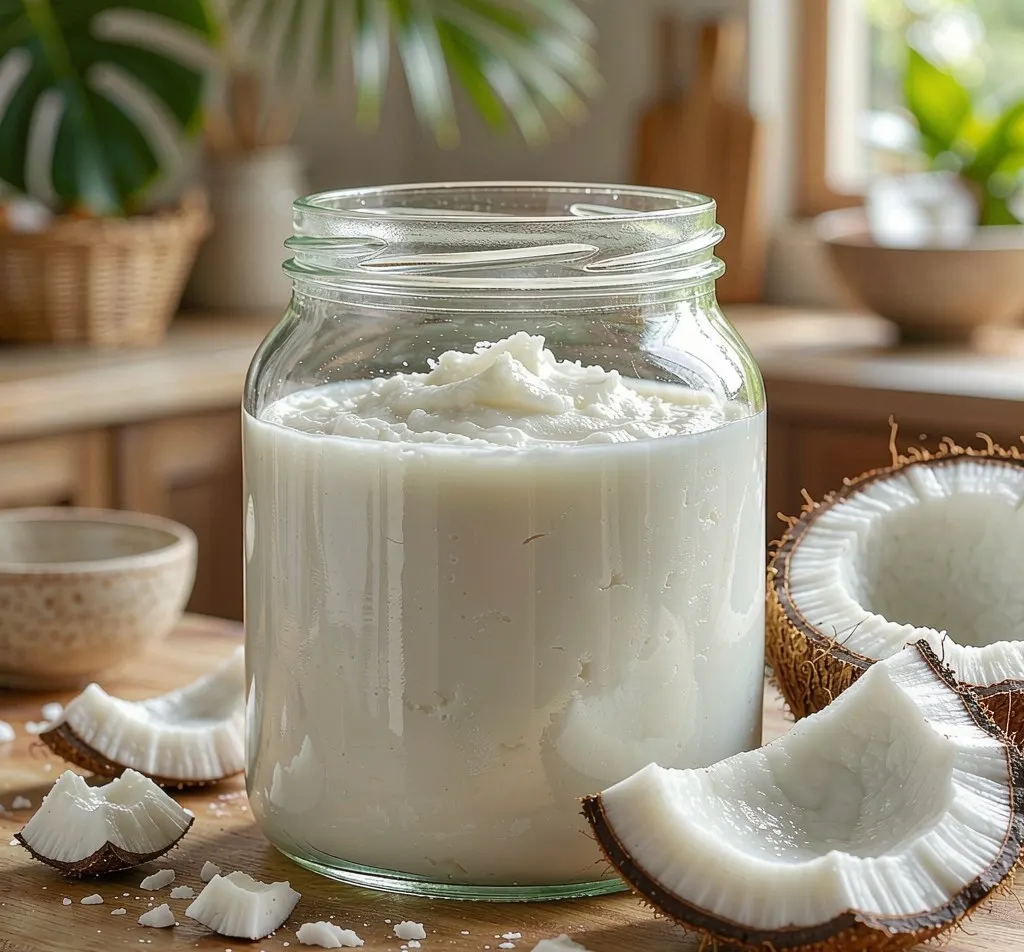
One jar serves both edible oil and coconut-based personal care. The glass is identical; the documents differ.
For food use, meaning virgin and refined coconut oil, MCT oil and blended edible oils, the declarations requested are FDA 21 CFR 175.300 (which covers resinous coatings where they apply), EU 10/2011 and German LFGB. The base glass is lead-free and cadmium-free, and recycled cullet is kept at or below 35% in food runs to limit heavy-metal variance. Heavy-metal migration tests are reported against a limit of ≤0.5 mg/L.
For hair masks, body butters, solid moisturizers and emulsified scrubs, the reference is EU Regulation 1223/2009. Where the jar touches the formulation the same migration limits apply, tested with a different extractive, often 10% ethanol or isooctane for lipophilic formulas.
The wide mouth matters even more in cosmetics. A body butter at 20°C is a stiff emulsion, and a 38 mm neck makes the user dig, which brings fingernails into contact with the product. The 70 mm and 82 mm sizes are the standard for refill jars, and the wider cosmetic jar range includes the matching aluminum lid with silicone ring and a frosted finish.
A co-packer filling both an edible oil and a hair mask can therefore buy one jar mold, one cap line and one liner specification, and split the run by finish: clear flint for food, frosted for cosmetics. Mixed food and cosmetic cartons can travel in one container with a separate declaration of conformity attached to each pallet, so QA can file each pallet correctly without opening cartons.
Labels, printing and frosted finish
Pressure-sensitive labelling is the most flexible route and is applied by the brand or its filler. The straight wall gives a full-circumference label zone 38 mm tall on the 8 oz jar, 52 mm on the 12 oz, 60 mm on the 16 oz and 95 mm on the 32 oz. On a frosted jar, a 60 lb PET label with a matte laminate avoids silvering at the edges.
Two methods put the artwork on the glass itself:
- Ceramic decal. The ink is fired at 580–620°C, is dishwasher-safe and survives 200+ industrial washes. It suits a cold-pressed line where the jar is kept as part of the product.
- Silk-screen direct print. UV-cured in 1–4 colors, scratch-resistant but not fired. It suits promotional and mid-tier SKUs.
The frosted, satin finish is produced by hydrofluoric acid etching to a surface roughness of Ra 0.8–1.4 µm. It diffuses light without tinting the oil, and it can either even out the white texture of solid oil or show the oil off under a spotlight. It is most often ordered on the 12 oz and 16 oz cosmetic sizes with the aluminum lid and silicone ring.
For a gift set of coconut oil with a wooden spoon, an FSC beech spoon can be sourced and packed in the same carton. Brands with a broader pantry range should know that glass cookie jars go through the same decal line and can be scheduled alongside.
Container loading and shipping documents
Jars ship in 12-up or 24-up RSC cartons with 3 mm EPE corner guards. Depending on the carton pattern, a 20-foot container takes roughly 11,000–13,000 of the 8 oz jar, about 7,500 of the 12 oz, about 5,800 of the 16 oz and about 3,200 of the 32 oz.
The commercial invoice lists the correct HTS code for each component, so a customs broker can enter glass and caps on separate lines. Pricing is quoted per project and moves with soda ash and natural gas costs as well as with size, decoration and quantity. Coconut oil jars can also be combined with spice jars and sauce bottles in one supply programme; the wide-mouth food jar overview shows what sits alongside them.
What to verify before placing a container order
Check three things on paper first:
- Liner evidence. Ask for the liner compound datasheet and a migration test from an ISO 17025 lab. A supplier's self-test is not a substitute.
- Cap source. Confirm the cap comes under the same quality system as the jar. Glass from one vendor and lids from another is a common cause of seal failure.
- Mold ownership. Get it in writing who owns the molds once they are amortized. A vendor that keeps ownership has leverage over every reorder.
Then test on your own line. Request 24 samples of the target size in clear and frosted, and fill them with your oil at your fill temperature. Measure seal vacuum after 24 hours at ambient. Follow with an accelerated hold at 45°C for 14 days, and look for liner creep or oil weeping at the lugs. Place the container order only once that passes.
Frequently asked questions
Can coconut oil be hot-filled into these jars at 60°C?
Yes. The usual window is 60–65°C, followed by closing on a vacuum lug capper. The vacuum that forms as the oil cools is what compresses the liner and keeps oxygen away from the unsaturated part of the oil.
What is the minimum order?
It is quoted per project. The figure depends on the size and finish, on whether the jar is clear or frosted, on the decoration method and on whether a mold adjustment is involved.
Should I choose a tinplate or an aluminum cap?
Tinplate twist-off is the default for food and accepts plastisol or PET liners. Choose aluminum if the product will pass through high-humidity distribution, or if the lid needs the silicone gasket for refillable cosmetic use.
How is the risk of seal failure in ocean transit controlled?
By closing to the specified torque for each neck size, using a liner rated for both ends of the temperature range, and validating lots with thermal cycling and a carton drop test. Running your own vacuum check and warm hold on samples before ordering is the second safeguard.