Part of our series on wholesale canning jars — read the overview first if the format is new to you.
Quick answer
What sizes do mason jars come in?
Mason jars are named in US ounces. The most-ordered bulk sizes are 4, 8, 12, 16 and 32 oz, with 2 oz, 24 oz and 64 oz at the ends of the range. The name is a category label rather than an exact volume: a 16 oz pint jar holds about 500 ml brimful and is filled to about 475 ml. Each size comes with a Regular (70 mm) or Wide (86 mm) mouth, and the two lids are not interchangeable.
| Size | Brimful capacity | Mouth |
|---|---|---|
| 4 oz | 120 ml | Regular 70 mm |
| 8 oz (half-pint) | 250 ml | Regular or Wide |
| 12 oz | 350 ml | Regular or Wide |
| 16 oz (pint) | 500 ml | Regular or Wide |
| 32 oz (quart) | 1000 ml | Regular or Wide |
| 64 oz (half-gallon) | 2000 ml | Wide 86 mm |
Mason jars are specified by three things: nominal capacity, mouth finish and case count. The sizes ordered most in bulk are 4 oz (120ml), 8 oz (250ml), 12 oz (350ml), 16 oz (500ml) and 32 oz (1000ml). Each comes on one of two finishes, Regular mouth at 70mm (2¾″) or Wide mouth at 86mm (3⅜″). Lids do not swap between the two, so settle the mouth before the capacity.
Mason jar size chart in oz and ml
The capacities below are brimful. Overflow capacity, the figure fillers work from, is 3-6% higher. Heights, weights and packing counts are standard reference figures and should be confirmed on the packing list for your order.
| Nominal size | Capacity | Mouth finish | Height | Glass weight | Pcs per case | Pcs per pallet |
|---|---|---|---|---|---|---|
| 2 oz | 60ml | Regular 70mm | ~60mm | ~95g | 24 | ~5,760 |
| 4 oz | 120ml | Regular 70mm | ~70mm | ~140g | 12 | ~3,600 |
| 8 oz (half-pint) | 250ml | Regular or Wide | ~95mm | ~210g | 12 | ~2,400 |
| 12 oz | 350ml | Regular or Wide | ~110mm | ~260g | 12 | ~1,900 |
| 16 oz (pint) | 500ml | Regular or Wide | ~130mm | ~330g | 12 | ~1,440 |
| 24 oz | 720ml | Wide 86mm | ~160mm | ~440g | 12 | ~1,100 |
| 32 oz (quart) | 1000ml | Regular or Wide | ~170mm | ~500g | 12 | ~960 |
| 64 oz (half-gallon) | 2000ml | Wide 86mm | ~235mm | ~850g | 6 | ~360 |
Body diameter changes with the mouth. A 16 oz jar is ~83mm across in Regular mouth and ~90mm in Wide mouth. Once cartons, dividers or shelf planograms are printed, switching mouth means redesigning the packaging around the jar.
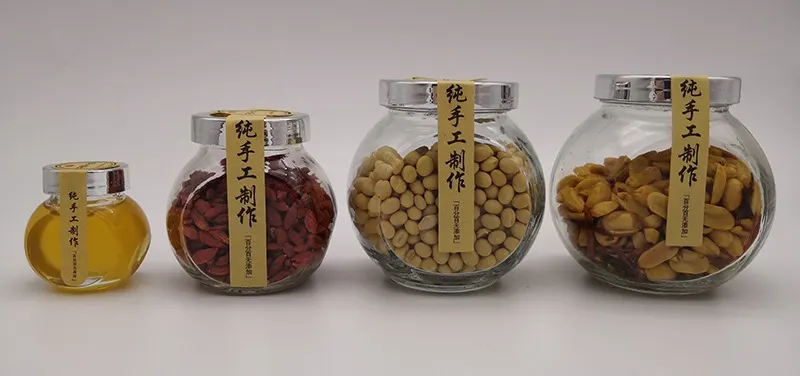
Regular 70mm or Wide 86mm mouth
Treat the finish as a production choice. Regular mouth has a 70mm thread and an opening of ~60mm; it pours cleanly and uses a little less glass. Wide mouth has an 86mm thread and a ~76mm opening that takes whole fruit, pickle spears and a ladle.
- Pourable fills such as sauces, syrups, juices and salad dressings belong in Regular 70mm, where the narrower shoulder controls the flow.
- Spoonable or whole-piece fills such as pickles, chunky salsas, whole peaches, layered desserts and poured candle wax belong in Wide 86mm. Filling of chunky product speeds up by 20-40% once operators are no longer working against the opening.
- Emptying the jar is easier through a wide mouth, which counts toward repeat purchase of jams and nut butters.
- Lid supply favours 70mm. The two-piece lid, a band plus a plastisol disc, is the most economical closure there is, while 86mm lids come in fewer stock colours.
Many brands settle on Regular mouth for 8 oz and under and Wide mouth for 16 oz and up. The whole range then runs on two lid inventories.
Sizes and mouths by product
| Application | Usual sizes | Mouth | Reason |
|---|---|---|---|
| Artisan jam and jelly | 4 oz, 8 oz, 12 oz | Regular 70mm | Single-serve up to family size, pourable fill, two-piece lids |
| Pickles and fermented vegetables | 16 oz, 32 oz | Wide 86mm | Spears and whole vegetables load 20-40% faster |
| Salsa and chunky sauces | 12 oz, 16 oz | Wide 86mm | Chunks bridge across a narrow opening and jam the fill |
| Soy and scented candles | 4 oz, 8 oz, 12 oz | Wide 86mm | Melt pool reaches the full diameter; the wick is easy to centre |
| Cold brew and kombucha service | 16 oz, 32 oz | Either, with a straw lid | The pint is the café standard; the quart suits growler-style takeaway |
| Spices and dry rubs | 2 oz, 4 oz | Regular 70mm | Small footprint; shaker inserts fit the 70mm finish |
| Meal prep and overnight oats | 8 oz, 16 oz | Wide 86mm | Room for a spoon and a shape that washes well in a dishwasher |
A product that sits between categories, a drinkable yogurt for instance, should be prototyped in both mouths and decided by a trial on the filling line. Shapes outside these formats are in the wider mason jar range, and every jar style we source is listed in the glass jar category.
Declared weight is not the jar name
Candle brands should size by wax weight. A “16 oz” jar holds ~12-13 oz of soy wax at a proper fill line, and labelling by jar capacity leads to FTC net-weight trouble. Food runs the other way: an 8 oz jar of honey weighs 12 oz on the scale, and the label declares weight, not fluid ounces. Weigh a filled sample during sampling and set the declared net weight from the real density of the product.
Closures for each finish
Each mouth has its own closure family, and a mismatch is a common reason samples fail.
| Closure | 70mm Regular | 86mm Wide | Suited to |
|---|---|---|---|
| Two-piece canning lid (band and disc) | Yes | Yes | Hot-fill jams, pickles, a home-canning look |
| One-piece CT lug lid, plastisol-lined | Yes, 70-2030/70G | Yes | Commercial hot-fill on high-speed cappers |
| Black or gold metal screw lid | Yes | Yes | Candles, dry goods, gift sets |
| Wooden or bamboo lid with gasket | Limited | Yes | Pantry storage, candles |
| Straw-hole or drink lid | Yes | Yes | Beverage jars, bar service |
For a hermetic hot fill, name a plastisol-lined lug lid and confirm the vacuum rating of the jar. Filled at 63-70°C with 6-10mm of headspace, the jar pulls 20-28 kPa of vacuum, and that vacuum is what makes the safety button click.
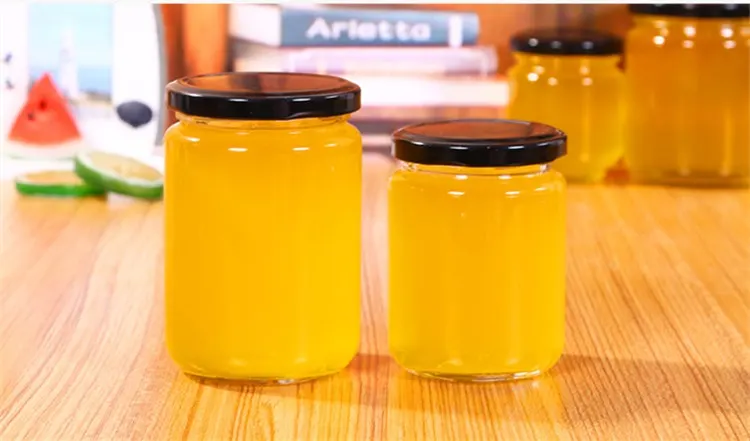
Test reports and inspection levels to request
Jars meet food at high temperature, so the documents carry as much weight as the glass. Collect these with the order:
- An FDA 21 CFR food-contact declaration. Flint soda-lime glass complies by nature, but you still want it in writing.
- Lead and cadmium migration reports to California Prop 65 levels.
- Thermal-shock resistance of at least 42°C differential for hot-fill, and 60°C+ for retort.
- Vacuum-seal validation on the exact lid you will use.
Do not make pressure-canning claims for resale unless the jar has passed thermal-shock and vacuum-seal testing; ask to see the reports. Inspection runs to AQL 2.5 for cosmetic defects and AQL 1.0 for functional ones such as finish cracks, stones and bird swings. Write both numbers into the purchase contract.
If the positioning is airtight storage, the airtight jar options with clamp and gasket closures go beyond the mason family. Light-sensitive products are better served by amber glass jars supplied with lids, and frozen lines by the thermal-shock notes in our guide to freezer-safe jars.
Pallets, containers and receiving
Pallets arrive at 100×120cm, 1.4-1.8m tall and 600-900kg gross. A dock without a forklift needs case-level delivery or split pallets, and the PO should say so.
A 40HQ of 8 oz jars carries 22-25 CBM of cartons on 20-24 pallets. Below ~15 CBM, compare LCL with a 20GP: loose glass is handled at both container freight stations, and breakage usually runs 1-2 points higher. Solid-wood pallets entering the US need ISPM-15 heat-treatment stamps, which should appear on the packing list. For an inland warehouse, cost the rail leg from both coasts before picking a port.
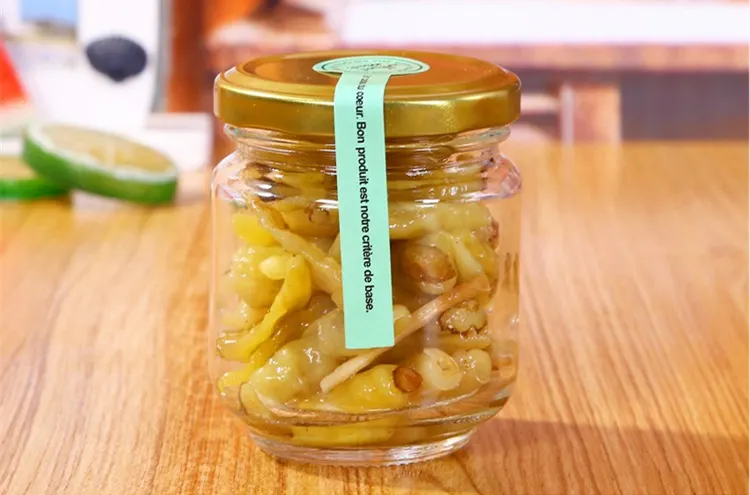
In the warehouse, jar pallets stack two-high at most before the bottom cartons crush. Pallets above ~800kg need racking or floor space for a single layer. A transit breakage allowance of 2-3% is normal, and divider-packed 12-packs on shrink-wrapped pallets routinely arrive under 2%.
What to put in an enquiry
- The sizes you are comparing, for example 8 oz against 12 oz.
- The mouth finish, or a description of the product if you want help choosing.
- Quantity per size, and whether sizes should be mixed in one container.
- The closure and its colour: two-piece canning lid, lug cap or decorative lid.
- The destination port or ZIP, and whether the dock has a forklift.
Frequently asked questions
Does a 16 oz mason jar hold exactly 16 fluid ounces?
No. The nominal size is a category name. A standard pint holds ~500ml brimful (16.9 fl oz) and is filled to ~475ml once headspace is allowed. Base the label and fill weight on the overflow capacity shown on the technical drawing.
Will a Regular-mouth lid work on a Wide-mouth jar?
Never. The two finishes differ in thread diameter and in bead geometry. A forced fit holds no vacuum and fails in retort. Brands that run both mouths keep both lids in stock.
What is the minimum order, and can sizes or colours be mixed?
Minimums are quoted per project for flint, amber and other colours alike. They follow the mould, the glass colour, the quantity per size and how the container is loaded.
Are these jars suitable for home pressure canning?
Annealed jars that meet the ≥42°C thermal-shock figure behave like retail brands in water-bath and pressure canning. “Canning-safe”, however, describes the jar, the lid and the process together. Request the glass test reports; a process authority validates the recipe.
How much breakage is normal by sea?
Contracts usually allow 2-3%. Well-packed divider cases tend to arrive at 1-2%.
Is embossing a logo on a stock jar worthwhile?
At low annual volumes it usually is not. The budget does more for the brand when spent on better lids and labels.
How long can empty jars be stored?
Glass does not degrade. Humidity and dust are the risks. Pallets kept wrapped, off the floor and under 70% relative humidity fill the same after 2+ years. Cardboard dividers give way first in a damp warehouse, so re-wrap any pallet you open.