One of our guides on candle jars wholesale; start there for the overview.
Certified recycled candle jars are available on stock moulds from 120ml to 735ml, with up to 50% PCR in flint glass and 80% or more in green, backed by GRS or SCS paperwork. Recycled content does not change how a jar copes with flame: wall thickness, annealing and freedom from stones decide that, and all three are specified the same way for virgin and high-cullet glass. Moving an existing jar to a certified programme keeps the same mould, so it is a documentation change, not a tooling project.
Stock formats and their maximum PCR content
| Model | Capacity | Format | Max verified PCR | Certification |
|---|---|---|---|---|
| CJ-120-RC | 120ml / 4oz | Small tumbler | 50% flint | SCS |
| CJ-210A-RC | 210ml / 7oz | Amber apothecary | 60% amber | GRS |
| J49-RC | 300ml / 10oz | Straight-sided, screw finish | 50% flint | GRS or SCS |
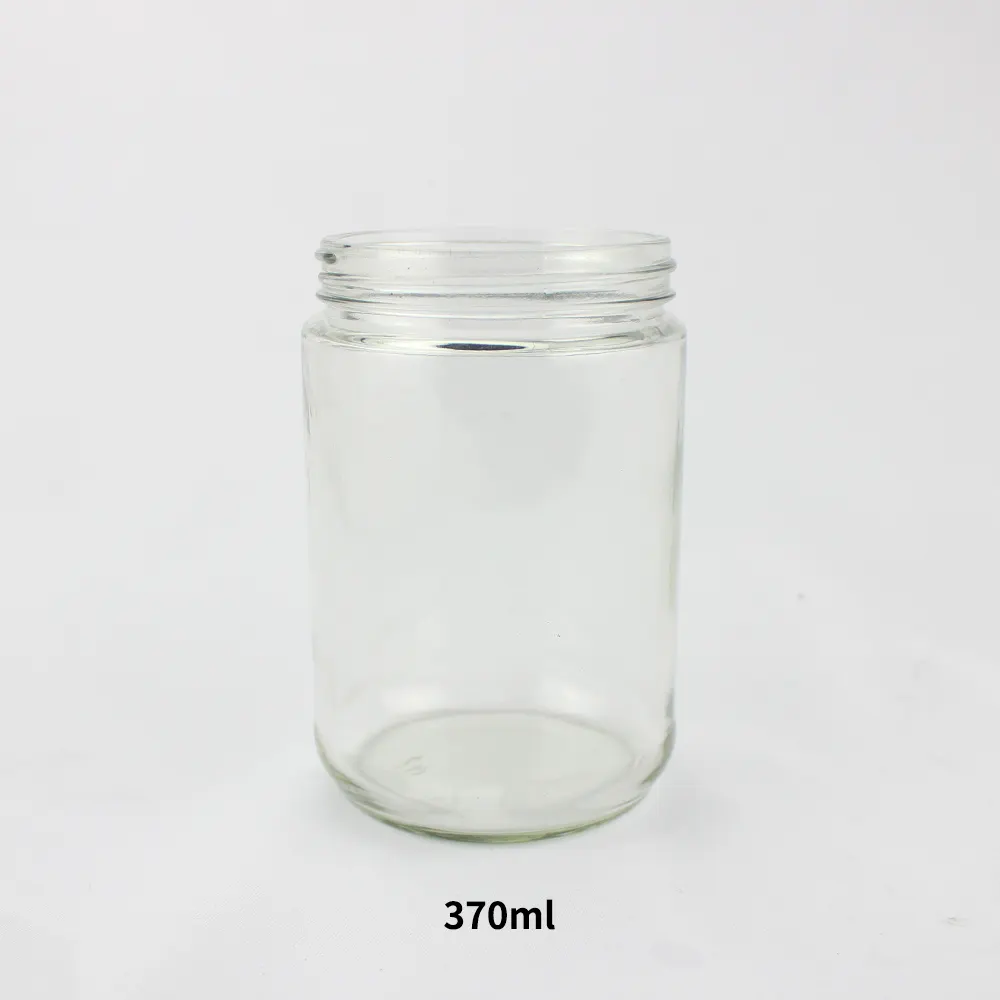
| J63-RC | 370ml / 12.5oz | Straight tumbler | 50% flint / 80% green | GRS or SCS |
| J52-RC | 735ml / 25oz | Round 3-wick | 60% flint / 85% green | GRS |
Tumblers in the 200-370ml band account for the most volume. Metal and wood lids can be quoted with the jar as a kit.
Choosing glass colour and PCR level
PCR (post-consumer recycled) glass shifts clear flint toward a soft green-grey. At 30-50% PCR the cast is slight and shows mostly in the thick base. Three routes follow from that:
- Flint at 30-50% for a quiet sustainability story. If you want glass that looks water-clear, cap the specification at 30% PCR.
- Green at 80% or more for the strongest claim, with the colour as the design.
- Amber at 60% for apothecary lines.
Decoration should work with the tint. Kraft-style screen printing and uncoated paper labels suit it; a heavy colour spray covers it and throws the story away.
Why candle jars suit recycled glass
Candles are the lowest-risk category for a first certified recycled programme. The jar never holds anything ingestible, so there is no food-contact layer and the regulatory file is lighter than for a beverage bottle. In home fragrance the tint counts in the jar's favour, since shoppers take it as a sign the claim is real and many brands now show it off. And a thick-walled vessel makes small cosmetic variation look like craft, where a water brand selling on clarity would see a defect.
Thermal requirements under a burning candle
Pouring is the mild part. Wax goes in at 60-75°C and the temperature gradient across the glass is gentle. The demanding condition is a long burn, and a jar should be judged against a 40-hour burn. The flame brings the wall around the headspace to 80-120°C while the outside stays close to room temperature, and late in the candle's life the deepening melt pool conducts heat into the base.
Three specifications carry the jar through this, at any cullet ratio:
- Wall thickness: a minimum of 3.5mm on straight tumblers and 4mm or more at the base.
- Annealing: controlled cooling that removes internal stress.
- No stones: unmelted inclusions start cracks. They are kept out by optical sorting of the cullet and 100% camera inspection at the cold end.
Put the thermal-shock requirement in writing as ASTM C149 ≥42°C, together with the minimum wall thickness. Your candle insurance and the ASTM F2417 burn test both rest on those figures.
Certificates a retailer will ask for
An audit of a "made with recycled glass" claim follows three linked documents:
- the glass plant's GRS or SCS scope certificate, showing the furnace is certified;
- the transaction certificate (TC) for your shipment lot, showing your jars came from a certified campaign;
- your commercial invoice, which ties the two together.
File the TC with the purchase order. Choose GRS if the logo will go on the pack, and note that the logo licence needs 50%+ certified recycled content and a registration at brand level; we gather the plant-side documents that registration calls for. SCS is enough when a percentage claim on your website is all you need.
Recycled-content certification and candle safety are separate files. ASTM F2417 covers the fire safety of the finished candle and ASTM C149 the jar's thermal performance, and careful retailers want both alongside the GRS or SCS papers.
What drives the price and how to brief it
A certified jar costs somewhat more than the same mould in standard glass. The difference pays for segregated certified cullet and the per-lot transaction certificates, and it is quoted per project according to colour, PCR tier, scheme, decoration and quantity. Our candle jar price reference gives the baseline, and the standard candle jar range shows the same shapes without certification.
A complete brief names the capacity and format, glass colour and PCR tier, the certification scheme, the thermal specification, lid type, decoration, quantity and destination port. Send it to us and we match it to a certified plant. For cullet sorting, defect control and the bottle side of the same material, read the recycled glass bottle guide; recycling rates and EPR rules are collected in our sustainability data for glass packaging.
Frequently asked questions
Will a recycled glass jar crack when hot wax is poured?
No, provided it is properly annealed. Pouring at 60-75°C is a light load. The burn is what tests a jar, and wall thickness and annealing quality govern that on recycled and virgin glass alike.
Does the tint change how the candle looks?
Slightly, in flint. Expect a faint green-grey cast that is strongest at the base. Brands that want none of it specify 30% PCR at most, or move to amber or green.
Do I need a new mould to switch to recycled glass?
No. The mould stays as it is; what changes is the cullet stream feeding the furnace and the certificates that come with the lot.