For a retail counter, the workable glass candy jar holds 1L to 2L and has a mouth of 100mm or more, wide enough for a 60ml scoop to go in without touching the rim. Specify the mouth first, then the lid your staff can reseat quickly, then the shape that suits your shelving. Jars of 3L to 5L belong on the floor or the back bar, not on a counter where people are serving.
Size the mouth to the scoop
A jar that a scoop cannot enter cleanly fails in daily use, however good it looks in a catalogue. The rule we work to is that the inner diameter of the mouth should be at least 1.6× the width of the scoop. The stainless 60ml scoop found in most sweet shops is about 55mm wide, which sets the minimum mouth at 90mm. That is why 100mm and 110mm wide-mouth finishes account for most candy jar orders.
A counter jar of 1L to 2L holds roughly 600g to 1.2kg of wrapped candy and stays stable when a customer tilts it. Our wide-mouth jar guide goes further into matching mouth to scoop.
Choose a lid for how often the jar is opened
On a busy Saturday a jar may be opened and closed two hundred times, so the closure should fit the staffing, not only the look.
| Closure | Strength | Limit |
|---|---|---|
| Ground-glass stopper | Tightest classic seal for unwrapped sweets | Needs two hands |
| Metal lug or CT cap with plastisol or foam liner | Reseats in one motion, consistently; a twist-off lug gives an audible vacuum cue | A less traditional look than a stopper |
| Clamp lid with silicone gasket | Takes the most abuse and suits humidity-sensitive products such as gummies | The top-tier option |
If moisture is the main worry, compare the seals on our airtight glass jar page.
Shapes, glass colour and common specifications
Shape is a merchandising choice. Round apothecary jars look nostalgic and suit a heritage sweet shop. Straight-sided cylinders give the most fill volume per centimetre of shelf and take labels cleanly. Square and hexagonal jars sit edge to edge for a modern, architectural display. More decorative outlines are in the fancy glass jar range.
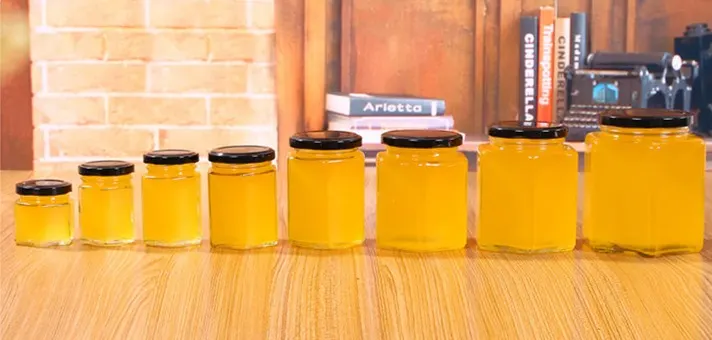
| Type | Capacity | Mouth inner diameter | Height | Closure options |
|---|---|---|---|---|
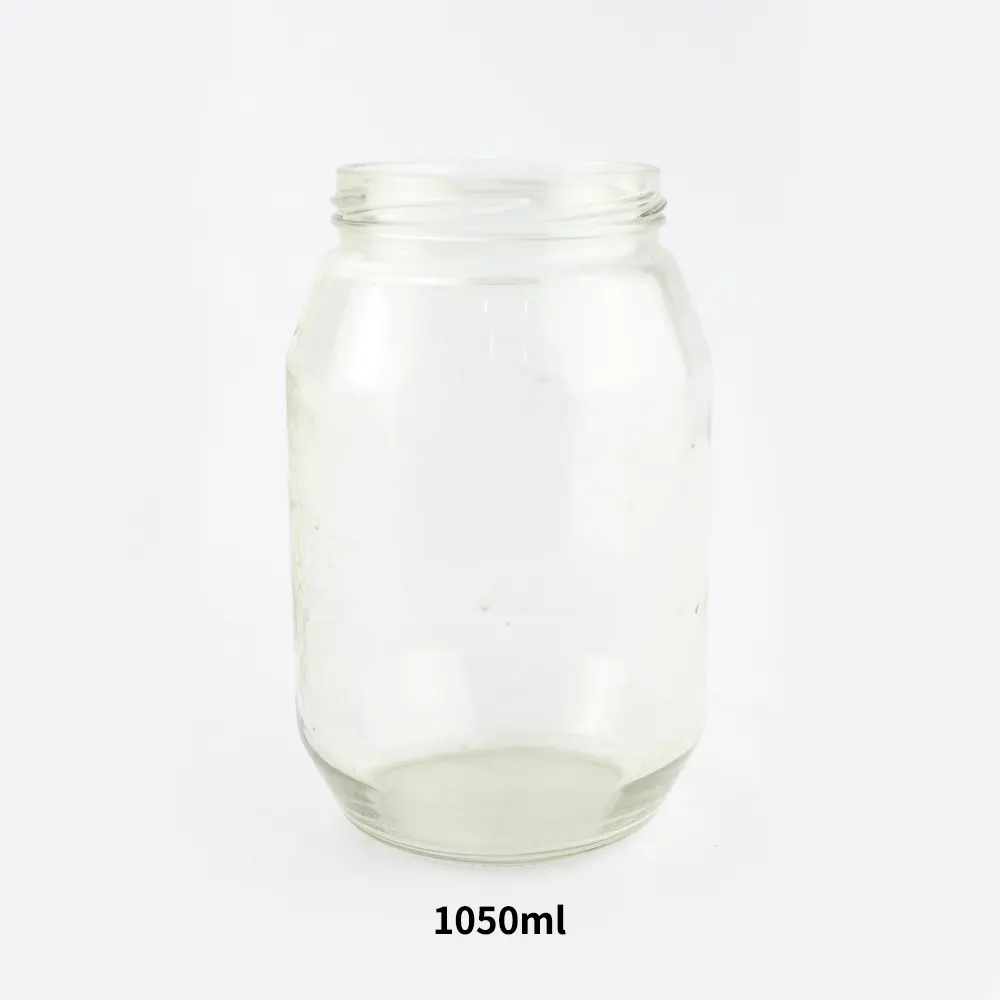
| Round apothecary, ball lid | 1.0 L | 100 mm | 185 mm | Glass stopper or 100mm CT cap |
| Straight-sided cylinder | 1.5 L | 110 mm | 210 mm | 110mm lug cap with plastisol liner |
| Square display jar | 2.0 L | 100 mm | 230 mm | Clamp lid with silicone gasket |
| Hexagonal jar | 0.75 L | 82 mm | 160 mm | 82mm twist-off cap |
| Large floor apothecary | 5.0 L | 150 mm | 340 mm | Glass stopper |
For white and pastel sweets, ask about iron content. Standard flint (clear) glass shows a faint green edge at the base, and on a thick-bottomed jar that tint can colour a pale product. Low-iron flint keeps colours true, so request the iron-oxide specification if colour fidelity matters to the brand.
Why glass, not acrylic or PET
Plastic bins cost less, but a season of scooping leaves them scratched, cloudy and holding odours. Soda-lime glass stays clear for years and wipes down with food-safe sanitiser. It also looks more valuable, which supports selling loose candy by weight.
Glass is chemically inert as well. Sour candies dusted with citric acid, high-fat pralines and hard candies flavoured with essential oils can sit in it without flavour scalping or stress cracking, both of which are documented in polycarbonate and some PET formulations.
Brands selling into retail gain a further benefit. A row of identical filled jars blocks the shelf and works like a billboard, an effect flexible pouches cannot give.
Decoration and label panels
Candy jars are usually branded in one of three ways: an acid-etched logo, ceramic screen printing, or a pressure-sensitive label. Ceramic print is dishwasher-safe, which organic inks are not.
Straight-sided and square jars carry a dedicated label panel 60-90mm high, and a panel engineered flat to ±0.3mm takes a pressure-sensitive label without wrinkling. Round apothecary jars take a wrap-around label or a hang tag. Send your label dimensions with the enquiry and we confirm panel flatness and recess depth on the drawing before production.
Packing, freight and what to send for a quote
Glass jars ship by volume, not weight, so shape affects landed cost. Cylinders and squares pack tightly on a pallet, while wide-shoulder apothecary profiles waste space. Ask for pallet patterns and carton dimensions with the quotation so your forwarder can price the freight before you commit.
Standard export packing is a 5-ply carton with egg-crate dividers, typically 12-24 pieces depending on jar size. Cartons are palletised to a height of 0.9-1.1m, shrink-wrapped and fitted with corner boards. ISTA 1A drop testing is the method used to verify the pack.
Minimum quantity and price are quoted per project and depend on the mould, the decoration, the quantity and the freight terms. A useful quote request states target capacity, mouth diameter, lid preference, quantity and destination port.
Frequently asked questions
Is glass safe in direct contact with candy?
Yes. Soda-lime glass is inert and non-porous and does not migrate into food. Buyers who need paperwork can ask for EU 10/2011 migration test reports and reference to FDA 21 CFR 174-186; the food-grade jar page lists the compliance documents usually requested.
Which lid keeps candy freshest on an open counter?
A ground-in glass stopper seals tightest for unwrapped sweets. In a high-traffic shop a metal lug or CT cap is the practical choice, and a clamp lid with a silicone gasket is best for gummies and other products that react to humidity.
What is the minimum order for glass candy jars?
It is set per project, according to the mould and the quantity per size.