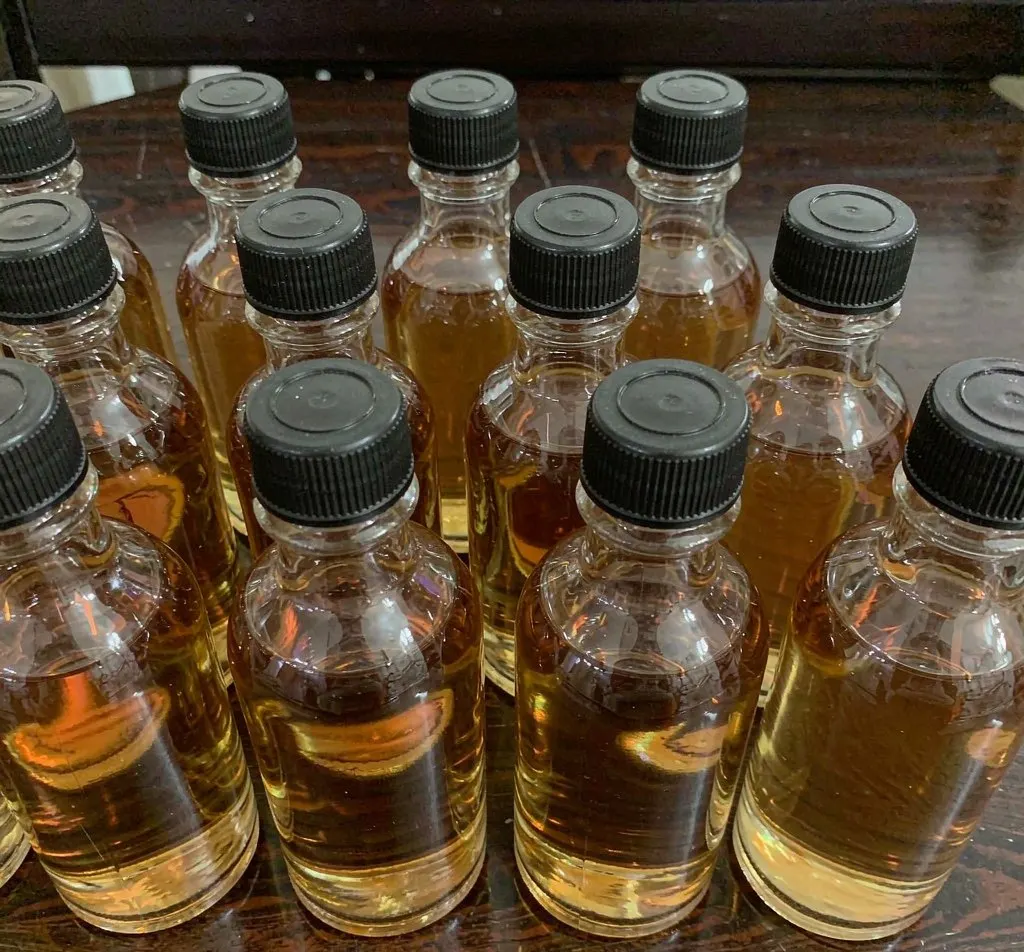
For a craft bitters brand scaling from farmer’s-market pours to national distribution, the weakest link in the supply chain is rarely the recipe. It is the closure. A dasher top that floods two milliliters instead of one turns a measured aromatic finish into a bitter, undrinkable wash, and at a volume of 8,000 to 12,000 bottles per production run the variance compounds into thousands of dollars of over-pour and inconsistent customer experience. Procurement teams at cocktail syrup manufacturers and bar-equipment distributors repeatedly report the same root cause: they sourced a glass bottle and a generic cap separately, and the orifice tolerance was never specified or validated against the liquid viscosity. The dash rate is a function of three engineered variables — sprinkle-hole diameter, internal insert geometry, and tilt angle — and none of those are controlled when the cap is treated as a commodity line item. This page is written for the buyer who owns that specification, not the one who hopes the catalog photo is accurate.
Bar consistency is the second pain point that drives bitters-bottle sourcing decisions. In a high-throughput cocktail program a bartender executes 120 to 180 builds per shift, and the bitters bottle is lifted between 300 and 600 times a night. If every dash delivers 0.8 ml ±0.15 ml, the tenth drink tastes like the first. If the orifice wanders between 0.4 ml and 1.4 ml, the bar loses recipe reproducibility, and the brand loses its signature. The engineering answer is a fixed-bore dasher insert with a controlled orifice — typically 1.2 mm, 1.5 mm, or 2.0 mm — paired with a vented metal shell so the liquid meters by gravity through a known aperture rather than by the operator’s wrist flick. We treat the dash volume as a toleranced spec, measured per cap lot, not as a happy accident of the molding process.
The third consideration is brand presentation at shelf and behind the bar. Glass weight, shoulder profile, and the precision of the embossed logo communicate price tier before the liquid is ever tasted. A procurement decision that optimizes only for landed cost per unit, ignoring the 1.7 oz woozy shoulder curve and the registration tolerance of a screen-printed label, can quietly erase the brand premium the marketing team spent a year building. The sections below specify the cap, the bottle, the decoration, the compliance, and the commercial terms so the buyer can evaluate our glass bitters bottles against any competitor on equal engineering ground.
Dasher Cap Engineering: Orifice, Dash Volume, and Sealed Closure
The dasher top is the defining functional component of a bitters bottle, and it is where most wholesale suppliers cut corners. A true dasher cap is a two-part assembly: a stamped aluminum or tinplate shell with an internal molded insert that defines the sprinkle orifice, and a liner or stopper that seals the bottle mouth. The external metal shell is what the customer sees and grips; the insert is what meters the liquid. We supply the shell and insert as a matched, lot-controlled set so the dash volume does not drift between production months.
Orifice diameter is the primary control variable. We tool three standard dasher inserts: a 1.2 mm micro-orifice for high-proof aromatic bitters where a single dash should read 0.4 to 0.6 ml, a 1.5 mm standard orifice delivering 0.6 to 0.9 ml per controlled tilt, and a 2.0 mm wide orifice for thicker syrup-based or citrus bitters where viscosity would otherwise choke a narrow bore. The measured dash volume is taken on a calibrated tilt of 45 degrees over a 1.5-second pour, using a liquid of 1.05 to 1.20 specific gravity — the typical range for 28 to 45 percent ABV bitters with glycerin or sugar loading. At 1.2 mm the measured average is 0.52 ml with a lot standard deviation under 0.06 ml; at 1.5 mm it is 0.78 ml with under 0.09 ml deviation; at 2.0 mm it is 1.05 ml with under 0.12 ml deviation.
Sealing the bottle mouth is the second function of the closure, and it is where the metal cap meets the glass finish. We offer two sealed configurations. The first pairs the dasher shell with a natural cork or synthetic stopper that seats into the bottle neck and carries a food-grade liner on the shell underside; this is the classic apothecary look favored by heritage bitters brands and it holds an internal pressure tolerance up to 0.5 bar from CO2 off-gassing in fermented or fruit-based bitters. The second configuration uses a foil-lined pulp or PE liner pre-mounted in the metal shell, giving a tamper-evident torque seal at 12 to 18 in-lb and a shelf life extension that supports 24-month ambient storage. For distillation-adjacent products such as those explored in our moonshine bottles range, the lined-seal option is the safer commercial choice because it resists alcohol vapor migration through natural cork.
Venting is the third engineered detail most catalogs omit. A dasher must breathe: as liquid leaves the bottle, air must enter through a secondary vent channel in the insert or a capillary gap at the neck, or the dash becomes a stutter of bubbles and uneven drops. We machine a 0.6 mm vent flute into the insert flank so the pour meters smoothly at any fill level from full to 8 percent remaining. Without that vent the last 15 percent of the bottle delivers roughly 30 percent less per tilt, which is precisely when a bartender is finishing a service rush and can least afford inconsistency.
Material of the shell matters for both aesthetics and corrosion. Our standard dasher shell is 0.21 mm tinplate steel with a clear or colored lacquer rated to 240 hours of salt-spray exposure, suitable for cold and humid back-bar environments. For citrus-forward bitters with high acid volatility we offer 0.23 mm aluminum with a food-contact epoxy interior coating that passes LFGB extraction at 40 degrees C for 10 days. Both shells accept a debossed brand initial or a printed lot code on the crown. The cap thread or crimp must match the bottle finish precisely, which is why we sell dasher caps only against our own bitters bottle neck standards of 18 mm-415 or 28 mm-400, never as a mix-and-match afterthought.
Bottle Shapes and Specification Table
The bitters bottle category splits into two silhouettes that buyers must choose between deliberately. The vintage embossed apothecary shape — rounded shoulder, tapered waist, rectangular or rounded-rectangle cross-section, often with a relief monogram — is the heritage profile associated with 19th-century medicinal tonics and reads as premium on a back bar. The woozy shape is the American standard: a slim, tapered 1.7 oz or 3.4 oz bottle with a long neck and a small 18 mm finish, originally a hot-sauce and bitters workhorse. Both are produced in the furnace line, but the tooling, MOQ, and per-unit cost differ, and the table below documents the production-validated numbers rather than catalog estimates.
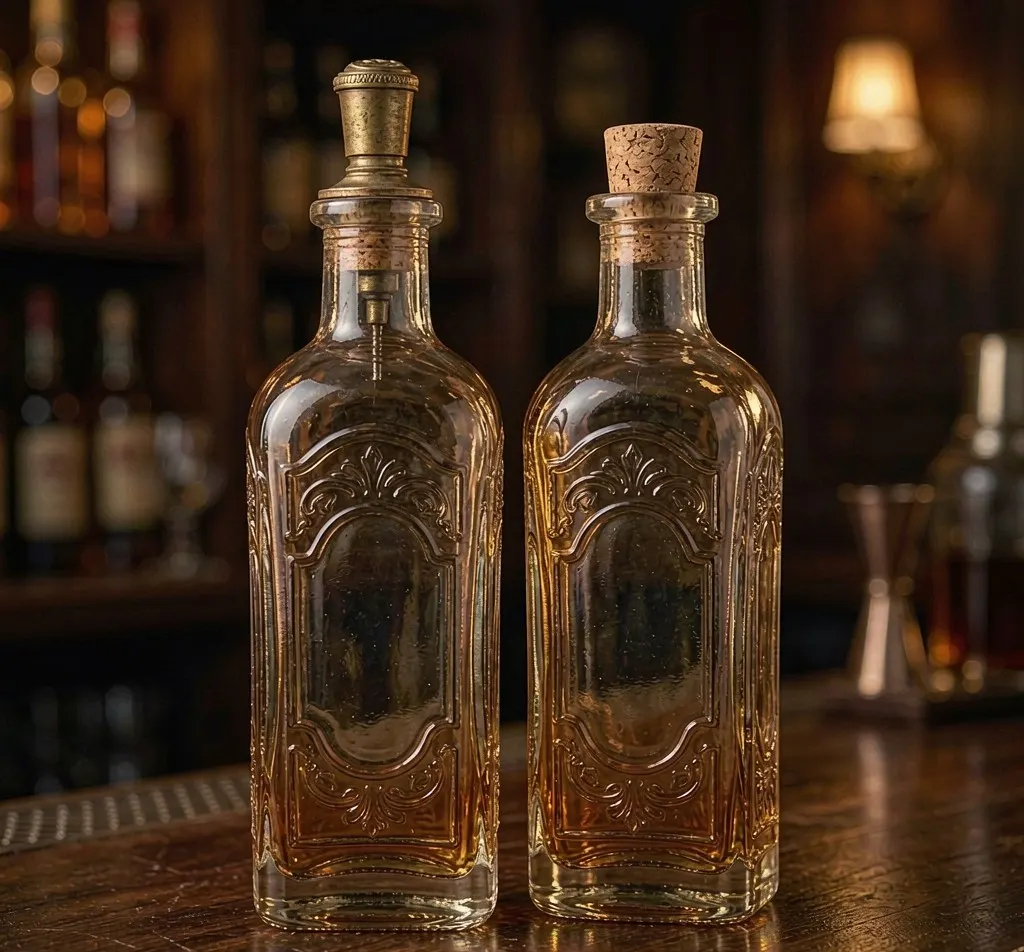
| Model | Capacity | Neck Finish | Height (mm) | Max Dia (mm) | Closure Type |
|---|---|---|---|---|---|
| WG-50 Woozy | 50 ml / 1.7 oz | 18 mm-415 | 112 | 33 | Dasher or CRC |
| WG-100 Woozy | 100 ml / 3.4 oz | 18 mm-415 | 142 | 41 | Dasher or CRC |
| AP-90 Vintage | 90 ml | 28 mm-400 | 148 | 52 | Dasher + cork |
| AP-130 Vintage | 130 ml | 28 mm-400 | 166 | 56 | Dasher + cork |
| AP-150 Vintage | 150 ml | 28 mm-400 | 182 | 58 | Dasher + cork |
| AP-90-FL Flat | 90 ml | 28 mm-400 | 150 | 48 (rect) | Dasher + cork |
Capacities of 90 ml, 130 ml, and 150 ml cover the three commercial bitters tiers. The 90 ml size is the classic retail bitters bottle — enough for roughly 110 to 180 dashes at our 0.52 ml standard and a comfortable 12 to 18 month sell-through for a specialty brand. The 130 ml size suits cocktail-syrup and amaro-style bitters with higher pour frequency, and the 150 ml size is the bar-pour and foodservice format that distributors buy by the pallet for back-of-house use. The 1.7 oz (50 ml) and 3.4 oz (100 ml) woozy sizes are the entry and mid retail formats, with the 1.7 oz preferred for gift sets and subscription boxes where shelf footprint and shipping weight dominate the landed-cost math.
Neck finish is the single most overlooked compatibility variable. The 18 mm-415 finish on the woozy line accepts our standard small dasher and a child-resistant closure where local regulation requires it; the 28 mm-400 finish on the vintage line seats the larger dasher shell and the cork-stopper assembly. A buyer who specifies “woozy with a 28 mm dasher” has a contradiction we cannot tool, and roughly one in six inbound RFQs contains exactly that mismatch. The stated heights carry a ±1.5 mm production tolerance and the diameters a ±0.8 mm tolerance, both measured cold at 20 degrees C. FOB reference prices are ex-works Qingdao or Ningbo and exclude decoration, cap, and carton; they are directional, not a quote, and move with soda-ash and cullet pricing by roughly 4 to 9 percent quarter to quarter.
Vintage Embossing and Brand Decoration Process
The embossed relief is what separates a vintage bitters bottle from a plain pharmaceutical vial, and it is produced at three different process depths depending on brand requirement. Shallow embossing at 0.15 to 0.30 mm raises a monogram or motif on the shoulder without affecting the label panel; mid embossing at 0.40 to 0.70 mm creates a tactile logo customers can read by touch in low bar light; deep relief at 0.80 to 1.20 mm is a full-panel motif used by heritage reissue brands where the glass itself is the billboard. All relief is cut into the mold steel, not applied after forming, so it survives every wash cycle and never rubs off — a durability advantage over sticker or printed marks that matters for bottles that return to the bar rail hundreds of times.
Surface decoration beyond embossing uses three controlled methods. Silk-screen printing lays 1 to 3 spot colors directly on the glass with a UV-cured ink rated to 200 dishwasher cycles and 48 hours in a 20 percent ethanol wipe without color loss; it is the economical choice for a single brand name and a batch code. Ceramic (decal) firing bakes a multi-color, photo-grade label into a 120 to 180 micron enamel layer at 580 to 620 degrees C, producing a finish that resists abrasion, acid, and commercial dishwashers for the product’s full life — this is the route for gift-set and premium retail bottles where the label must look identical on bottle 1 and bottle 50,000. Hot-stamp foil applies a metallic monogram on the shoulder or base for limited runs where a gold or copper mark signals the top tier; foil is less durable than fired enamel and is specified mainly for collectible and seasonal editions.
Label panel geometry is an engineering constraint that buyers under-specify. A screen or decal must register within ±0.5 mm of the panel centerline or the artwork drifts off the flat and wraps onto the curve, where ink film thins and adhesion drops. For brands using pressure-sensitive paper or synthetic labels from a third-party printer, we supply the panel flatness tolerance of 0.10 mm over the panel so the converter can predict adhesion without a pilot run. Coordination between embossed relief and printed art is handled at tooling sign-off: a deep monogram on the shoulder is positioned at least 12 mm above the label panel so the two decoration systems never collide.
Color of the glass itself is a specification, not a default. Flint (clear) glass maximizes label and liquid visibility and is the standard for citrus and aromatic bitters where color is part of the brand. Amber and cobalt volumes are produced in campaigns and carry a 15 to 25 percent per-unit premium plus a 2,000 to 4,000 piece campaign minimum because the furnace must be purged between colors. We do not recommend green or smoke tints for bitters because they suppress the visual cue of the dash and read as hot-sauce or spirits packaging; the shape-language difference is discussed further against our hot sauce bottles bulk line, which shares the woozy silhouette but is rarely embossed or dasher-clad.
Channel Scenarios: Bitters Brands, Syrups, Distributors, Gift Sets
The bitters brand is the primary buyer and the most demanding, because the bottle is the product’s face. For an established brand at 60,000 to 200,000 units annually, the 150 ml vintage for foodservice plus the 90 ml for retail, both on the same 28 mm-400 dasher platform, gives line consolidation: one cap, one cork, two bottle molds, simplified QC. The dasher orifice is held constant across both so the brand’s dash signature does not change between formats.
Cocktail syrup and shrub manufacturers are a fast-growing bitters-adjacent channel. These products are thicker than alcohol bitters — specific gravity 1.15 to 1.35 versus 1.05 to 1.20 — so the 2.0 mm wide-orifice dasher is specified to prevent clogging, and a synthetic stopper replaces cork because sugar loading accelerates cork taint. The 100 ml woozy is the dominant syrup size because its slim profile fits a speed rail and its 18 mm finish accepts our small dasher and a measured-pour disk. We coordinate the closure torque to 14 to 16 in-lb so the syrup does not weep at the liner under repeated warming and cooling in a bar environment.
Bar-equipment and bar-supply distributors buy for resale into venues, and their priority is mix-and-match compatibility. A distributor stocking our 1.7 oz and 3.4 oz woozy bitters bottles alongside branded jiggers and pourers wants a closure that interoperates with the rest of the category. Our 18 mm-415 dasher is dimensionally matched to the common woozy closure standard, so a distributor can offer dasher tops, shrink bands, and tamper rings as add-ons without carrying a second cap spec.
Gift sets and subscription boxes are the margin channel. A 1.7 oz woozy trio in a printed carton ships lighter and breaks less than a 90 ml vintage trio, which is why e-commerce bitters clubs standardize on the 50 ml size. For these programs we offer a coordinated base-emboss code and a foil monogram so the three bottles read as a set, plus a hang-hole option in the carton-ready shipper. The decoration is usually ceramic-fired enamel because the set is photographed for a product page where label consistency is visible at 2000 pixels. Note that the 1.7 oz woozy glass weight is 62 to 70 grams versus 138 to 165 grams for the 90 ml vintage, a difference that flows directly into per-unit freight and damage rate on a 12-bottle master.
Buyers comparing our bitters bottles to small spirits formats should review our shot bottles and 50ml liquor bottles wholesale references. The critical distinction is closure and neck: spirits miniatures use a 18 mm or 28 mm screw or a cork for pour-and-sip, not a metered dasher, and their fill is consumed in one or a few pours rather than dosed drop by drop across months. A 50 ml liquor bottle has no orifice metering and no need for a vented insert; specifying the wrong closure line is the most common cause of a bitters launch delay we see in inbound requests.
Glass Composition and Food-Contact Compliance
All bitters bottles we supply are soda-lime glass composed of silica sand, soda ash, limestone, and cullet, with lead content held below 0.01 percent by weight — effectively lead-free and compliant with both U.S. and EU limits for food-contact glass. We do not use lead crystal or lead-based colorants in any food line. The glass is a Type III container glass per pharmacopeia classification, suitable for aqueous, alcoholic, and mildly acidic contents up to pH 3.0, which covers the full bitters and syrup range. For products below pH 3.0 (high-citrus or vinegar shrubs) we validate leachables per lot because acidic formulations accelerate alkali extraction from the glass surface; in practice the extraction stays under the 20 mg/dm2 limit at our wall thickness of 2.0 to 2.8 mm.
Food-contact compliance is documented, not asserted. Every production lot ships with a certificate of compliance referencing FDA 21 CFR 175.300 for the closure linings and resins, and for EU-bound shipments an LFGB Section 30 and 31 declaration for the glass and any enamel or ink. The dasher shell interior coating, where used, is verified against FDA food-contact extraction at 49 degrees C for 10 days and against LFGB at 40 degrees C for 10 days, with specific migration of heavy metals held under the respective limits (lead under 0.5 mg/kg, cadmium under 0.1 mg/kg in the LFGB simulant). We maintain a retained sample of every mold and every enamel frit so a compliance trace can be reconstructed for up to 36 months after shipment.
Alcohol compatibility is specifically tested because bitters are 28 to 45 percent ABV. The glass itself is inert to ethanol, but the closure liner and the cork or synthetic stopper are not. Our standard food-grade PE and pulp liners show less than 0.3 percent weight change after 60 days immersion in 40 percent ethanol at 23 degrees C, and the synthetic stopper compound is selected for low swell. Natural cork, where specified for the heritage look, is steam-sterilized and graded to a TCA-free standard with a lot sensory check, because a tainted cork in a 12,000-bottle run is a recall-scale event. We advise brands shipping to hot climates to choose the synthetic stopper or the lined-seal shell, since natural cork can dry and shrink at sustained 30-plus degrees C warehouse temperatures, raising leakage risk above 0.5 percent.
Recyclability and cullet are part of the compliance story for brands with ESG commitments. Our flint and amber glass is 100 percent recyclable and produced with 25 to 40 percent cullet content depending on color campaign, lowering the per-bottle embedded energy relative to virgin-melt glass. We provide a material data sheet per shipment that documents cullet percentage and heavy-metal screening so a brand’s sustainability report can cite primary data rather than category averages. This documentation is included in the same dossier as the FDA and LFGB declarations referenced above.
Wholesale Terms, MOQ, and Lead Time
Commercial terms are standardized to reduce negotiation overhead for repeat buyers. Rush campaigns at 18 to 22 days are possible on woozy flint at a 12 percent premium when furnace capacity allows, but are not quoted on custom-color or deep-emboss tooling.
Pricing is FOB Qingdao or Ningbo and quoted per confirmed specification, not per catalog line.
Sampling precedes every production campaign. We do not begin a 12,000-piece run on a new emboss until the signed sample approval is in hand, because rework of embossed glass is not economically viable — the only correction is remelt. Production samples from the first off-tool run are retained for the duration of the order as the accept standard for the remaining lot.
Packaging and freight inputs are specified at order. Bottles are packed in partitioned cartons of 24, 36, or 48 units depending on size, with a master of 4 cartons on a stretch-wrapped pallet at 1.0 by 1.2 meters, 1,200 to 1,800 bottles per pallet for the woozy line and 600 to 900 for the vintage line. Palletized density drives the freight number more than bottle count: a 20-foot container holds roughly 38,000 woozy units or 22,000 vintage units under standard loading. We provide carton dimensions and weights in the quote so the buyer’s freight forwarder can confirm cube before booking, and we consolidate with other lines from our food glass packaging hub when a mixed shipment lowers the per-unit land cost.
Supplier Evaluation: What to Verify Before You Commit
Selecting a bitters-bottle supplier should be a technical audit, not a price auction. The first check is furnace and mold ownership: a supplier that brokers glass from a third furnace cannot hold emboss tolerance or color campaign dates because they do not control the melt. The second check is closure integration — confirm the supplier sells the dasher cap and insert as a validated pair against the bottle neck finish, because a separated supply chain is where dash-volume drift originates.
The third check is the inspection report content. A compliant bitters-bottle lot report should list orifice diameter per cap lot, measured dash volume at the standard tilt, neck-finish gauge, wall thickness at shoulder and base, and thermal-shock pass rate. If a supplier’s report stops at “visual inspection passed,” the functional specs are unverified. The fourth check is compliance documentation turnaround: FDA and LFGB declarations should arrive with the shipment, not on request weeks later, because a distributor cannot clear customs or list with a retailer without them.
The fifth check is decoration control. Emboss depth, screen registration, and enamel firing temperature are process parameters that must be recorded per campaign, not per sample. Logging furnace zone temperature, ink lot, and registration offset for every decoration run, tied to the lot number on the carton, lets a label-adhesion complaint six months later be traced to a specific enamel batch. A buyer should require that traceability as a contract condition. Finally, evaluate communication latency and engineering responsiveness: a supplier who cannot answer an orifice-tolerance question in writing within two business days will not support a launch that slips.
Frequently Asked Questions
What dasher orifice size should I specify for a 40 percent ABV aromatic bitters?
For a 40 percent ABV aromatic bitters with specific gravity near 1.08, the 1.5 mm standard orifice is the default, delivering 0.6 to 0.9 ml per controlled 45-degree tilt. If your recipe is high-proof and you want a tighter, more precise dose closer to 0.5 ml, specify the 1.2 mm micro-orifice. If your bitters carries fruit pulp or sugar loading above 1.20 specific gravity, move up to the 2.0 mm wide orifice to prevent clogging. The choice is driven by viscosity and your target dash volume, both of which we validate on a pre-production sample using your actual liquid.
Can I use a woozy hot-sauce bottle with a dasher cap for bitters?
The 1.7 oz and 3.4 oz woozy silhouette is shared between hot sauce and bitters, and the 18 mm-415 neck finish accepts a dasher cap, so the glass shape is compatible. The difference is in closure and decoration: hot-sauce woozies are typically sold with a tamper band and a pour orifice, not a metered dasher insert, and they are rarely embossed. If you buy a plain woozy from a hot-sauce bottles bulk line you must separately source and validate the dasher insert, which is exactly the separated supply chain we advise against. Buying the woozy and the matched dasher from one supplier keeps the dash volume toleranced per lot.
What is the minimum order quantity for an embossed vintage bitters bottle?
Minimum quantities are quoted per project, because they depend on the mould and the line it runs on.
How do you guarantee bar consistency across a 50,000-bottle run?
Consistency comes from treating dash volume as a toleranced spec rather than a molding outcome. We tool three fixed orifice inserts (1.2, 1.5, 2.0 mm), machine a 0.6 mm vent flute into each insert so the pour meters evenly from full to 8 percent remaining, and ship a lot inspection report with measured average dash volume and standard deviation — under 0.06 ml at 1.2 mm, under 0.09 ml at 1.5 mm, under 0.12 ml at 2.0 mm. The cap and insert are a matched, lot-controlled set, and the neck finish on the bottle is gauged to accept that exact closure, so the variance does not drift between production months.
Are your bitters bottles compliant with U.S. and EU food-contact rules?
Yes. The glass is lead-free soda-lime (lead under 0.01 percent by weight) and suitable for aqueous, alcoholic, and mildly acidic contents down to pH 3.0. Every lot ships with an FDA 21 CFR 175.300 declaration for closures and resins and, for EU shipments, an LFGB Sections 30 and 31 declaration for glass and decoration, with heavy-metal migration held under LFGB limits (lead under 0.5 mg/kg, cadmium under 0.1 mg/kg in simulant). Closure liners and any synthetic stopper are tested for ethanol compatibility at 40 percent ABV for 60 days. Natural cork, where specified, is TCA-free graded with a lot sensory check.
What lead time should I plan for a custom-embossed, decorated launch?
Lead times are quoted per project, once the mould, decoration and line schedule are confirmed.
How do bitters bottles differ from mini liquor and shot bottles?
The functional difference is the closure and the dosing intent. Bitters bottles use a metered dasher with a fixed orifice and a vented insert so a single dash is 0.5 to 1.0 ml, delivered consistently across hundreds of pours. Mini liquor and shot bottles are filled once and consumed in one or a few servings, so they use a screw cap, a cork, or a simple pourer with no orifice metering and no vent flute. Neck finishes may look similar (18 mm or 28 mm) but the closure line is not interchangeable, and specifying a spirits closure on a bitters bottle loses the dose control that defines the category. Review our 50ml liquor bottles wholesale and shot bottles pages for the spirits-side specifications.
What closure should I choose for a high-citrus, low-pH shrub bitters?
For a shrub or high-citrus bitters below pH 3.0, we validate glass leachables per lot but the bigger risk is the closure. Choose the lined-seal metal shell with a food-grade PE or pulp liner and a synthetic stopper rather than natural cork, because sugar and acid loading accelerate cork taint and natural cork can dry and shrink above 30 degrees C, raising leakage past 0.5 percent. Specify the 2.0 mm wide orifice dasher so the thicker liquid meters without clogging, and set closure torque to 14 to 16 in-lb to prevent weeping at the liner under bar-temperature cycling.