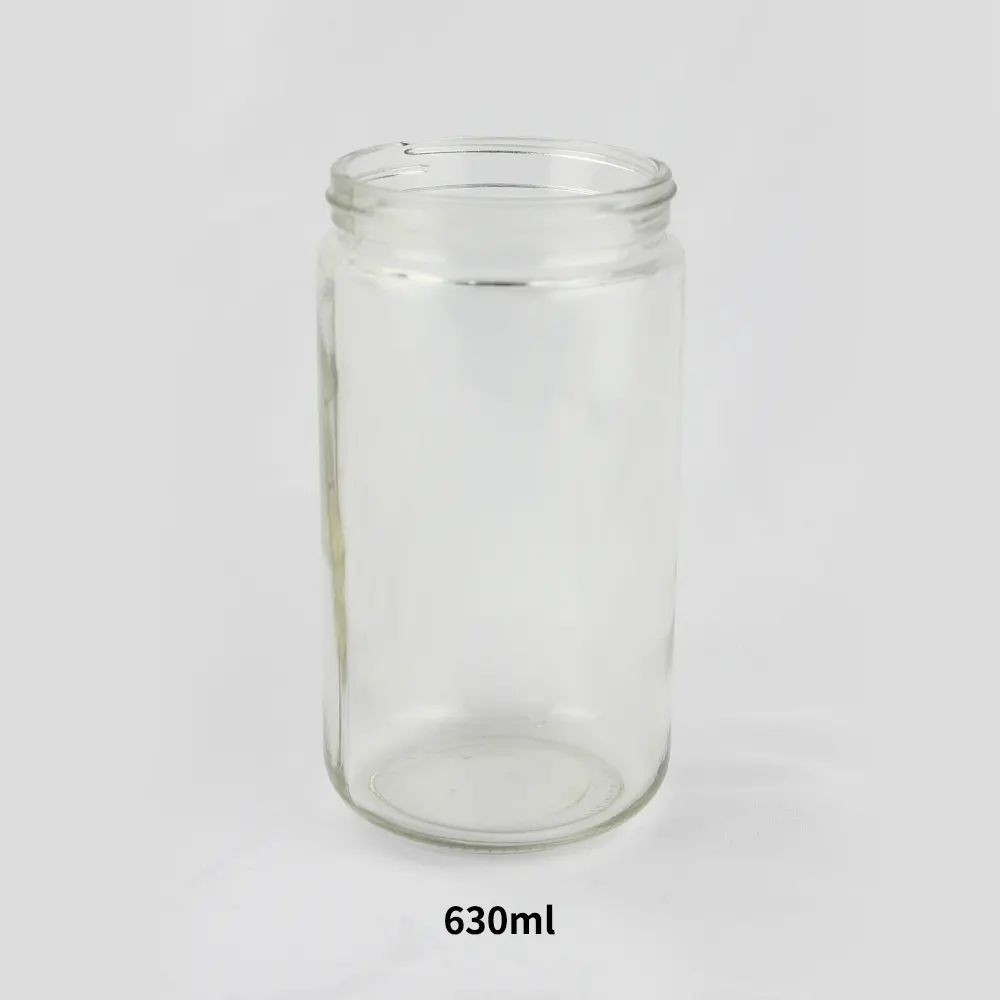
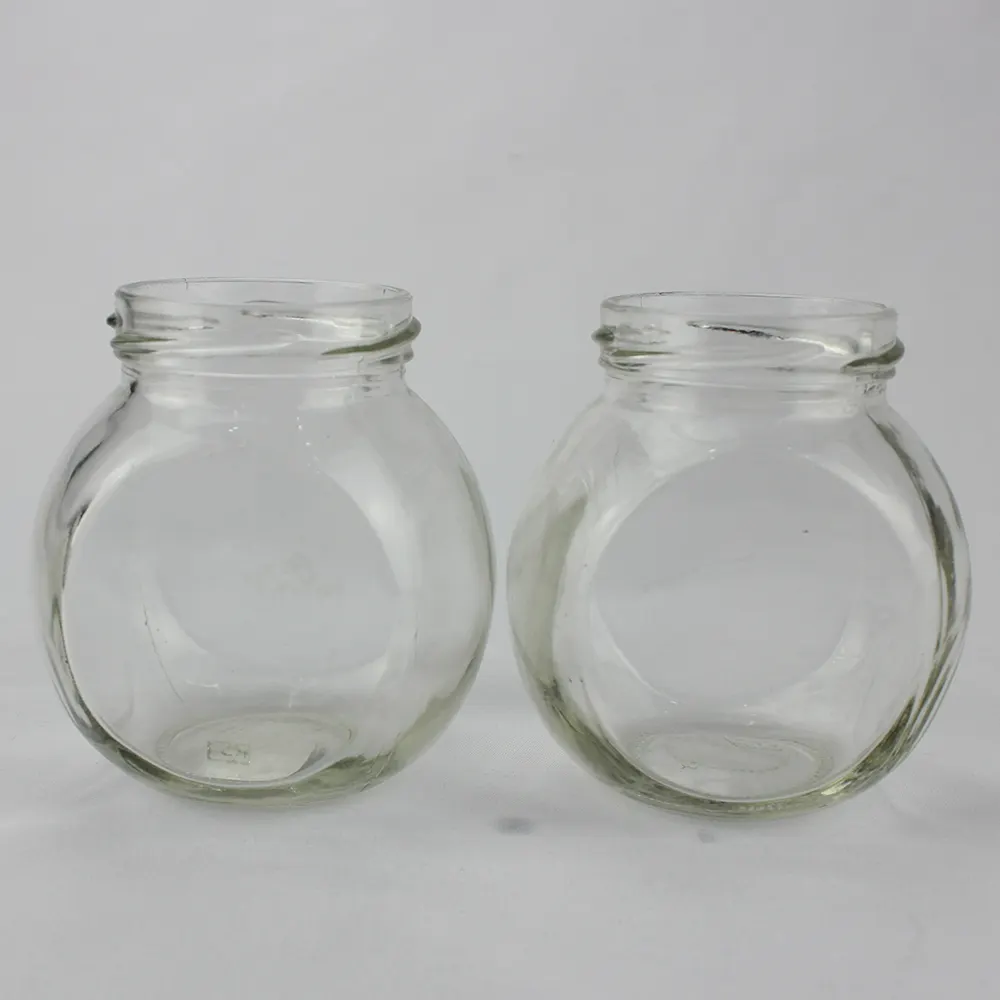
Part of our wholesale glass jars range; the stock moulds are pictured at the end of this guide.
A glass-lidded jar seals in one of two ways, and the choice decides what you can put in it. A clamp-top, where a wire bail presses the lid onto a gasket, is hermetic and suits food storage, refill retail and preserving. A ground-glass stopper seals by surface contact alone, so it belongs on dry products that are handled gently: display canisters, bath salts, candles and gift candy. Putting a stopper jar on liquids, carbonated products or parcel shipping is the most common mistake buyers make in this category.
Clamp-top and ground stopper compared
| Attribute | Clamp-top (wire bail) | Ground-glass stopper |
|---|---|---|
| How it seals | Flat or slightly domed glass lid pressed onto a gasket at the rim by a wire assembly | Conical glass plug ground to match a ground neck, with no gasket and no wire |
| Airtight | Yes, hermetic | No, a friction fit only |
| Suitable contents | Dry goods, coffee, pantry staples, home preserves | Dry products only |
| Typical channels | Zero-waste and refill retail, food storage, gifting | Gift lines, display, bath and candle vessels |
| Standard capacities | 125ml up to 2,000ml | 100ml to 1,000ml |
| Parcel shipping | Works with a proper export carton | Needs individual secondary packaging |
Stopper jars stop at smaller sizes for a mechanical reason: a large friction-fit stopper works loose under its own weight. The same weakness shows up in parcel transit, so a stopper jar sold direct to consumers should be costed with gift-box style packaging from the start.
Tolerances that make a clamp-top seal
Three parts have to stay in tolerance with one another: the jar rim, the pressed-glass lid and the wire-and-gasket hardware.
Rim and lid
Two rim dimensions carry the seal. Outer diameter positions the wire hooks, and flatness determines whether the gasket is squeezed evenly all the way round. Standard wire-bail jars hold rim OD to about ±0.8mm and flatness within 0.5mm. Go looser and the lid rocks. Go tighter and the mould becomes more expensive with nothing the consumer would notice. The lid is usually 4–6mm thick and has a dimple in the centre where the top wire sits.
Lids and jars are specified as a matched set from a single supplier, made in one campaign under one gauge control. Combining one vendor's lids with another's jars is the usual source of clamps that feel slack and seals that leak in the field.
Wire and clamp force
Stainless wire lasts longer than galvanized in damp kitchens and dishwashers. If the brand promises lifetime reuse, write 304 stainless into the specification. The geometry of the wire sets the clamping force, so the user cannot under-tighten it: a well-made jar applies roughly 15–25N of downward force on the lid across the usual 60–100mm rim range.
For batch release on clamp-top orders we ask for a vacuum-hold test on filled jars at 0.6 bar for 60 seconds, with no stream of bubbles at the gasket line. Our range of glass jars with lids shows clamp-top, screw and push-lid versions on shared jar bodies, which helps when one storage programme needs several closures.
Gasket material and spare-part planning
The glass outlives the gasket by a wide margin. Natural rubber dries out, cracks and loses its compression set after roughly two to four years in a kitchen, sooner with dishwasher heat or oily contents. A brand that sells these jars with no plan for replacements will hear about it later.
Natural rubber is the traditional, biodegradable option. Silicone costs more, but it withstands dishwashers indefinitely and does not swell in contact with oil, so it is the better choice for coffee, nuts and infused oils. Name the material in the specification. A purchase order that says only "rubber ring" invites the cheapest compound on offer.
Spare gaskets are light and are packed in polybags of ten, which makes them easy to run as a consumable line:
- list replacement gaskets as their own SKU
- put one spare in gift sets
- print the gasket size code on the base of the jar so reorders are unambiguous
- agree a standing gasket supply at the same time as the jar order
Sizes are normally coded by rim diameter, such as 60mm, 80mm and 100mm, and are interchangeable across most European-style tooling. Cross-section thickness still has to be confirmed, because a 2.5mm gasket in a groove cut for 3mm seals badly from the first day.
Capacities and range planning
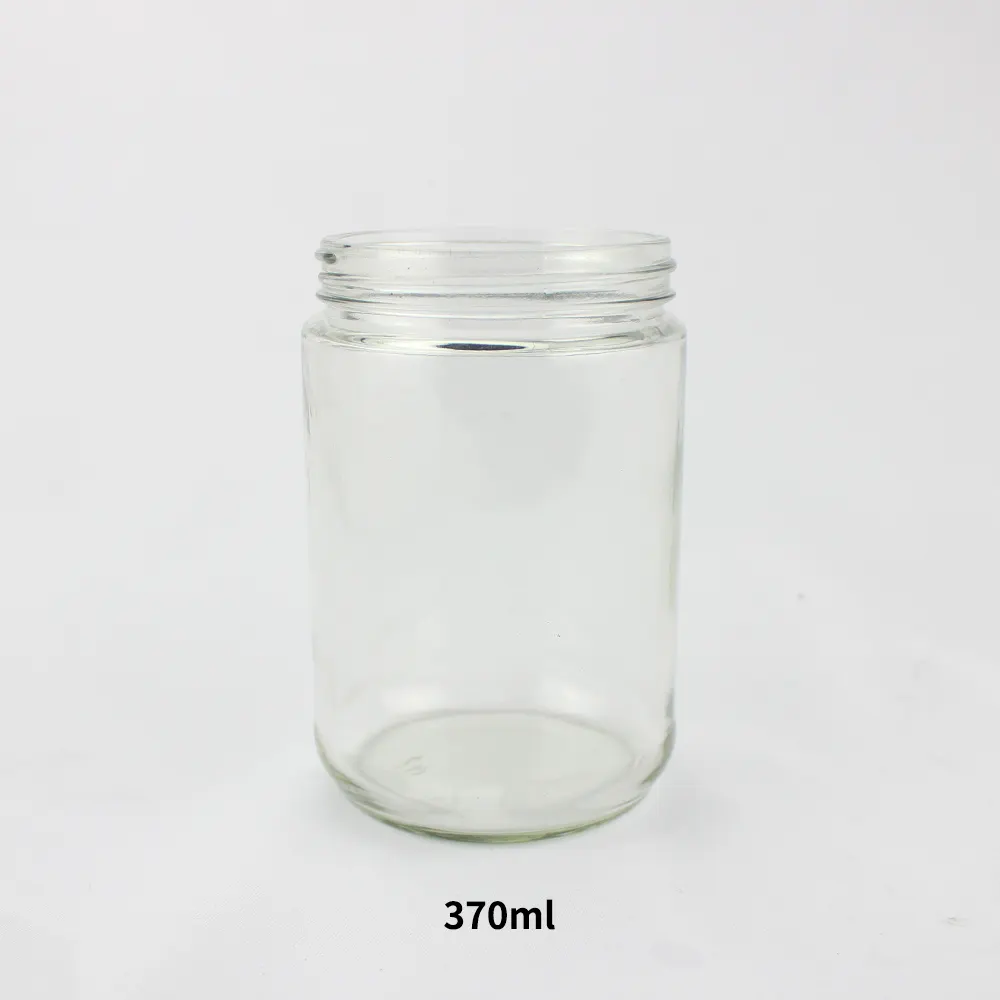
Standard clamp-top tooling comes in eight sizes: 125ml, 250ml, 350ml, 500ml, 750ml, 1,000ml, 1,500ml and 2,000ml. The 500ml and 1,000ml jars account for most food-storage volume. A sensible retail range takes three to five of these and keeps the rim diameter the same on at least two, so a single gasket size fits jars of different heights.
Open-tooling sizes are listed in the wholesale glass jar catalogue. A shape of your own goes through custom jar development, compliance paperwork is explained under food-grade glass jars, and the closure guide weighs clamp-top against the other closure types.
What refill retail and gift programmes each need
Refill stores and bulk-food retailers want jars that survive thousands of openings, read clearly on a shelf and make the plastic-free message obvious, which an all-glass closure does literally. They buy mid-range sizes from 500ml to 1,500ml in steady repeat orders, pay close attention to gasket availability and spare-part logistics, and increasingly ask about recycled-content glass. Consistent rim gauges matter more to them than decoration.
Gift and seasonal buyers take the same jars for different reasons. A 350ml clamp-top filled with layered cookie mix, bath salts or loose tea and finished with a ribbon and hang tag sells every Q4. These programmes run as limited editions with heavy decoration, including decal or screen print on the lid as well as the body, and they need retail-ready packaging. Delivery date matters most here, since a seasonal jar that arrives after the selling window has no value. Quantities and timing are quoted per project and depend on tooling, decoration and freight terms.
Hermetic alternatives for either channel are set out on our airtight glass jar page, and hexagon jars are worth a look when the range needs a more distinctive outline.
Case pack, pallet and freight
All-glass closures ship less efficiently than screw-cap jars, and the difference should be modelled before a price point is fixed. Lids cannot be nested in filled jars, so they are interleaved with cardboard dividers, and the clamp wires take up space as well.
- A 1,000ml clamp-top typically packs 12 per case, at around 0.045–0.055 cubic meters per case.
- That is roughly 20–30% less freight-efficient than an equivalent twist-off jar.
- Export pallets usually carry 1,200–1,800 jars, depending on size.
- The same 1,000ml jar with lid and hardware weighs 750–900 grams.
At that weight, full-container sea freight is the only practical mode for volume orders. Include a drop test of the export carton in the pre-shipment protocol: 1.2m, six drops, covering corner, edge and face.
FAQ
How long does a clamp-top gasket last?
Natural rubber generally gives two to four years of normal kitchen use, and less if it is washed by machine often or holds oily food. Silicone lasts considerably longer.
What minimum order applies to glass-lidded jars?
Minimums are quoted per project. They depend on whether the jar is an open-tooling size or a new mould, and on decoration and quantity per design.
Can clamp-top jars be shipped to e-commerce customers?
Yes, in a properly designed carton with dividers between the lids, validated by the drop test described above. Stopper jars need individual secondary packaging before they go into the parcel network.