One of our guides on wholesale canning jars; start there for the overview.
A mason jar vacuum sealer draws air out of the headspace so that outside air pressure clamps the flat lid onto the rim. It is a dry-storage method that slows oxidation; it kills no microorganisms and does not replace canning. For dry goods it typically stretches shelf life several times over, provided the jar has a flat, chip-free rim and a true 70-450 or 86-400 finish that the sealer adapter can seat on.
How the vacuum seal forms
A jar vacuum system has three parts: a vacuum source, a bell-shaped attachment that sits over the flat lid, and the closure. The source can be a countertop external-vacuum machine of the FoodSaver type, a handheld battery pump or a hand pump. The attachment links to it by hose or by docking directly.
While the pump runs, air leaves past the edge of the lid, and headspace pressure typically drops to 50–80 kPa below atmospheric. When the cycle ends, ambient pressure pushes the sealing compound onto the rim and the lid locks. The threaded band is optional from then on, and many users take it off. That puts more weight on the flat lid and its compound than conventional canning does.
Since nothing is sterilised, the method suits low-moisture foods, where the threats are oxidation, rancidity and insects, not bacteria. This matters for product liability and for how a jar-and-sealer bundle is described on the pack.
Shelf life with and without vacuum
Oxygen attacks fats, pigments and volatile aromatics, and taking most of it away slows staling. The periods below are typical for a dark pantry at 18–22°C and draw on extension-service guidance and industry testing.
| Food | Ordinary jar or original bag | Vacuum-sealed mason jar |
|---|---|---|
| Roasted coffee beans | 2–4 weeks before staling shows | 6–9 months |
| Nuts and seeds | 1–3 months before rancidity | 9–12 months |
| White rice and grains | 1–2 years | 3–5 years |
| Dehydrated fruit | 6–12 months | 18–24 months |
| Powdered milk, protein powder | 3–6 months after opening | 12–18 months |
| Dried herbs and spices | 6–12 months of full aroma | 2–3 years |
| Flour | 6–8 months | 1–2 years |
Two limits should appear in any marketing copy. Moist foods, fresh produce and anything that needs sterility still require heat processing in jars made for canning. And oily whole grains such as brown rice and whole-wheat flour gain less than refined products, because their fats oxidise anyway; refrigeration still helps them. Brands that say so plainly see better reviews and fewer returns.
Regular-mouth and wide-mouth compatibility
North American mason jars use two finishes: regular mouth with a 70mm thread diameter and wide mouth at 86mm. Each sealer attachment fits one of them, and most retail kits pack both adapters.
| Attribute | Regular mouth (70mm) | Wide mouth (86mm) |
|---|---|---|
| Attachment | Small bell adapter | Large bell adapter |
| Common sizes | 4oz, 8oz, 16oz, 32oz | 8oz, 16oz, 32oz, 64oz |
| Typical contents | Spices, coffee, powders | Bulk dry goods, whole fruit, dehydrated meals |
| Time to reach vacuum | Quicker, with less headspace to empty | A little longer per cycle |
| Retail trend | Stable | Growing faster |
For the buyer, the point is that jars must carry genuine 70-450 or 86-400 continuous-thread finishes. Near-standard threads from plants that do not specialise in this jar often leave the adapter sitting badly, and that misfit is a leading cause of one-star reviews on sealer bundles.
Wide mouth currently outsells regular mouth in vacuum-storage sets, because a hand or a measuring scoop fits inside and whole items can be stored.
Countertop machines, handheld pumps and hand pumps
Three kinds of sealer share the market, and all of them use the same jars and lids.
- Countertop electric machines with a hose port. The user seats the lid, places the bell, connects the hose and presses the accessory or canister button. A cycle lasts 30–60 seconds and gives the deepest, most repeatable vacuum. These suit committed preservers and small-batch food businesses and sit at the top of a kit range.
- Handheld electric pumps. Cordless and rechargeable, they dock onto a matching bell cap and finish in 20–40 seconds. This is the growing segment; the small size makes them natural gift items and bundle partners for jar multi-packs.
- Manual pumps. Piston or squeeze designs need 15–30 strokes. They serve budget and off-grid buyers and still sell through RV, camping and emergency-prep channels.
Whichever sealer a shopper buys, that shopper comes back for jars and lids. A retailer who carries one well-reviewed sealer next to three or four jar sizes earns repeat business that a pure appliance seller does not.
Jar specifications that decide whether vacuum holds
Four points separate a jar that keeps vacuum from one that leaks.
- Rim flatness and finish quality. The sealing land is the top surface the lid compound touches. It has to be flat within a tight tolerance, with no chips, no ridge at the mould parting line and no waviness. Flaws that pass a visual check can still leak under sustained vacuum. The dimensional tolerances involved are set out on our mason jar size and specification page.
- Glass strength. The pressure difference across the headspace is permanent, so annealing and even wall thickness matter. A poorly annealed jar can fail weeks after sealing. Consumers blame the sealer, but the defect is in the glass.
- Finish standard. Require true 70-450 / 86-400 thread geometry, verified with go/no-go gauges.
- Lid compound. Plastisol-lined two-piece lids formulated to retain vacuum outperform dry-gasket types. Plastisol ages, so lid stock needs rotating.
A source that already handles airtight jar programmes will gauge finishes and test lid compounds as routine. Ask to see the data.
Sizes, lids and kit configuration
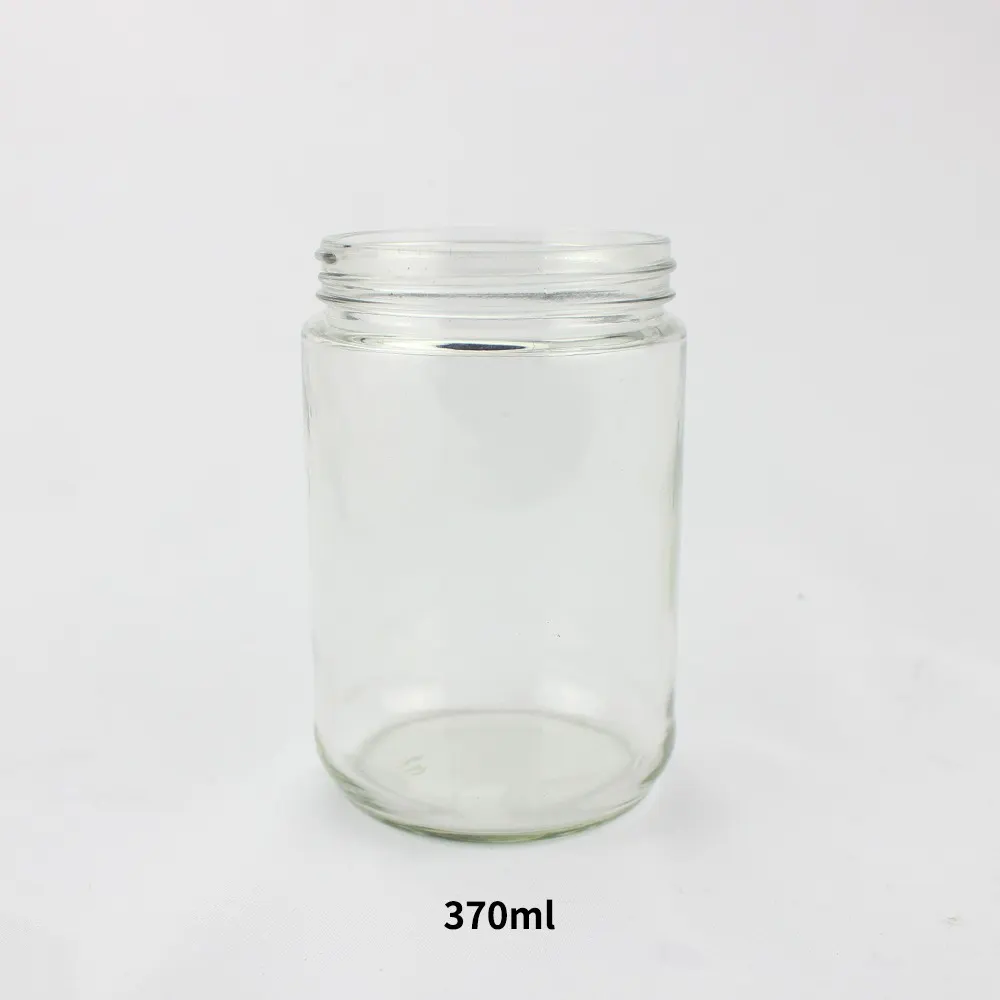
The 16 oz and 32 oz jars move fastest in sealer bundles, with 64 oz as the bulk-storage step up. Two-piece lids, meaning flats and bands, are normally quoted apart from the jars. For the 16 oz size, plan lid orders at 1.5–2 times the jar quantity. Small jars are resealed most often, and in practice a flat is good for a single vacuum.
Refill packs of lids are an add-on few sellers exploit. Case packs deserve a question too: retail-ready 4-packs and 6-packs in printed sleeves save repacking at a 3PL. Between a light jar and a heavy-wall one, the heavier usually earns better reviews for vacuum use, because it feels substantial and holds vacuum more dependably.
Decoration for private-label vacuum jars
Generic glass dominates this category, so decoration is how a private-label line stands apart. The usual tools are measurement scales and logos embossed in the mould, screen-printed fill lines and silicone colour bands. A custom mason jar project can also give a straight-sided or square-shouldered profile, which nests more tightly in a drawer than the classic shouldered jar and is a real improvement for pantry use.
Decoration must survive the dishwasher. Ceramic-frit printing and fired decals outlast organic inks. The same jars also serve water-bath canning, so a single catalogue can be shown to retail buyers with vacuum storage as the lead use.
Vacuum-hold testing before a lot is accepted
A jar either holds vacuum or it does not, so a visual inspection is not enough. A workable protocol:
- Draw 32 jars at random from the lot.
- Seal them with a reference sealer to a measured vacuum level.
- Accept the lot if at least 31 hold for 72 hours with less than 10 percent decay.
Add rim-flatness gauging, a lid-compound check and thermal-shock sampling, since these jars will see refrigerators and the occasional warm fill. Put the acceptance criteria in the purchase specification so that a failed lot leaves no room for argument.
Frequently asked questions
Does one sealer work on both regular-mouth and wide-mouth jars?
Yes, with the right adapter fitted. Most kits supply one for each finish.
How long does food keep in a vacuum-sealed mason jar?
Dry goods last roughly three to five times as long as in ordinary storage, as the table above shows for coffee, nuts, rice and herbs. Those figures assume a dark pantry.
Can liquids or wet foods be vacuum sealed in a jar?
Only for short storage in the refrigerator, where marinated vegetables or an opened sauce keep noticeably longer. Shelf-stable wet food always needs thermal processing, by water bath or pressure canner. Jars for that route should be cleaned first as described in our guide to sterilising mason jars.
Which sizes should a sealer bundle include?
Build it around 16 oz and 32 oz for coffee, nuts and everyday dry goods. Add 8 oz for spices and gift sets and 64 oz for bulk rice and grain. Kits of six to twelve jars in mixed sizes are the established retail format.
Can the lids be used again?
Bands can, indefinitely. Flats are effectively single-use where reliable vacuum matters, because the plastisol deforms the first time it seals.
What minimum order applies to private-label vacuum jars?
It is quoted per project and depends on the mould, the decoration, the case-pack format and the quantity per size. Send target sizes, pack format and a volume estimate through the quote form and we will work it out with the jars, lids and export packing together.