Filed under rum bottles wholesale; the moulds we quote for this are pictured at the foot of the page.
There is no single rum bottle price. The unit cost is built from capacity and glass weight, flint grade or color, how far the bottle is customized, decoration, closure, order volume, and packing and freight terms. We quote each project against its specification, so the useful work for a buyer is to fix those variables and send every supplier the same request.
Capacity and weight set the baseline
Capacity comes first because it determines how much glass goes into each bottle and how long it spends on the machine. The weights below are typical for standard flint stock bottles and are meant for planning; confirm them against the drawing of the bottle you choose.
| Capacity | Typical weight | Where it sits |
|---|---|---|
| 50 ml (mini) | 80-120 g | Made on high-speed smallware lines; lowest absolute cost |
| 200-375 ml | 250-450 g | Gift and craft formats, with a moderate choice of existing tooling |
| 700-750 ml standard | 450-650 g | The main volume sizes, with the deepest stock and the most competitive pricing |
| 700-750 ml heavy | 700-1,100 g | Super-heavy base tiers that run at slower machine speeds |
| 1 L+ | 650-900 g | Duty-free and value channels |
Weight deserves a deliberate decision. Each extra 100 grams means more raw batch, more furnace energy and more freight, so weigh the heavier feel in the hand against what it adds.
Flint grade and glass color
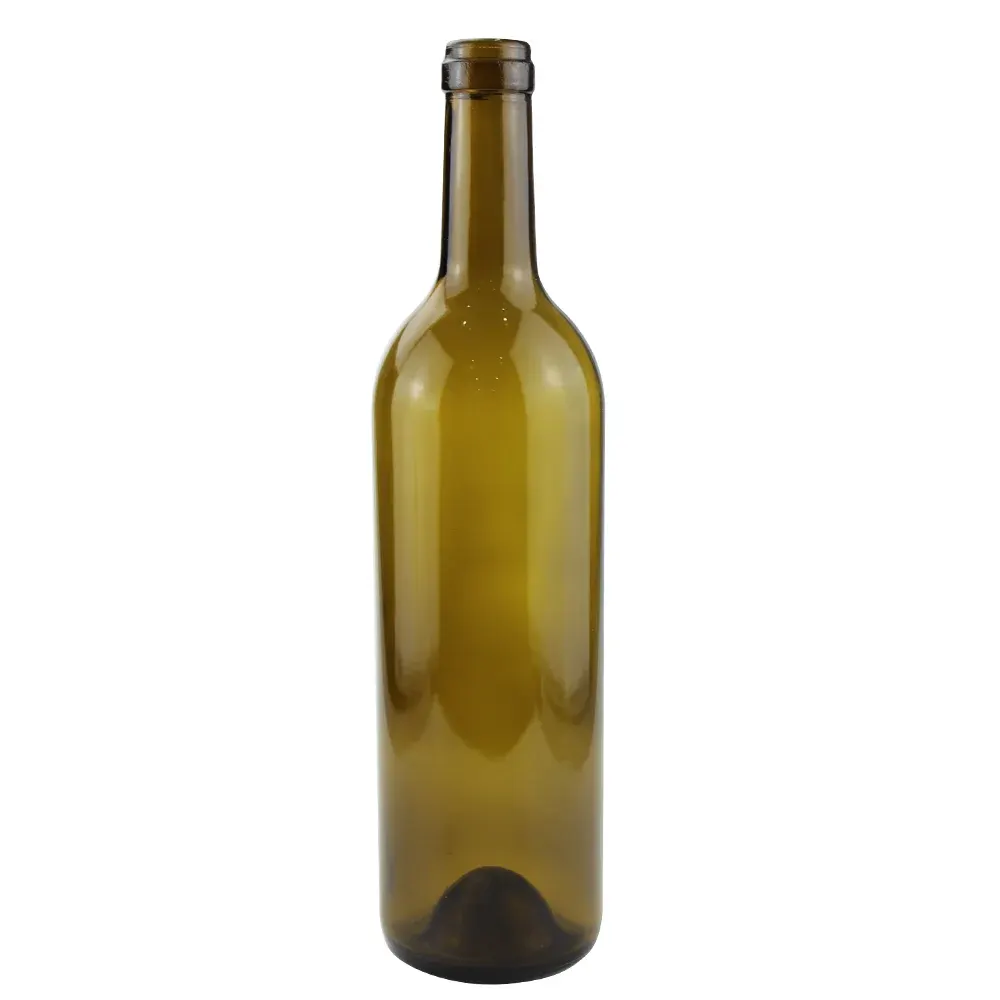
Standard flint is the reference point. Extra-flint, the low-iron glass with a crystal-clear look used on most sipping rums, costs more because its raw materials need more refining.
Color depends on what the furnace already runs:
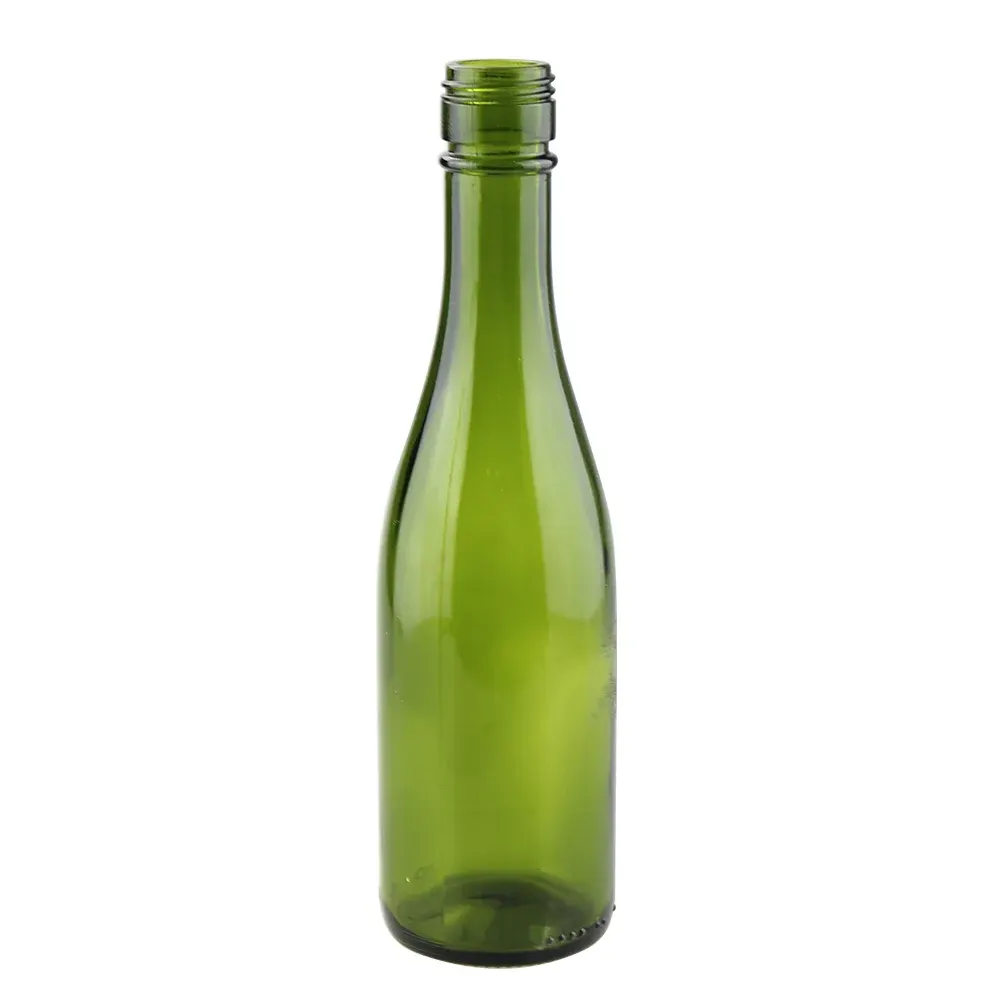
- Amber and standard green are the least expensive colors and sit close to flint, because plants produce them routinely.
- Antique green, dead-leaf and smoky tones may attract a color-change surcharge or require a minimum campaign size.
- Fully custom colors need a dedicated furnace campaign and only make economic sense at large volume.
For a dark rum with a tropical-heritage story, a green or antique tint the plant already runs can give a strong shelf presence without moving far from standard cost.
How far to customize
Customization works as a ladder, and each step up adds cost and exclusivity.
- Stock bottle with a stock closure. This is the baseline described above.
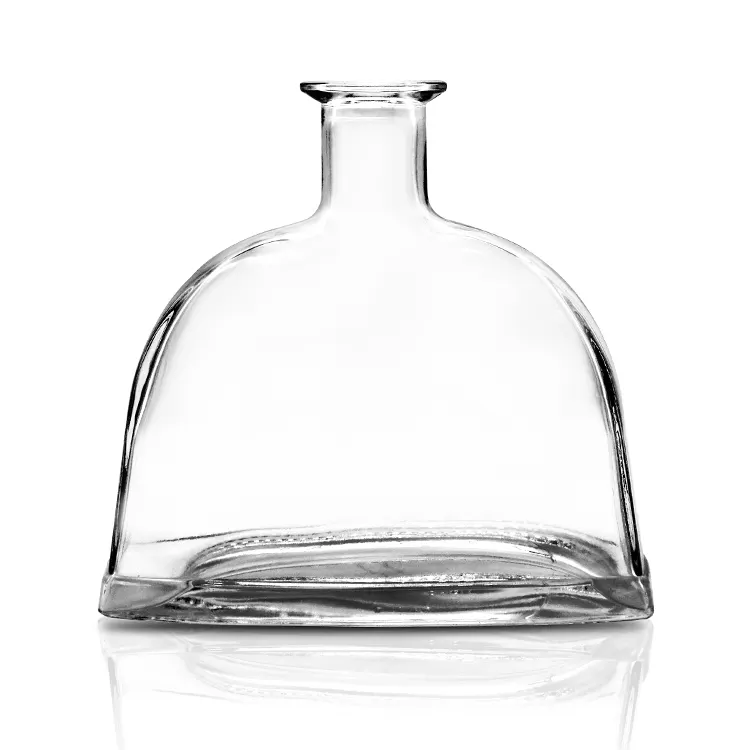
- Stock-plus. A stock body carrying a proprietary embossed plate or a modified neck finish. The tooling cost is limited to a mold insert.
- Full custom mold. A sample mold is made first, followed by a production mold set. The set is a one-time investment whose size depends on the number of cavities, the bottle weight and the complexity of the shape. Once it is paid for, the unit cost at volume comes back close to stock levels.
The crossover usually favors a full custom mold once annual volume passes roughly 50,000 to 100,000 bottles. If tooling is part of the project, ask for the mold-ownership clause in writing.
The other items on a quote
- Decoration. Multi-pass printing, precious-metal inks and hand finishing each multiply the decoration line.
- Closure. A standard ROPP cap is a minor item. A custom bar-top with a wooden head and an embossed top disc can cost more than a value-tier bottle. Our closure guide helps match a closure system to a budget.
- Energy and raw materials. Furnace fuel and soda ash move glass costs worldwide. A long supply agreement should refer to index reviews.
- Packing and freight. Divider cartons, export pallets and current ocean rates add materially to the ex-works figure, so compare quotes only on the same Incoterm.
How order volume changes unit cost
Glass gets cheaper per bottle as the order grows, and each tier has a different reason behind it. The table uses a 750 ml stock bottle as the example.
| Order tier | What changes at this tier |
|---|---|
| 1-5 pallets | Warehouse picking and carton handling |
| Half container | Pallet-tier pricing and better use of freight cube |
| Full 20ft container | FCL freight efficiency and production scheduling |
| 40ft HQ or several containers | Campaign runs and annual framework pricing |
The largest steps come between pallet orders and a full container, and again at 40ft HQ or annual framework volume. Past that point the savings flatten, and negotiation moves to terms and scheduling.
A specification worked through
Take a 750 ml extra-flint bottle at 850 grams with a 30 mm heavy base, a single-color screen print and a stock wooden bar-top. It ships in divider cartons on ISPM-15 pallets, one 40-foot HQ container a year, which holds roughly 22,000 to 26,000 bottles depending on carton cube.
Nearly every pricing variable appears in that one sentence: flint grade, weight tier, decoration, closure, packing and volume. Cost it a second time with one variable changed, for example a lighter bottle or standard flint, before the brand positioning is fixed. Then check the result against wider spirits benchmarks.
RFQ checklist for comparable quotes
Quotes can only be compared when every supplier has priced an identical specification. Include the following:
- Capacity and brimful tolerance
- Target weight or weight range
- Glass color and flint grade
- Neck finish code
- Quantity per order and estimated annual quantity
- Decoration requirement, with artwork references
- Closure specification
- Packing: carton count, pallet type, ISPM-15
- Destination port and requested Incoterm
- Target delivery window
Ask as well for the breakage allowance and the payment terms. You can send the completed specification through our quote request page.
Glass economics are shared across spirits, so the spirit bottle price overview and category pages such as the vodka bottle price guide are fair cross-checks for a rum quote.
FAQ
What does a 750 ml rum bottle cost on average?
An average is not much use, because a stock flint bottle at container quantity and a super-heavy custom bottle on its first run sit far apart. Pricing is quoted per project and moves with the mold, decoration, quantity and freight terms.
Why do suppliers quote so differently for the same bottle?
Usually they have not priced the same thing. Weight tier, flint grade, packing specification or Incoterm differs between the quotes, and some leave freight out or rely on last year's energy costs. Bring every quote to one specification, one Incoterm and one quantity tier before comparing.
What does a custom rum bottle mold cost?
The sample mold is a relatively small one-time cost. The production mold set is the larger investment, and its size depends on cavity count, bottle weight and complexity. It is quoted with the project.
Which order quantity gives the best unit cost?
The steepest reductions come when an order moves from pallets to a full 20-foot container, and again at 40-foot HQ or annual framework volume. Beyond that the curve flattens.
Is it valid to compare rum quotes with gin, whiskey or vodka?
Yes. If a rum quote falls well below category benchmarks for the same weight and volume, question the specification before counting the saving.