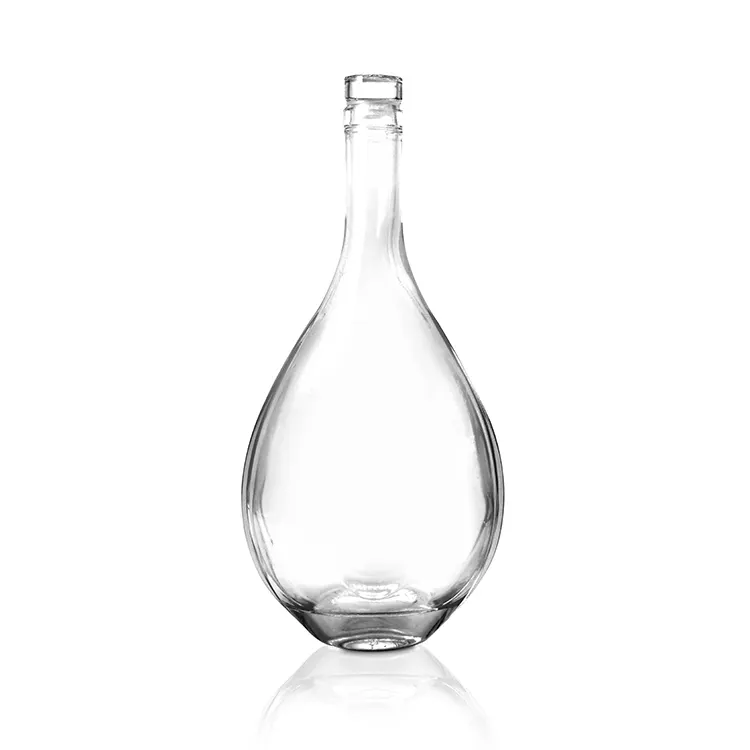
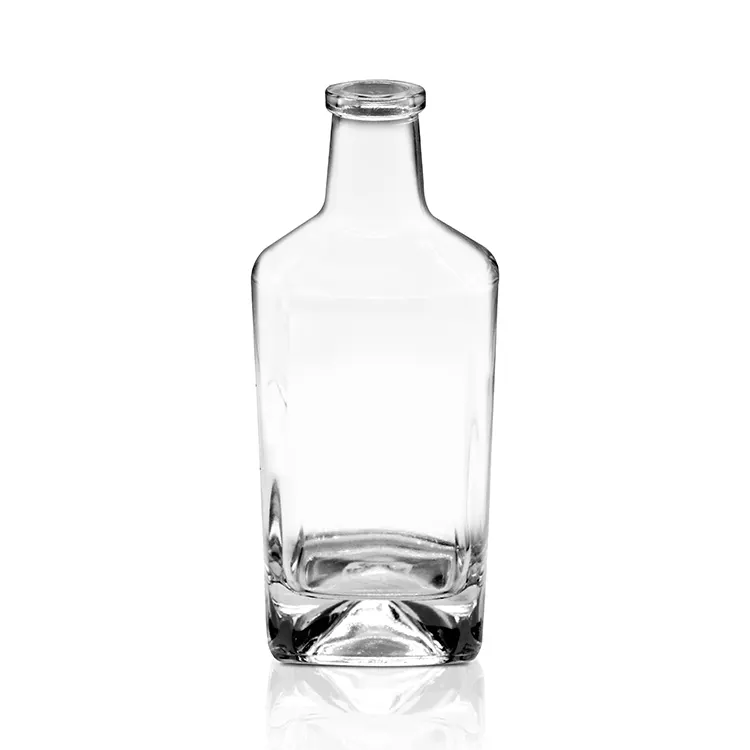
Part of our glass rum bottles range; the stock moulds are pictured at the end of this guide.
Rum is bottled in seven common sizes: 50 ml, 200 ml, 375 ml, 700 ml, 750 ml, 1 L and 1.75 L. The core retail bottle is 750 ml in the United States and 700 ml in the EU, where 750 ml is not a permitted spirits size. Most brands should launch one core size for their first market and add others only as channels ask for them.
Rum bottle sizes with typical weights and neck finishes
We specify rum bottles across this whole range in flint and colored glass. The figures below are planning values; the drawing for each project confirms the final numbers.
| Capacity | Typical weight | Common neck finish | Main role |
|---|---|---|---|
| 50 ml | 80–110 g | ROPP 18 mm | Sampling, travel retail, minibar |
| 200 ml | 220–280 g | ROPP 28 mm / GPI 28-400 | Convenience, single-serve |
| 375 ml | 350–420 g | GPI 28-400 / bar-top 18.5 mm | Gift sets, trial, half-bottles |
| 700 ml (EU) | 550–750 g | Bar-top / GPI 28-400 | Core retail size in the EU |
| 750 ml (US) | 550–750 g | Bar-top / GPI 28-400 | Core retail size in the US |
| 1 L | 700–850 g | ROPP 31.5 mm | Travel retail, on-premise |
| 1.75 L | 1,000–1,250 g | ROPP 31.5 mm / handle finish | Value lines, bar wells |
The 700 ml and 750 ml bottles carry most branded rum volume worldwide. Closure choices for each finish are discussed in our guide to spirit bottle closures.
Which sizes are legal in each market
Size is a compliance decision before it is a design decision. The US and the EU each publish a closed list of spirits fill sizes, and the lists do not match.
| Market | Core size | Other listed or common sizes | Rule |
|---|---|---|---|
| United States | 750 ml | 50 ml, 100 ml, 200 ml, 375 ml, 700 ml, 1 L, 1.75 L | TTB standards of fill, 27 CFR 5.203 |
| European Union | 700 ml | 500 ml, 350 ml, 200 ml, 100 ml, 50 ml; 1 L mostly in travel retail | Measuring-container directive framework |
| Travel retail | 1 L | Sits between the two systems |
In the US, 700 ml became an authorized size when Treasury Decision TTB-165 took effect on 29 December 2020. Treasury Decision TTB-200 added more sizes in 2025, so read the current list in 27 CFR 5.203 before a label goes for approval.
The practical result is that one 700 ml bottle can serve both markets. A brand that stays with 750 ml in the US needs a separate 700 ml version for Europe. Many distilleries handle this with one mold family in two capacities, sharing decoration and closure specifications between them.
Brimful capacity and headspace
The volume on the label is the nominal fill at 20 °C. Brimful capacity, the volume when the bottle is filled to the very top, has to be larger so there is headspace for filling accuracy and for the liquid to expand. For spirits that headspace is typically 3–5%, which puts the brimful capacity of a 750 ml rum bottle at roughly 770–790 ml.
Spirits expand by about 0.1% per °C, so a bottle filled in a cold plant and stored in a hot warehouse uses part of that margin. The margin can fail in either direction. With too little headspace the filling line rejects overfilled bottles. With too much, a legal metrology inspector checking actual contents may find underfills.
Label approval (COLA in the US) ties the declared volume to what is in the bottle. For a rum filled at 40% ABV and sold across several climates, we recommend writing both the brimful capacity and its tolerance into the purchase specification. A nominal "750 ml bottle" leaves out the two numbers that compliance depends on, and the tolerance has to hold at the accuracy of your own filler.
The order in which to add sizes
Adding sizes in sequence works better than launching a wide range. Brands that start with three sizes often find that one sells while the other two sit in the warehouse.
- Core size. 750 ml for a US-first brand, 700 ml for an EU-first brand.
- 50 ml mini, once there is a sampling budget. Minis are produced in high piece counts at low glass cost, and a single run can cover a year of tasting events.
- 375 ml, when gift and trial channels request it.
- 1 L, only after on-premise sales have proven their pace.
Most rum brands settle on two or three sizes. Litres and 1.75 L handles belong to high-turnover value lines and bar wells. How size affects glass weight and container loading is covered on the wholesale rum bottle page.
What to send when planning a size range
- Target markets (US, EU, travel retail) and the fills each one requires
- The core size and the second size you plan to add
- An annual volume estimate for each size
- Closure and decoration preferences for each size
You can send these through the quote form.
Frequently asked questions
Is 700 ml legal for rum in the United States?
Yes. It has been an authorized size since TTB-165 took effect on 29 December 2020, although 750 ml remains the default US bottle.
Can a 750 ml bottle be sold in the EU?
No. The EU standard spirits bottle is 700 ml, and 750 ml is not on the permitted list, so a US-specification bottle needs a 700 ml counterpart for European sales.
Do different sizes need separate molds and minimum quantities?
Each capacity is its own bottle. Minimum quantities are quoted per project because they depend on the mold and on the line that runs it.