Filed under glass jars with lids; the moulds we quote for this are pictured at the foot of the page.
A bamboo lid on a glass jar is a reclosable freshness closure for dry goods, candles and anhydrous cosmetics, and it seals only because of the food-grade silicone ring set into the underside of the lid. It is not a vacuum or canning seal, so sauces, pickles and other water-based fills need a clamp or lug closure instead. Stock jar bodies run from 250 ml to 2,000 ml with lids matched to the rim diameter.
How the seal works and what to specify
The bamboo part is a machined shell. A groove is CNC-cut into its underside, a silicone ring sits in that groove, and the ring is squeezed against the flat top of the jar rim (the rim land) when the lid is pushed home. The ring is typically 2–3mm in cross-section at 50–60 Shore A hardness.
Whether the assembly holds depends on three dimensions, and all three belong on the drawing:
| Feature | Target | What goes wrong outside it |
|---|---|---|
| Groove depth | 2.5–3.5mm, held to ±0.15mm | A shallow groove lets the ring fall out during shipping; a deep one gives too little compression |
| Rim flatness | Within 0.3mm across the land | A raw cut rim will not meet this, so the jar needs a ground or fire-polished rim |
| Skirt clearance over rim OD | 0.5–1.0mm | Too tight and the lid cannot be lifted with one hand; too loose and the ring no longer centres itself |
New jar-and-lid pairings are leak-tested in two ways: inverted for 24 hours over absorbent paper, and aged in a cabinet at 40°C/75% RH. An assembly built to the figures above passes the inversion test and keeps dry goods fresh for months.
Stock jar sizes and matching lid diameters
| Jar capacity | Rim OD / lid diameter | Common contents |
|---|---|---|
| 250 ml | 70 mm | Spices, bath salts, tealight candles |
| 500 ml | 85 mm | Pantry storage, 3-wick candles |
| 750 ml | 95 mm | Coffee, tea, body scrub |
| 1,000 ml | 105 mm | Flour, granola, refill-station goods |
| 2,000 ml | 125 mm | Bulk pantry storage, counter display in shops |
Every size in the table takes a food-grade silicone ring. Candle, pantry and body-care ranges most often use the four sizes up to 1L.
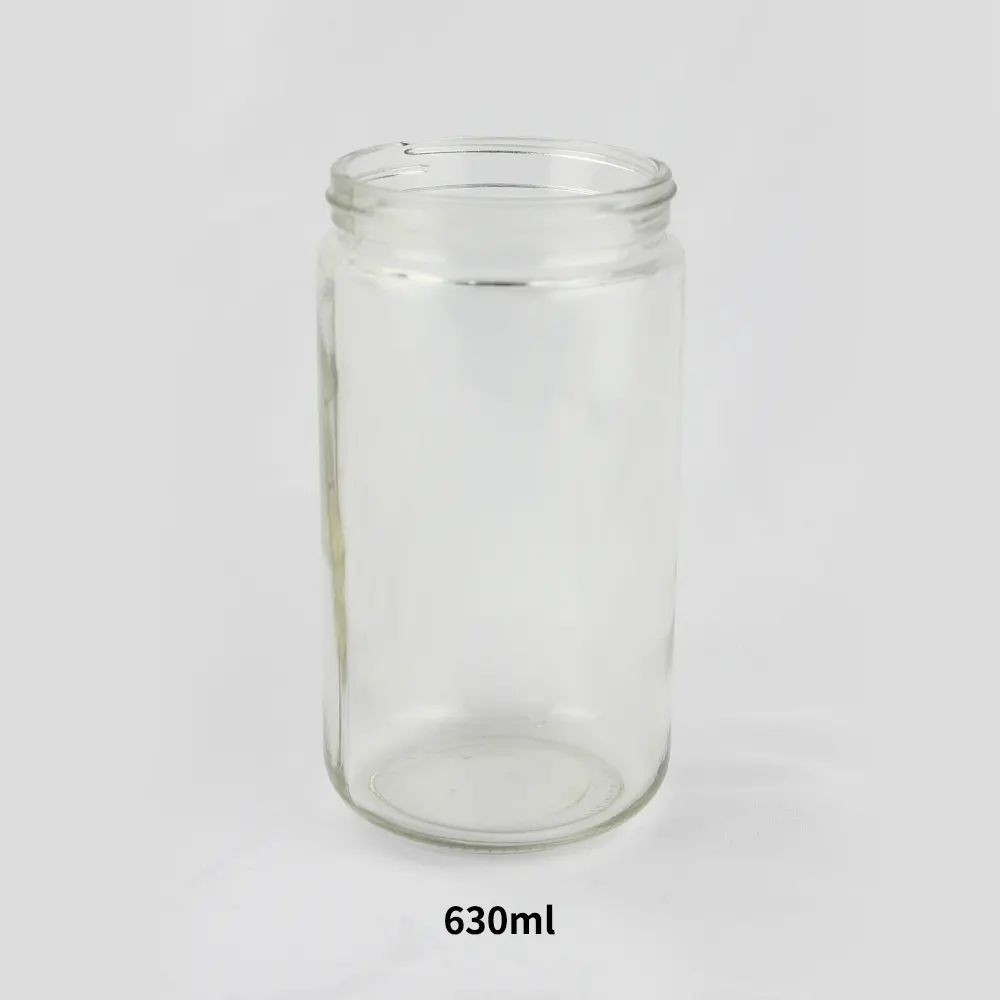
If you want embossing on the jar or a lid diameter outside the stock list, the project needs its own tooling; the route is described under custom glass jars and lids. Buyers still choosing a closure type can compare airtight jar systems, jars with cork lids and the broader guide to jar lids and glass versus plastic.
Bamboo type, finish and alternative lid materials
Stock lids come in two bamboo types. Carbonized bamboo has been heat-treated, which gives it a caramel colour and makes it hold its dimensions better. Natural bamboo is left blonde.
The surface is finished with food-safe mineral oil or a water-based lacquer. Brands that want to claim no coating at all can order unlacquered lids, but those depend entirely on the user following the care routine described below.
Two related materials cover cases where plain bamboo struggles. Acacia wood is denser and stands up to water better; some commercial kitchens specify it with a PU coating. For high-humidity markets there is a bamboo-composite lid built around a PP inner core, which looks like bamboo and behaves more like plastic.
Humidity, warping and export packing
Bamboo that has been kiln-dried to 8–12% moisture and then oiled or lacquered stays flat in ordinary household humidity. Trouble comes from standing water or from a closed, unventilated container on a tropical route.
The packing is planned around that. Lids travel beside the jars, not seated on them, so the silicone ring does not take a compression set on the way. Each carton carries desiccant and is built with ventilation for tropical lanes. Export lots go out with kiln-drying certificates and on fumigation-free IPPC pallets, and we advise keeping warehouse humidity below 70% relative humidity.
Care instructions to print for the end user
How long a lid lasts is decided mostly by how the customer treats it, so put the routine on the label or a hang tag:
- Wash the lid briefly by hand. No soaking and no dishwasher, because heat and long exposure to water make bamboo swell and crack.
- Dry it straight away.
- Rub in food-grade mineral oil every 2–3 months.
- Pull the silicone ring out and wash it separately.
Looked after this way a lid gives years of daily use. Neglected, it can swell and split within a season, and the complaint lands on the product. The glass jar can go in the dishwasher without concern.
What the sustainability claim rests on
Bamboo is ready to harvest in 3–5 years, grows back from the same roots without replanting, and is cultivated without pesticides. The lid biodegrades at end of life; the silicone ring does not, though it is recyclable where a silicone stream exists. Against a PP lid, a bamboo lid carries roughly 40-60% less cradle-to-gate carbon.
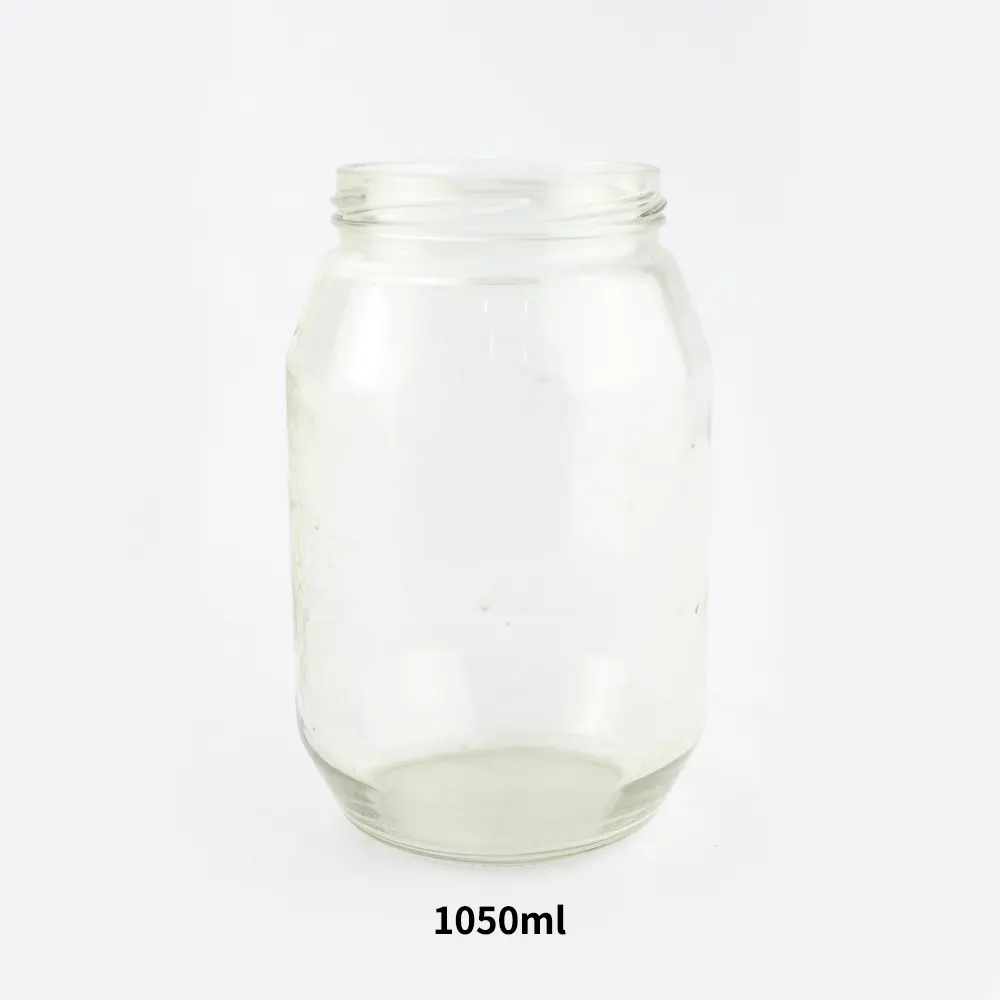
The larger gain is reuse. A glass jar with a durable lid is meant to be refilled for years, which is why refill-station retailers and direct-to-consumer candle brands adopted the format, and why swapping a PP cap for bamboo is among the most visible steps a brand with a plastic-reduction target can take.
Frequently asked questions
Can a logo be laser-engraved on the lid?
Yes, and it is the usual way to brand bamboo. The mark is permanent and needs neither ink nor setup plates. Keep line weight in the artwork above 0.4mm so it reproduces cleanly across the grain, and accept that tone will vary from lid to lid.
Are there sizes smaller than the stock table?
Stock ranges start with 100ml spice jars and go up to 2L canisters, with lid diameters of typically 60-110mm following the rim OD.
What does a bamboo-lid jar order cost?
Pricing is quoted per project. It moves with jar capacity, lid material and finish (natural, carbonized, engraved, acacia), any custom tooling, quantity and the destination port. Send those details through the quote request form.