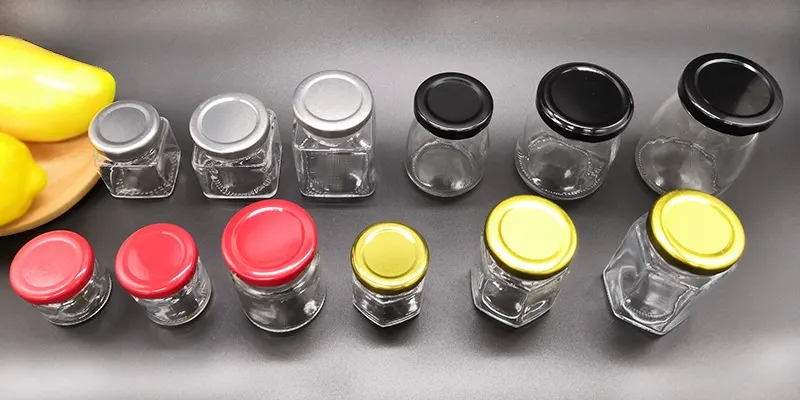
Filed under wholesale glass jars; the moulds we quote for this are pictured at the foot of the page.
Quick answer
Which lid should a glass jar use?
Match the lid to the process first. A lug (twist-off) cap with process-rated plastisol is the choice for anything hot-filled, pasteurised or retorted, because it seals by vacuum. A continuous-thread cap seals by compressing a liner and suits cold fills, dry goods and jars that are opened many times. For airtight dry storage the order is clip-top, then continuous-thread with an induction seal, then bamboo, then cork.
| Closure | Seal | Heat processing | Best for |
|---|---|---|---|
| Lug (twist-off) | Vacuum + plastisol | Yes | Jam, sauce, pickles, baby food jars |
| Continuous thread + liner | Compression | No (unless induction) | Dry goods, supplements, cold-fill sauces |
| Clip-top bail | Gasket | Pasteurization only | Pantry storage, fermentation, gifts |
| Bamboo + silicone ring | Press-fit | No | Dry pantry goods, eco lines |
| Cork | Radial compression | No | Oils, spirits, gift jars, tea |
Choose the lid before the jar. Anything hot-filled, pasteurized or retorted needs a lug (twist-off) cap; cold-filled and dry products are better served by a continuous-thread cap with the right liner; clip-top bails give reusable airtight storage; bamboo and cork belong on dry goods where shelf presentation leads. The closure sets shelf life, capping-line compatibility and food-contact compliance, so it is the first line of the specification, not an accessory.
How to narrow down the closure family
Five questions, asked in this order, settle most projects.
- Is the product heat processed? Hot-fill, pasteurization and retort all point to a lug cap with a plastisol rated for that process. A continuous-thread cap has no vacuum assist and cannot be relied on to hold the vacuum a thermal process creates.
- Is it a liquid, or does it need an oxygen barrier lasting years? Then use a lug cap, or a continuous-thread cap with an induction-seal liner. The induction foil is a hermetic membrane that does not depend on how well the consumer recloses the cap.
- Is it a dry product opened often? A continuous-thread cap with a foam liner fits value ranges, a clip-top fits the top of the range, and bamboo fits brands built on sustainability. For airtightness the order is clip-top, then continuous-thread with induction seal, then bamboo, then cork.
- Does appearance on the shelf drive the purchase? Look at cork, bamboo, or decorative jar ranges with embossed or coloured closures.
- What can the filling line cap? Machinery overrides preference. Confirm chuck and torque specifications with the co-packer, and check finish dimensions against the closure selection hub before a purchase order goes out.
| Closure | How it seals | Heat processing | Reuse | Typical products |
|---|---|---|---|---|
| Lug (twist-off) | Vacuum plus plastisol compound | Yes | Limited | Jam, sauces, pickles, baby food |
| Continuous-thread with liner | Liner compression | No, unless induction sealed | Yes | Dry goods, supplements, cold-fill sauces |
| Clip-top bail | Hermetic gasket | Pasteurization only | Yes, indefinitely | Pantry storage, fermentation, gifts |
| Bamboo with silicone ring | Press fit | No | Yes | Dry pantry goods, eco ranges |
| Cork | Radial compression | No | Partly | Oils, spirits, tea, gift jars |
Lug caps for hot-filled and processed food
A lug cap is the tinplate twist-off lid found on commercial jam, pickle and pasta-sauce jars. Its skirt carries three to six lugs that ride under ramps moulded into the jar finish. A quarter turn pulls the cap down and presses a sealing compound, plastisol or a PVC-free alternative, onto the rim.
The second half of the seal is vacuum. As a hot-filled jar cools, the headspace contracts and draws the button in the centre of the cap downward. The pop a consumer hears on first opening tells them the jar was fresh and had not been opened.
Lug finishes are made from 38mm to 110mm; retail food jars mostly use 63mm and 70mm. In the brief, write the finish code exactly (63TW, 70TW and so on), state whether the process is pasteurization, hot-fill-hold or retort, because each needs a different plastisol formulation, and ask for torque retention data measured after thermal processing. Lug finishes also match the widest choice of stock shapes in the glass jar range.
Continuous-thread caps and liner choice
Continuous-thread (CT) caps screw down a full helical thread, standardised as the 400-series: 38-400, 58-400, 70-400 and 89-400. They seal by squeezing a liner against the rim, with no vacuum involved. That makes them the natural choice for cold-filled products, dry goods, food supplements and personal-care jars that are opened and closed many times.
With a CT cap the liner does the engineering work:
- Foam polyethylene for dry goods.
- Pressure-sensitive liners where tamper evidence is wanted.
- Induction heat-seal liners for a hermetic barrier to moisture and oxygen.
- Pulp-backed or plastisol liners for specialty uses.
Caps are available in tinplate, aluminum and polypropylene, ribbed or smooth, and take screen printing, hot stamping, embossing and matte or gloss colour coats. Each finish size is made by several cap vendors, so a buyer is not tied to a single source. The weakness is tamper evidence: a CT cap shows nothing unless an induction seal or shrink band is added. Liner chemistry by product type is set out in the closure guide for glass bottles and jars.
Clip-top bail jars for reusable airtight storage
A clip-top, also called a swing-top or bail closure, is a glass or ceramic lid hinged on a wire lever that clamps a rubber gasket onto the rim. The seal is hermetic and can be remade without limit. Because the force comes from the geometry of the wire and not from thread torque, the gasket decides the result: food-grade natural rubber or silicone, usually 2.5–3.5 mm thick, compressed by a defined percentage when the bail closes.
These jars are used for pantry storage, sourdough and fermentation cultures, and food gifts. When we review a clip-top supplier we look at four things: consistent bail tension across open-close cycles (a sound bail lasts 5,000+ actuations), FDA and LFGB certification for the gasket material, stress annealing on the moulded lid as well as the body, and whether replacement gaskets are sold as spare parts. Plants behind airtight jar programs usually keep the gasket tooling in-house, which makes spares easier to obtain.
Bamboo and wooden lids for dry goods
Bamboo and acacia lids are the look of the zero-waste pantry. The wood is decoration. The seal is a food-grade silicone O-ring sitting in a groove under the lid, pressed onto the rim by the lid's weight or a light press fit.
That is airtight enough for flour, pasta, coffee and tea. It is not suitable for liquids, for any heat process, or for long storage where aroma matters, since wood moves with humidity and the press fit relaxes over repeated cycles.
Ask for kiln-dried material at 8–12 percent moisture content, formaldehyde-free adhesive in laminated bamboo, a food-safe oil or lacquer finish, and silicone rings that can be replaced. Fit is where quality problems recur. The lid's inner diameter has to follow the jar's outer rim to about ±0.3 mm, which is why jars with bamboo lids are bought as paired sets from one supplier.
Cork stoppers for oils, spirits and gift jars
Cork comes as natural single-piece cork, agglomerated cork, and the bar-top or T-cork with a wooden or plastic cap. All three seal by being squeezed radially in the neck, with a 20–25 percent reduction in diameter. Agglomerated cork bound with a food-grade binder gives more consistent dimensions and costs less; natural cork carries the heritage story.
On an apothecary jar of dry goods the cork is mostly there for appearance. With liquids the selection turns technical: cork moisture content of 5–8 percent, steam sterilization, and a diameter matched to the bore tolerance.
Cork has limits a specification should state. It is not hermetic over several years, it lets oxygen through slowly (good for wine, bad for ground spices), and it dries out in low-humidity stores. It remains a sound choice for bath salts, loose tea and gourmet gifts, the main uses for cork-lidded jars. Where the same display look is wanted with no oxygen transfer at all, jars with ground-glass lids are the alternative.
What to fix in the purchase specification
Nine points should be settled before an order for jars with lids is placed.
- Finish code and tolerance class, written down and checked with go/no-go gauges on the pre-production sample.
- Liner or compound specification with its regulatory grade: FDA 21 CFR 177 for the US, EU 10/2011 for Europe.
- Application and removal torque window for threaded closures, plus retention torque after your own thermal process.
- Decoration compatibility, since ceramic print, spray colour and sleeve options vary with the closure material.
- Case-pack format. Lids applied, packed separately or nested each change freight volume and labour at the filling line.
- A spare-parts policy for gaskets, lids and bails covering a three-year horizon.
- Dimensional drawings of jar and lid, held as controlled documents.
- Pre-shipment inspection criteria, with AQL levels agreed beforehand.
- A pilot run of 500–1,000 units through the real filling line for any new jar-lid pairing, before container quantities are committed.
A brand buying several jar families can run the first eight points once and apply them from small jars with lids, including sub-4-oz formats where miniature closures bring their own constraints, up to bulk food sizes, with one supplier answerable for the whole closure matrix. Product categories also have their own closure habits, as the page on honey jars shows, and custom jar-and-lid projects add branded tooling to the list.
Closure failures that cause most complaints
Three defects account for the bulk of complaints, and each has a known cause.
- Lost vacuum on lug jars. The compound does not suit the fill temperature, or rims are chipped. Specify a process-rated compound and inspect rims at AQL 1.0.
- Cross-threaded or stripped CT caps. The finish has drifted out of tolerance. Gauged finishes and a defined torque window remove the problem.
- Silicone rings popping out of bamboo lids. The groove geometry is wrong. Put a retention-force test in the specification: the ring should resist a 5 N pull.
None of these is unusual. Each is avoided by writing the check into the purchase specification and confirming it on the pre-shipment sample.
Frequently asked questions
How does a lug cap differ from a continuous-thread cap?
A lug cap locks onto short ramps with a quarter turn and relies mainly on the vacuum formed during hot filling. A continuous-thread cap screws down a full thread and seals on its liner alone. The first is for heat-processed food, the second for cold-fill products and jars that are reopened often.
Which lid keeps dry pantry goods most airtight?
A clip-top jar with a rubber gasket, followed by a CT cap with an induction-sealed liner. Bamboo with a silicone ring is adequate for everyday use, and cork is the weakest barrier of the four.
Can bamboo lids go on liquids or wet foods?
No. They are press-fit lids for dry goods. Liquids need a lug cap or a CT cap with an induction liner.
What minimum quantity applies to jars with custom lids?
It is quoted per project. The mould, the line it runs on, the decoration and the lid type all move the figure, so send the brief with fill type, process temperature and target jar sizes and we will recommend a closure family alongside the quotation.
How do I make sure lids and jars from one order fit each other?
Buy both from one supplier as a matched system, put the finish code and tolerance class in writing, and have the pre-production sample gauged and torque or fit tested. The pilot run on your own filling line is the last safeguard.
Are spare gaskets and lids available for clip-top jars?
Yes. Established clip-top suppliers keep the gasket tooling and sell replacement gaskets and bails as spare parts. Confirm the spare-parts policy for at least three years before settling on a jar platform.