Blue and white liquor bottles are glass, not porcelain: an opaque white body, either opal glass or white-sprayed flint, carrying cobalt-blue artwork. For a finish that lasts, specify ceramic decals fired at 550–620°C, which fuse the blue into the surface; printed and sleeved versions cost less but wear. The bottle still fills, caps and ships like any standard glass container.
Three ways to put blue on white glass
The decoration route decides how durable the artwork is and how much hand work goes into each bottle, so choose it before the shape.
| Route | How it is made | Durability | Suits |
|---|---|---|---|
| Ceramic decal firing (water-slide or baked-flower) | White base from a spray coat or from opal glass; a screen-printed ceramic decal is applied by hand or machine and fired in a decorating lehr at 550–620°C | Inks fuse into the glass; dishwasher-proof and scratch-resistant, the closest match to glazed porcelain | Reusable, hospitality and top-tier gift bottles |
| Spray coat with UV or organic screen print | White base coat sprayed and cured, then blue printed in one to four passes and UV-cured | Good resolution, but the ink sits on the surface; lower abrasion resistance, dishwashing not advised | Mid-range lines where cost matters more than permanence |
| Shrink sleeve or adhesive label | Applied over a white-sprayed or flint bottle | Only as durable as the sleeve or label | Market tests and seasonal SKUs where speed counts most |
If the aim is a bottle that is blue all through, with no white ground or artwork, that is a different product: see solid blue glass bottles.
Choosing the bottle under the decoration
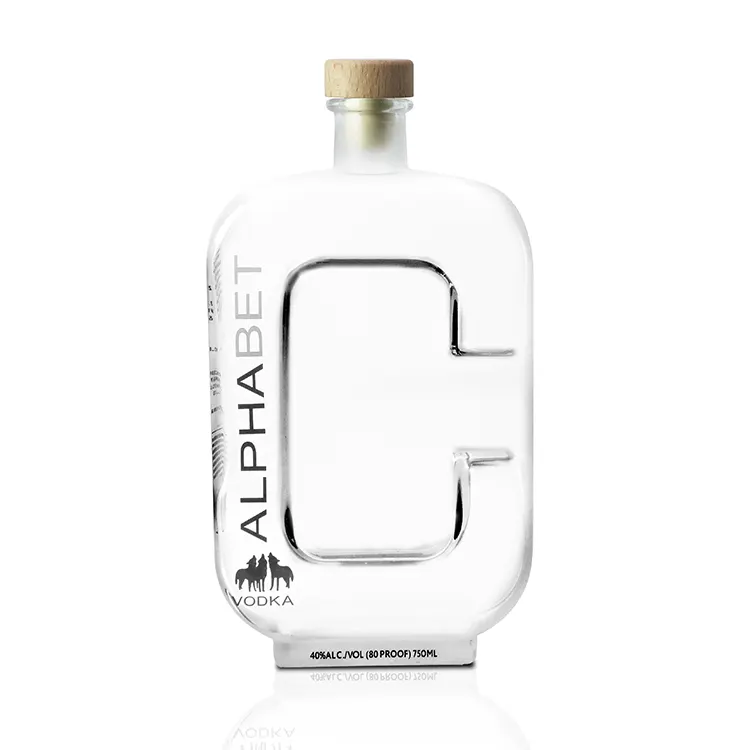
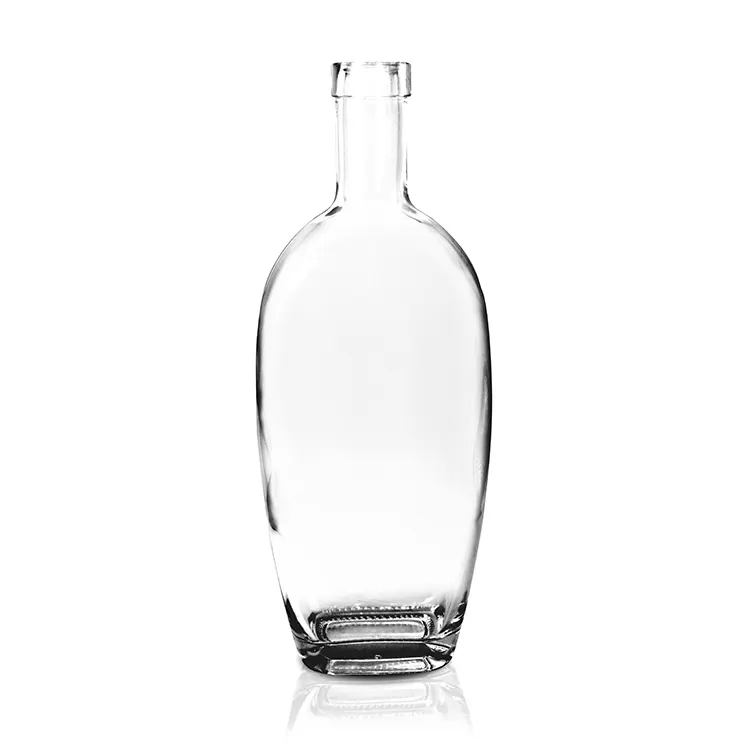
Nearly any spirits format can take the treatment, but the shape should give the artwork space. Tall bodies with a gentle curve in 500ml and 750ml work best. The meiping, or plum vase, outline with sloped shoulders is the classic baijiu form, and a straight-sided cylinder suits gin. Other common capacities are 375ml and 1L; the 750ml liquor bottle range shows base shapes to start from.
Closures are the usual ones: 28mm or 30mm aluminum ROPP caps, bar-top corks for higher tiers, and Guala-type anti-refill caps where regulations call for them. The neck finish is fixed when the mold is made, so check it against your capping equipment first.
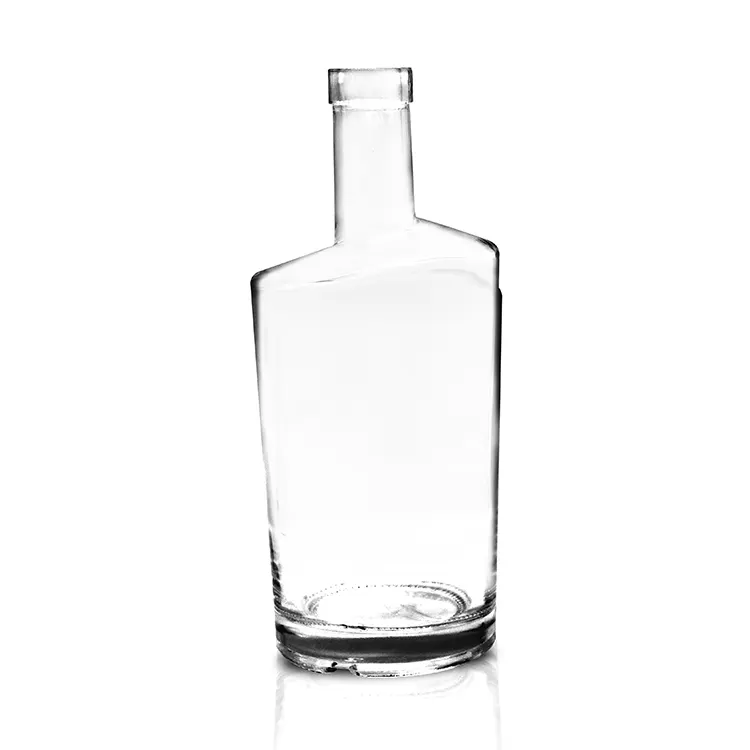
Two points are easy to get wrong. A white-opaque body hides internal fluting and embossing, so branding belongs in the artwork and on the closure, not in glass relief. And the white ground can be made two ways. Opal glass is white through its whole thickness, looks deeper and shows chips less, but its material cost is higher. White spray on flint glass gets 90% of the effect and is the right call for most SKUs.
What happens in the decal room and the lehr
Water-slide decals are printed in reverse on backing paper. An operator soaks each one, slides the ink film onto the white surface, squeegees out water and air, and leaves the bottle to dry. A skilled applicator positions 400–600 bottles per shift, which is why labor is a real cost on full-wrap designs.
Firing follows a controlled temperature curve. The decal's organic carrier burns off below 400°C, and above 550°C the ceramic pigments, cobalt silicate for the classic qinghua blue, sinter into the glass. Too cool, and the artwork rubs off. Too hot, and the body slumps a fraction of a millimeter out of round.
That narrow window is the reason to insist on a decorated pre-production sample fired in the production lehr, not a lab kiln and not a digital mockup. Firing also shifts color slightly from the printed decal, so approve the blue on the fired piece. Supply vector artwork and Pantone references early: multi-color decals distort as they wrap a tapered body, and the ceramic ink house formulates to the target. Firing curves, color tolerances and Pantone matching for ceramic inks are covered under glass bottle decoration services.
Tests to write into the purchase contract
Durability should be shown by test, and a decoration house that cannot produce a recent rub-test report is a warning sign. Standard checks for liquor-market decals are:
- Alcohol rub: a cotton pad soaked in 95% ethanol rubbed 50 cycles across the artwork, which simulates bar wiping and spill cleanup.
- Cross-hatch adhesion testing.
- Domestic dishwasher cycles, repeated, for reusable or hospitality SKUs.
- Ink declarations: for the EU and US, lead- and cadmium-free ceramic ink declarations with migration test reports under the FDA and LFGB frameworks, since hands and lips touch the decorated surface at the rim.
Where the look sells
Scrolling peonies, lotus panels, mountain-water scenes and dragons among clouds carry long associations with craft and ceremony. For baijiu that signals heritage and gifting, the two strongest purchase drivers in the category. Abroad, the same bottle reads as collectible, and porcelain-style gift sets take prominent shelf positions in Europe, North America and Southeast Asia around Lunar New Year and the holiday season. Gin and vodka brands aimed at travelers and collectors use it too.
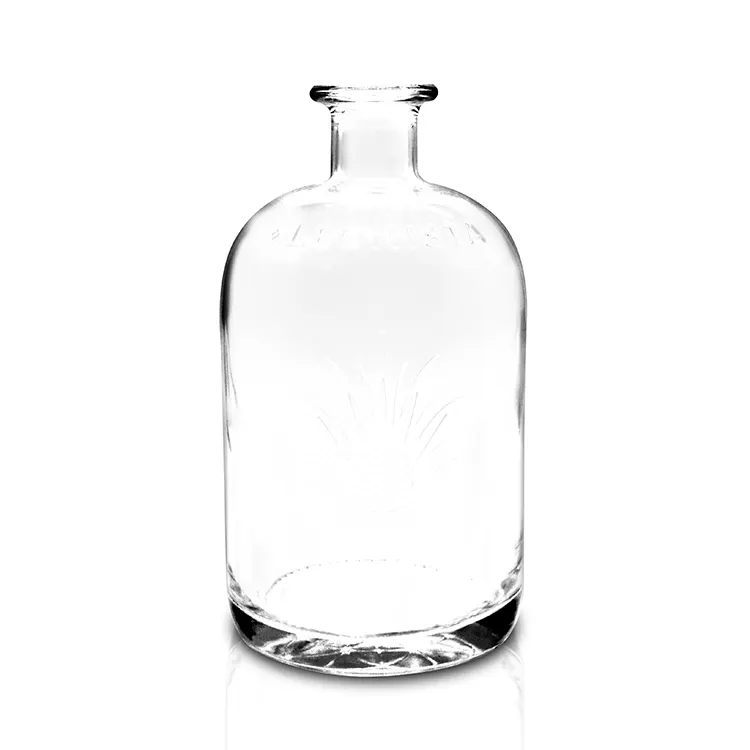
The contrast also helps online, where blue on white stands out in thumbnail grids that flatten amber and green glass. Other formats are grouped under liquor glass bottles, and a proprietary design starts with a custom liquor bottle project.
Frequently asked questions
Do these bottles run on a normal bottling line?
Yes. Because they are glass, they fill and seal on standard glass lines. True ceramic bottles have looser neck tolerances.
Will the blue artwork survive washing and handling?
Fired ceramic decals are effectively permanent. UV-printed and sprayed decoration stays on the surface and wears gradually with abrasion, so choose fired decoration for reusable bottles and top-tier lines.
What are the minimum quantity and the timing?
Both are quoted per project. They depend on the mold, the decoration route, the number of decal colors and screens, the order quantity and the freight terms. Repeat orders that reuse archived decals skip the proof stage.
Can a specific Pantone blue or existing artwork be reproduced?
Yes. We pass your vector files and Pantone targets to the ink house and arrange a fired pre-production sample for your approval.