Paragon jars are tall, slender glass food jars with a height-to-diameter ratio of 1.9:1 to 2.4:1, stocked in six capacities from 4 oz to 32 oz. The 4 oz takes a 48-485 continuous-thread cap; every larger size has a lug (twist-off) finish that suits hot-fill at 82 to 85 °C and water-bath pasteurization at 100 °C for up to 30 minutes. The shape buys more shelf facings and a taller label panel than a standard straight jar, and in exchange asks for closer attention to stacking and cool-down. Pricing and minimum quantities are quoted per project.
Sizes, finishes and dimensions
Caps are tinplate with a plastisol liner throughout. Each capacity is tied to a Glass Packaging Institute (GPI) finish. This is the table to attach to a purchase order or an inquiry, so that the glass, the closure and the capping change parts are all quoted against the same figures.
| Capacity | Volume (ml) | Finish | Mouth OD (mm) | Cap | Body dia. (mm) | Height (mm) | Jar weight (g) |
|---|---|---|---|---|---|---|---|
| 4 oz | 120 | 48-485 CT | 48.0 | CT | 54 | 92 | 95 |
| 8 oz | 227 | 53-2020 Lug | 53.0 | Lug | 62 | 116 | 140 |
| 12 oz | 355 | 58-2020 Lug | 58.0 | Lug | 66 | 132 | 190 |
| 16 oz | 473 | 63-2030 Lug | 63.0 | Lug | 70 | 150 | 240 |
| 24 oz | 710 | 63-2030 Lug | 63.0 | Lug | 76 | 168 | 320 |
| 32 oz | 946 | 63-2030 Lug | 63.0 | Lug | 82 | 184 | 400 |
Mouth outer diameter carries a tolerance of +0.2 / -0.0 mm, which keeps the compression on the cap liner the same from lot to lot. Sidewall thickness is 2.6 mm on the 4 oz to 12 oz jars and 3.0 mm from 16 oz upward. Height rises more slowly than diameter as capacity increases, yet the largest jar still has a 2.2:1 ratio, so the range looks like one family on shelf.
Choosing between the CT and lug finishes
The closure decision sets both the capping equipment and how the jar behaves in the consumer's kitchen. A lug cap is not held by thread engagement. It is pulled down by the vacuum that forms as hot product cools, which is why it belongs on hot-filled and pasteurized products. A continuous-thread (CT) cap is simpler to apply and easier to reopen many times, which suits honey and dry foods.
The 48-485 CT on the 4 oz jar is the most common small-jar thread in North America and matches stock 48 mm closures from three major cap suppliers, so a second cap source is available if one runs short. The lug finishes follow the standard 2020 and 2030 pitch. A single capping head set can therefore run 8 oz through 32 oz with a change part and a torque re-set, without a new turret.
Sharing 63-2030 across the 16 oz, 24 oz and 32 oz jars is deliberate. A brand with several SKUs can hold a single cap size and a single liner specification, which trims warehouse stock and removes the chance of the wrong cap reaching the line.
How the slender profile compares with straight and hexagonal jars
The gain from a narrow body is shelf count and label height. The 16 oz Paragon has a flat label panel 104 mm tall with a 196 mm circumference, against 78 mm by 210 mm on a standard 16 oz straight jar. That height allows a full-wrap label with a 26 mm clear band top and bottom, or a front-and-back layout with a 30 mm spine that stays readable when the jar sits sideways in a peg display.
| Measure | Paragon | Straight-sided | Hexagonal |
|---|---|---|---|
| Height : diameter | 1.9:1 to 2.4:1 | 1.3:1 to 1.5:1 | 1.4:1 to 1.7:1 |
| 16 oz facings in a shelf foot | 18 to 20 | 15 to 16 | 14 to 15 |
| 16 oz label panel, height | 104 mm | 78 mm | 72 mm (per flat face) |
| Wall thickness | 2.6 to 3.0 mm | 2.2 to 2.8 mm | 2.4 to 2.9 mm |
| Mean tilt, 10-high pallet stack | 0.8° | 1.4° | 2.1° (corners touch) |
| 16 oz glass weight | 240 g | 268 g | 255 g |
Label panel flatness is 0.4 mm out-of-plane across a batch. That is tight enough for pressure-sensitive labelers at 220 cpm to run without flagged or wrinkled labels, a point worth confirming for private-label lines that change artwork often.
Stacking and thermal stress
A tall jar is less forgiving in a pallet column, and the design answers that in three places. The base is a flat, non-ribbed push-up with a 4 mm radius fillet and a landed ring, which seats the jar above within a 1.2 mm concentric tolerance so tilt does not build up through a 10-high stack. The wall thicknesses above keep the vertical load rating over 95 kg before buckling. The shoulder slopes at 38 degrees in place of a sharp 90-degree corner, removing the stress point where vertical cracks start while jars cool after water-bath processing.
Hot-fill and pasteurization limits
The closure on the lug sizes is a tinplate cap with a peroxide-cured plastisol liner. The compound softens under the heat of the product and the cap, then sets into a gasket shaped to the sealing land of the finish. For hot-fill, specify a liner that stays stable to 95 °C without cold-flow, so it neither extrudes into the product nor loses compression as the jar cools.
The process window to brief a co-packer with is short:
- Fill temperature: 82 to 85 °C. The upper figure is the recommended ceiling for the liner; above 90 °C the liner can scorch and leave a brown ring at the finish that fails appearance grading.
- Headspace: 6 to 9 mm on the 8 oz to 16 oz jars, 10 to 12 mm on the 24 oz and 32 oz.
- Capping: immediately after filling, under a steam-vacuum tunnel or a cap-sterilizing steam jet, at a target application torque of 18 to 22 inch-pounds on a lug chuck capper.
- Cooling: a controlled water shower to below 38 °C before labeling.
- Pasteurization: water bath at 100 °C for up to 30 minutes, with the cool-down staged at 1 °C per minute for the first 5 minutes to avoid thermal shock at the shoulder.
Lug caps go on with a partial turn, typically 1/4 to 1/6 of a rotation, and the vacuum does the rest. A capper left on continuous-thread settings will over-tighten, strip the lugs and break the seal. This is the set-up error we see buyers overlook most often.
Vacuum targets and incoming checks
A sealed jar should show a headspace vacuum of 250 to 380 mbar, measured at 25 °C once the contents have cooled to 40 °C internally. The release rule to write into the supply agreement is a lot mean above 250 mbar with no single unit under 180 mbar.
Ask for the torque and vacuum set-points on the spec sheet, then check the first articles of each day's run with a vacuum gauge on your own line. Skipping the check invites oxygen ingress, and with it off-flavors and mold in moist, low-acid packs such as wet pesto or garlic in oil.
Products the jar suits
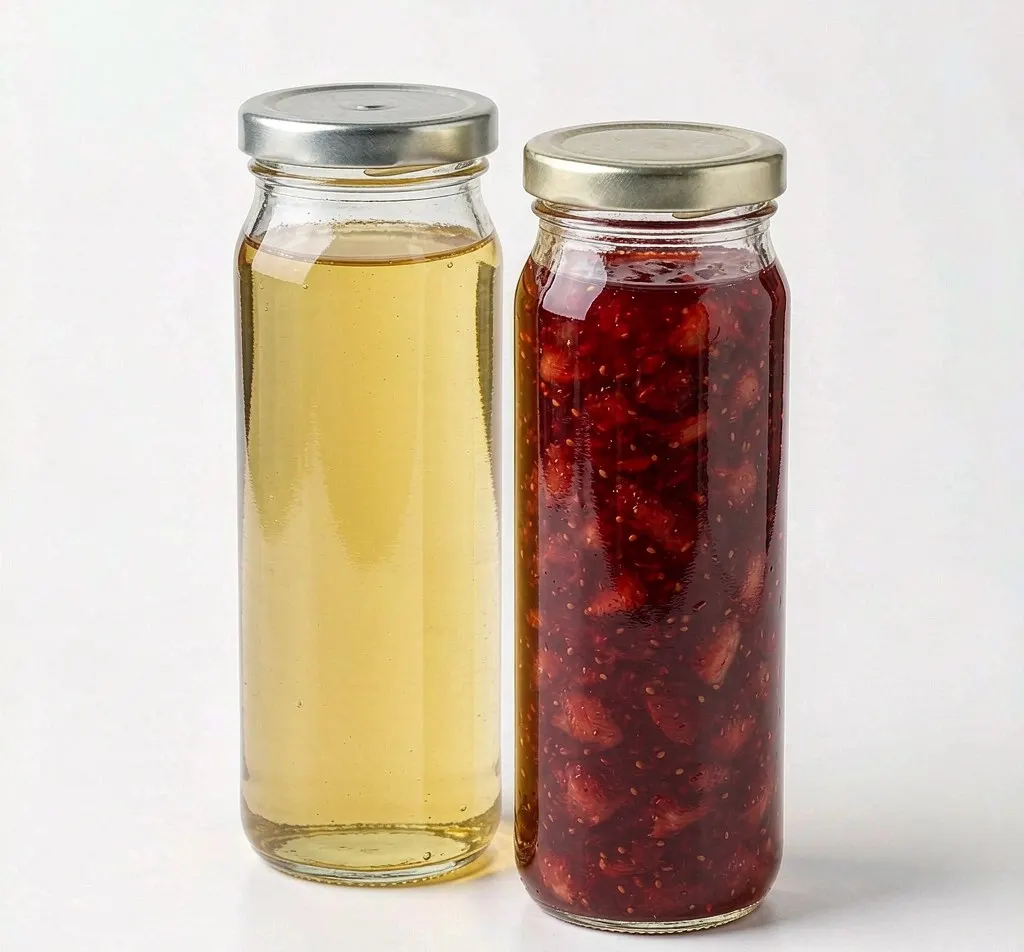
Fruit preserves and jam are the main use, mostly in the 8 oz and 12 oz sizes sold through specialty retail. Their 53-2020 and 58-2020 lug finishes hold vacuum through the 85 °C fill a high-Brix strawberry or apricot preserve needs.
Honey works in the 4 oz and 8 oz jars with either closure. We suggest the 48-485 CT where the consumer reopens the jar every week, and the lug version for whipped or creamed honey that is hot-filled and shelf-stable. Our guide to honey jar closures and filling goes further on that choice.
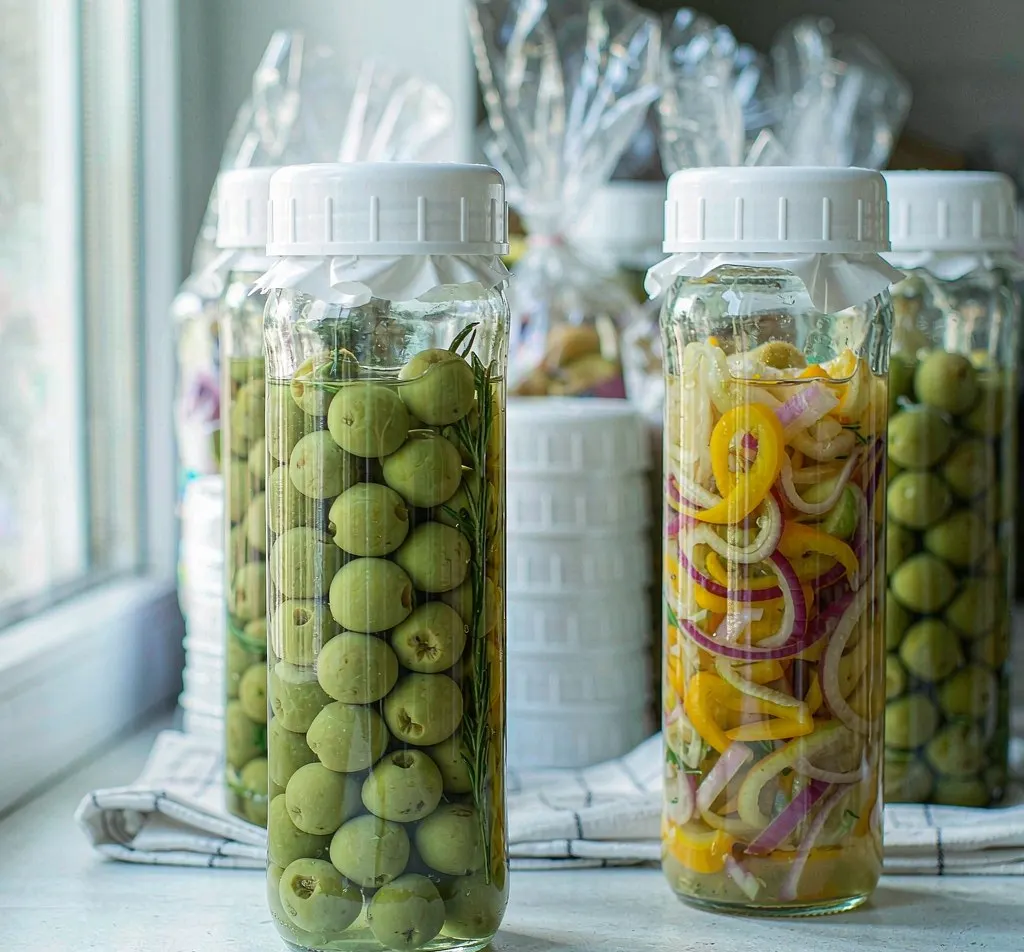
Olives, capers and pickled vegetables are where the lug vacuum matters most. Brined olives packed at 80 °C in a 16 oz or 24 oz jar go through a 20-minute water bath and keep a stable vacuum, avoiding the cloudy brine and corroded caps seen on CT-packed product. Capers in vinegar, pickled garlic and antipasto mixes share the 63-2030 finish, so a three-SKU private-label range can run on the same cap and liner.
For tomato sauces, the 24 oz and 32 oz jars are an alternative to the standard 26 oz sauce jar. The fill and process window for pH 4.2 to 4.6 tomato products is set out on the pasta sauce jar page, and the wider sauce bottle and jar range shows where else the 63-2030 closure is used.
Outside food, candle makers use the 8 oz to 16 oz jars as vessels, since the slim wall and flat panel take a printed or applied mark cleanly. We do not supply wax or wicks. Pre-heat the glass to 50 °C before pouring, for the same reason food processors stage their cool-down. Buyers comparing finishes across wet and dry foods can start from the wide-mouth food jar overview.
Decoration and colored glass
| Method | What it gives | Best fit |
|---|---|---|
| Fired ceramic decal | A transfer fired onto the glass that survives dishwashing and pasteurization without fading | Established preserve brands running large quantities per design |
| Silk-screen print | 1 to 4 spot colors applied straight to the glass, matched to a Delta-E of 2.0 against the approved strike-off | A single dominant brand color and an unlabeled look; quicker to set up than decal |
| Pressure-sensitive or shrink-sleeve label | Applied on the filling line; artwork changes without touching the glass | Short runs and ranges with many variants |
For light-sensitive contents such as extra-virgin olive oil or some herbal honeys, amber glass with a wall of at least 2.0 mm transmits under 0.5% of light at 380 nm. Have that confirmed by spectrophotometer on the first article.
The glass is lead-free and cadmium-free. Decorated jars ship with a food-contact compliance letter that references FDA 21 CFR 175.300 for the coating and Prop 65 where it applies. The letter comes with the first decorated shipment and is renewed annually.
Documents and supplier checks before a first order
Every lot should arrive with a Certificate of Analysis covering dimensions, weight, finish gauge and vacuum sample results, a food-contact compliance letter, and a carton pack-out list with the lot number on the pallet tag. When we match a project to a plant, these are the points we verify, and a buyer sourcing directly should check the same ones:
- A current ISO 9001 certificate and a documented HACCP or comparable food-safety plan. Ask for the certificate number and verify it; a scanned logo proves nothing.
- A dimensional tolerance sheet with the gauging method stated. "Within industry standard" is not a tolerance.
- A vacuum verification protocol for outgoing lots with a written release criterion.
- Who owns the mold, and how quickly a size can be put back into production if the furnace schedule changes.
- The cap and liner source, assessed separately from the glass and qualified to the same food-contact standard, with liner compound data on file.
- Retention samples and lot traceability, so a faulty lot can be isolated.
- A small trial on your own capper before a full container. A 0.3% incoming defect rate can still turn into 4% seal failures on a line that is set up badly, and no spec sheet will show that.
Mixing sizes in a single 40-ft high-cube container is normal practice and spreads ocean freight across the range. For preserve programs that need other shapes on the same lug systems, the canning jar index lists the finishes and process data available.
Frequently asked questions
What is the minimum order for Paragon jars, and can sizes be mixed?
Minimums are quoted per project because they depend on the mold and the line it runs on. Sizes can be consolidated in a single container, and the quantity, decoration and freight terms together determine the quote.
Are caps included with the jars?
Caps are quoted and supplied separately from the glass. We recommend buying them as a matched set with the jars, since the liner compound and cap panel are validated together with the finish.
Are the jars shelf-stable after hot-fill?
The lug sizes hold their vacuum after cool-down, which is what keeps acidified and properly formulated low-acid products stable without refrigeration. That depends on staying inside the fill, headspace and cooling limits listed above.
How much shelf space does the slender shape save?
The frontal area is about 17% less than a standard wide-mouth jar of equal volume. At 16 oz that means 18 to 20 facings per linear shelf foot where a straight jar gives 15 to 16. The cost is stack stability, handled by the landed base ring and the thicker sidewall.
What lead time and payment terms apply to a first order?
Both are set per project. Lead time is confirmed once the mold, the decoration route and the production schedule are known, and shipping terms are agreed with the quote.