A sourdough starter jar should be a wide-mouth, straight-sided glass jar with a cover that vents: a 70–86 mm opening, no shoulders, and either a cloth cover or a lid that can sit loose on the threads. For home bakers the mainstream size is 32 oz, with 24 oz as the practical minimum and 64 oz for bakeries keeping a mother culture. The reason is biological: a starter is a semi-aerobic culture that has to release carbon dioxide, so an airtight jar is the wrong jar.
Why a starter jar is not a fermentation crock
Buyers often group starter jars with other fermentation glass, and the two work in opposite ways. Jars for kimchi and fermented vegetables are built to keep oxygen out, using water-sealed airlocks, weights and tight gaskets. A starter holds wild yeast and lactic acid bacteria that need gas exchange: CO2 has to leave, a little oxygen should reach the surface, and pressure must never accumulate.
The second difference is handling. A baker opens the jar every day, frequently twice a day, to scrape the walls, stir in flour and water and check how far the culture has risen. A shape that works well for jam can therefore be a poor starter jar. The same glass body may serve both categories, but the closure and the headspace are specified on different logic.
Demand comes from several channels at once: bakeries selling dehydrated starter and feeding kits, subscription boxes that bundle flour with a jar, and grocery private labels building starter gift sets. All of them need the same basic container.
Body shape to specify
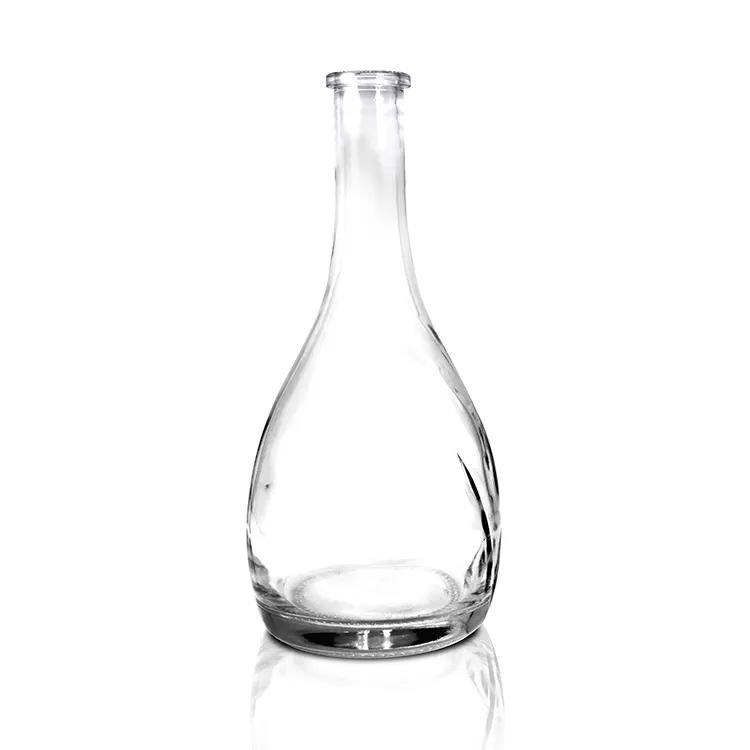
The most frequent complaint about starter jars is the shoulder. Dried starter collects in the curve between body and neck, and getting it out takes a bottle brush or a long soak. For a jar that is fed daily, that is enough to lose the customer. Three features define a shape that works.
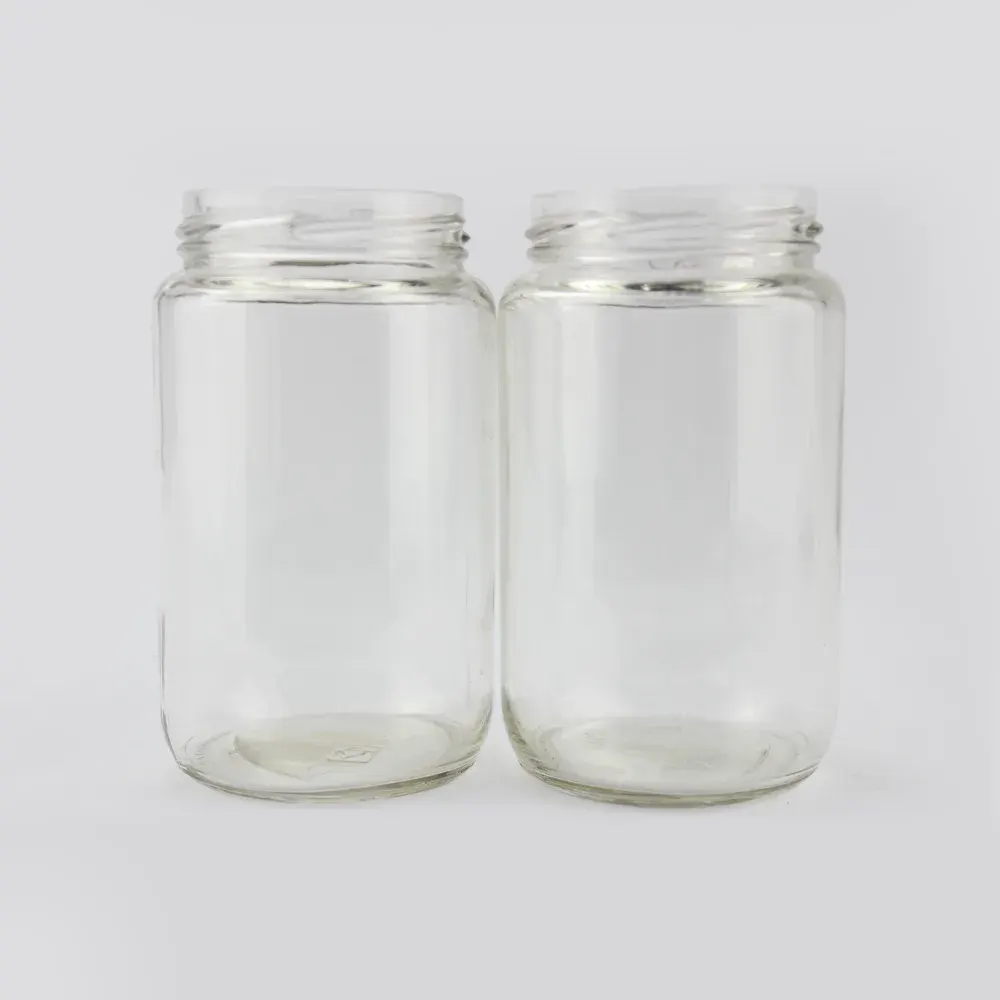
- An opening of 70 mm or more. The 70–86 mm range matches the standard wide-mouth mason finish and gives an adult hand holding a silicone spatula access to the bottom corners. The wide-mouth mason sizes at 32 oz use the 86 mm opening, and that is the jar kit brands pick most often.
- Straight or nearly straight walls. One pass of the spatula cleans the whole wall, and the flat side gives a clear view of the rise. Tracking the rise is part of the hobby, which is why these jars are so often sold with a rubber band or printed measurement marks.
- A wide, flat base. A jar carrying half a kilo of active dough and stirred hard needs a low centre of gravity. Above 24 oz, we advise a base diameter of at least 70% of the jar's height.
Straight walls also suit the glass plant. They release cleanly from the mould, anneal evenly and pack more densely than shouldered shapes. A straight-sided wide-mouth jar at 32 oz usually weighs 420–480 g in soda-lime glass, and a standard 40×48 pallet takes 1,800–2,100 of them in five layers.
Capacity and headspace
Undersizing is the sourcing error we see most. The culture itself weighs only 100–200 g, which tempts buyers toward a small jar. But each feeding adds equal weights of flour and water, and an active starter doubles or triples in volume at its peak. Headspace, not resting volume, sets the size.
| Capacity | Who it suits | What to know |
|---|---|---|
| 16 oz | Bakers building a levain for a single loaf | A niche size |
| 24 oz (about 700 ml) | Home bakers feeding 1:1:1 from 100 g of starter | The smallest practical size; peak rise fills roughly two-thirds of the jar |
| 32 oz (about 950 ml) | Most home bakers and most kits | Comfortable headspace, room for a whole hand and spatula, and the most widely available wide-mouth tooling; repeat orders concentrate here |
| 64 oz (half gallon) | Bakeries and micro-bakeries holding mother culture in bulk | Lower volumes, and a natural upsell inside a kit range |
Covers that let the culture breathe
The cover is what distinguishes a jar designed for starter from a jar that is only marketed for it. Two systems are in use, and the better kits put both in the box.
Cloth and elastic band
The traditional method is a square of breathable fabric, such as cotton muslin, linen or fine polyester mesh, held over the mouth by a rubber band or an elasticated hem. Air moves freely and CO2 escapes, while dust and fruit flies stay out. For an 86 mm mouth, kit brands generally cut the cloth to 6×6 inches and use undyed food-grade fabric. It is a small addition that raises the perceived value of the kit and looks good on the retail carton.
A rigid lid left loose
The other route is a tinplate, bamboo or glass lid that rests on the finish without being tightened. Gas passes around the threads during fermentation, and the baker screws the same lid down when the starter goes into the refrigerator to rest. One jar for the counter and the fridge is a real selling point.
This only works on a continuous-thread finish, so specify 70-450 or 86-400. A lug cap is either locked or off, with no usable position in between. Both finish families appear in our range of glass jars with lids.
The ordinary two-piece canning closure, a flat disc under a screw band, does the job well. Backed off a quarter-turn, the disc lets pressure out and keeps insects away; fully tightened, it seals for cold storage. Some kit brands ship exactly that and print the breathing instructions on the disc.
Measurement marks
Graduations are what turn a commodity jar into a starter jar. The options differ mainly in how long they last.
- Fired ceramic enamel. Dishwasher-proof and able to withstand years of daily washing.
- Acid etching. Subtle marks that cannot wear away.
- A band system. No marks on the glass; the baker slides a rubber band to the level of the starter after each feeding.
- Screen-printed ink. The simplest scale, but it fades within a year of dishwasher cycles and generates complaints.
For a brand above entry level we suggest fired enamel marks every 100 ml and a discreet feeding line at the midpoint of the jar. Our overview of glass decoration methods explains how these finishes are applied.
Packing and quality checks to put in the order
How the jar is packed depends on who is selling it. Bakeries tend to take 64 oz jars for their own culture and 32 oz jars to sell filled with live starter. Kit and baking-set brands, the growing segment, build a giftable box around a single 24 or 32 oz jar with a cloth cover, spatula, band and flour. Subscription box companies order to a quarterly theme and are the most sensitive to breakage, since one broken jar spoils the whole box.
For subscription and other parcel shipments, we recommend walls of 3 mm or more, partition dividers in the master carton, and an ISTA 1A drop test ahead of the first production run.
Glass is heavy but uses container space efficiently, so ocean freight planning is straightforward. Loading 24 oz and 32 oz jars in one container is fine. Mixing them on a single pallet is possible too, though every change of SKU on a pallet means extra handling at origin and destination. Most kit brands end up with one main size and one accessory size.
Three checks are worth writing into the purchase order:
- mouth roundness held within 0.5 mm, so that a lid seats the same way whether loose or tight;
- annealing checked by polariscope on every shift;
- a hot-water thermal-shock test at a 40°C differential, because bakers rinse these jars under hot tap water.
When we match a starter jar project to a plant, tooling, sampling and inspection follow the same structure as the wider wholesale mason jar range.
Frequently asked questions
Which jar size works best for a sourdough starter?
For the usual home feeding of 100 g each of starter, flour and water, treat 24 oz as the floor and 32 oz wide-mouth as the default. Size for the peak, when the culture can reach three times its resting volume. Bakeries holding culture in bulk generally use 64 oz.
Should the jar be sealed or loosely covered?
Loosely covered while the starter is fermenting. A sealed jar can build pressure and cuts the surface off from oxygen. Tighten the lid fully only for refrigerated storage.
What is the MOQ for custom starter jars with measurement marks?
Minimums are quoted per project. They depend on the mould, the decoration method chosen for the marks, and the production line the jar runs on.
Can a kimchi or pickle fermentation jar be used for starter?
Not as supplied. Vegetable ferments are anaerobic, so those jars come with airlocks, gaskets and weights designed to exclude oxygen. A starter jar needs the opposite: a venting cover, a wide mouth and straight walls.
How should starter jars be packed for subscription-box shipping?
Ask for walls at least 3 mm thick, a partition divider for each jar inside the master carton, and an ISTA 1A drop test before production starts.