A glass tea container keeps loose leaf fresh only as well as its lid seals, because the glass is already a complete barrier to oxygen, moisture and odour. For wholesale programs the choices that matter are the closure type, amber or flint glass, a capacity worked out from leaf density, and a moisture-ingress test with a limit of 0.5g weight gain per jar. The format we are asked for most often for retail loose leaf is a 350ml jar with a 70mm finish.
Three lid systems and where each one fits
Tea is among the most packaging-sensitive dry goods in grocery. Loose-leaf oolong loses measurable aroma after a few weeks of humidity, and blends with flower petals or citrus peel hold enough residual moisture to go mouldy in a poorly sealed jar. Glass contributes nothing to those failures; they all start at the closure.
| Lid system | How it seals | Best use | What to specify |
|---|---|---|---|
| Clamp lid with silicone gasket | A wire bail or cam clamp presses a silicone ring onto a ground rim, giving a hermetic seal that passes the inverted water test | Back-of-house storage, tea-room service jars, high-end retail | Food-grade silicone gasket; shore hardness of 55 to 65 Shore A certified per batch |
| Screw lid with liner | Metal lug or continuous-thread lid with a plastisol or TPE liner | Retail units sold once and opened at home; lower cost than clamps | Application torque, typically 12 to 18 inch-pounds on 63mm to 70mm finishes; liner compound for dry goods, not wet fill |
| Bamboo or wooden lid with silicone seat | A silicone ring set in a groove on the underside of the lid | Display and gift lines where appearance leads | Groove tolerance of ±0.15mm; bamboo moisture content of 8% to 12% at assembly |
On clamp jars, the gasket material is the detail to watch. Thermoplastic rings made to look like silicone take a compression set within months and then leak humidity without any visible sign.
Lined screw lids are the same closure family found on airtight glass food jars, and they are dependable on a retail shelf when the capper applies the stated torque.
Bamboo carries the most engineering risk. If the bamboo is wetter than the stated range at assembly, the lid warps in a dry warehouse; if it is drier, it cracks in a humid market. The silicone seat does the sealing, so the wood only has to stay dimensionally stable. For glass jars with bamboo lids we ask for a 72-hour humidity-cabinet cycle on every lot as standard.
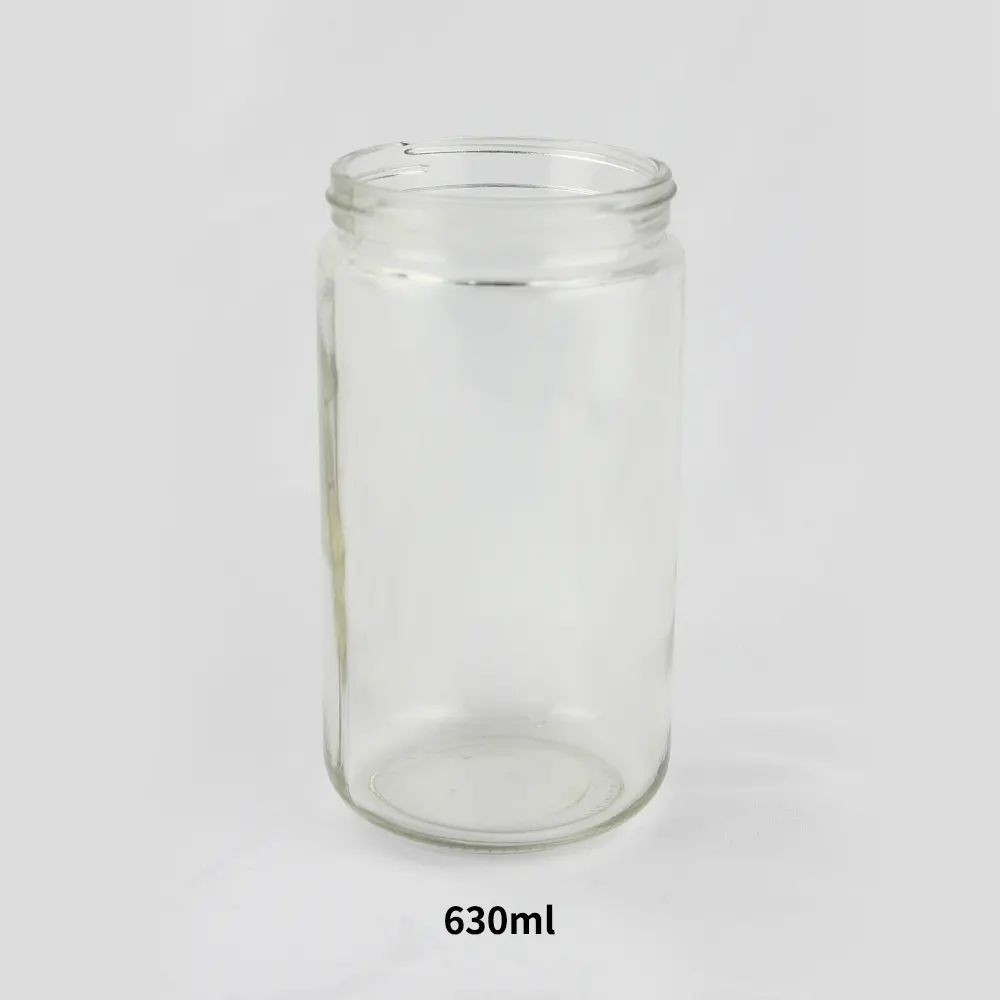
Amber or coated glass for sensitive teas, flint for display blends
Light protection and product visibility pull in opposite directions, and most tea brands end up needing both as separate SKUs.
Amber and coated jars. Green teas, white teas and matcha-adjacent products photo-oxidize under retail lighting, visibly so within four to eight weeks, and green tea turns hay-flavoured. Amber glass blocks the damaging spectrum below 450nm. A sprayed opaque coating in matte black or deep green does the same job and gives the matte look common in Japanese-style ranges. The trade-off is that the shopper cannot see the leaf, so the label has to sell the tea.
High-flint jars. In fruit blends, petal tisanes and colourful rooibos mixes, the leaf is the selling point. We specify low-iron flint, with Fe2O3 at 0.02% maximum, so the glass is water-white and free of the green cast of cheaper flint. These jars belong where light is controlled: behind a counter, inside a gift box, or in e-commerce, where the jar travels in a carton.
An assortment that works for European tea brands pairs amber or coated jars for the green, white and other sensitive teas with flint jars for the herbal and fruit range. Keep the finish and lid system identical across both, and a single lid inventory covers the whole line.
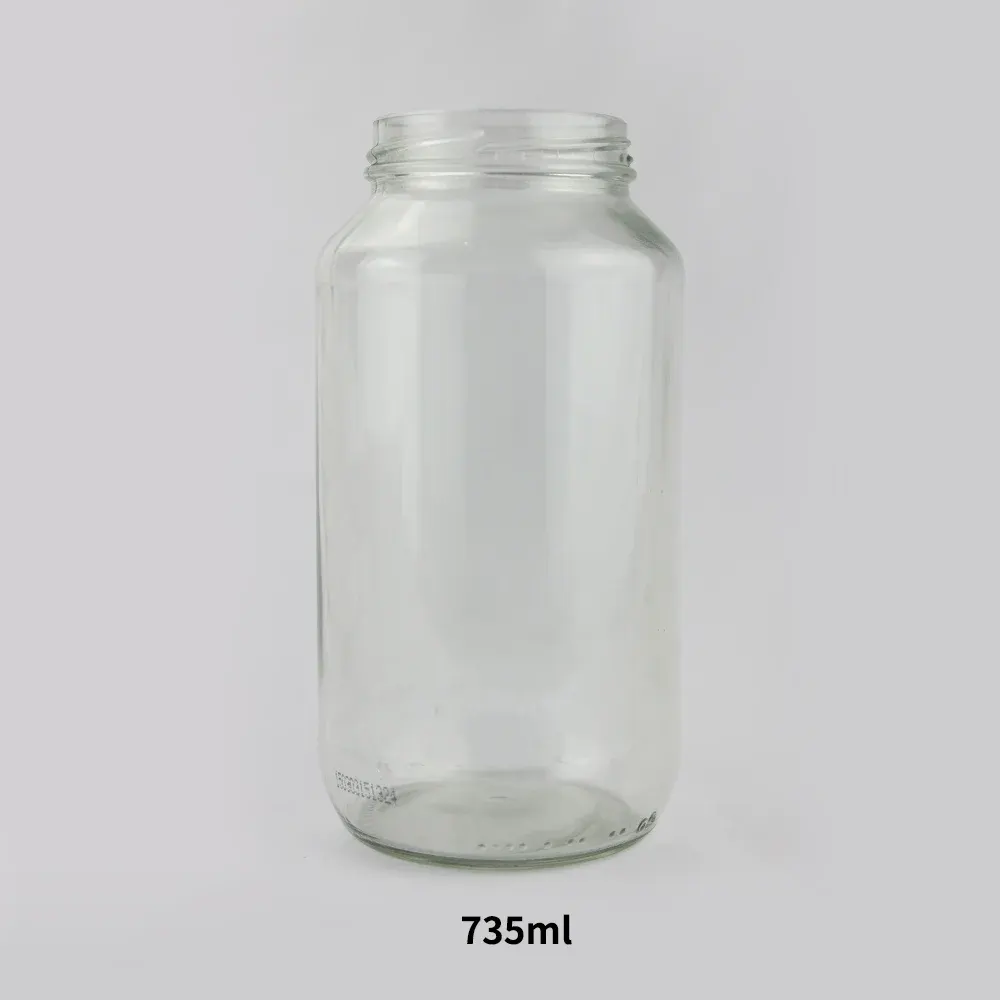
Jar capacity by tea format and leaf density
Tea is priced by weight and packed by volume, and density varies widely. Rolled oolong packs at about 0.35g/ml, a fluffy white peony at 0.12g/ml, and a fruit tisane with apple pieces at 0.5g/ml. Treat the figures below as starting points and confirm each blend with a fill test.
| Use | Fill or jar size | Notes |
|---|---|---|
| Retail loose leaf | 100g to 250g fills, usually in 250ml to 500ml jars | Straight sides give the largest label area and the most shelf facings |
| Gift tea and sampler sets | 30ml to 100ml | Small straight or hexagonal jars, mostly sold as multi-jar sets |
| Hospitality and tea-room service | 800ml to 2L, holding 250g to 500g of working stock | Clamp lids and wide mouths of 100mm+ |
| Bulk and food-service back-of-house | 2L to 5L | Gasket-sealed clamp lids as standard |
For sampler sets, the hexagon glass jar range is worth a look because six-sided jars nest neatly in a gift tray.
Counter jars in a tea room are opened dozens of times a day. A gasket under a clamp keeps its compression through thousands of cycles, while the liner in a screw lid would be worn out by constant re-torquing. A wide mouth lets staff scoop without spilling. The largest back-of-house sizes follow the specifications of our wholesale storage jars.
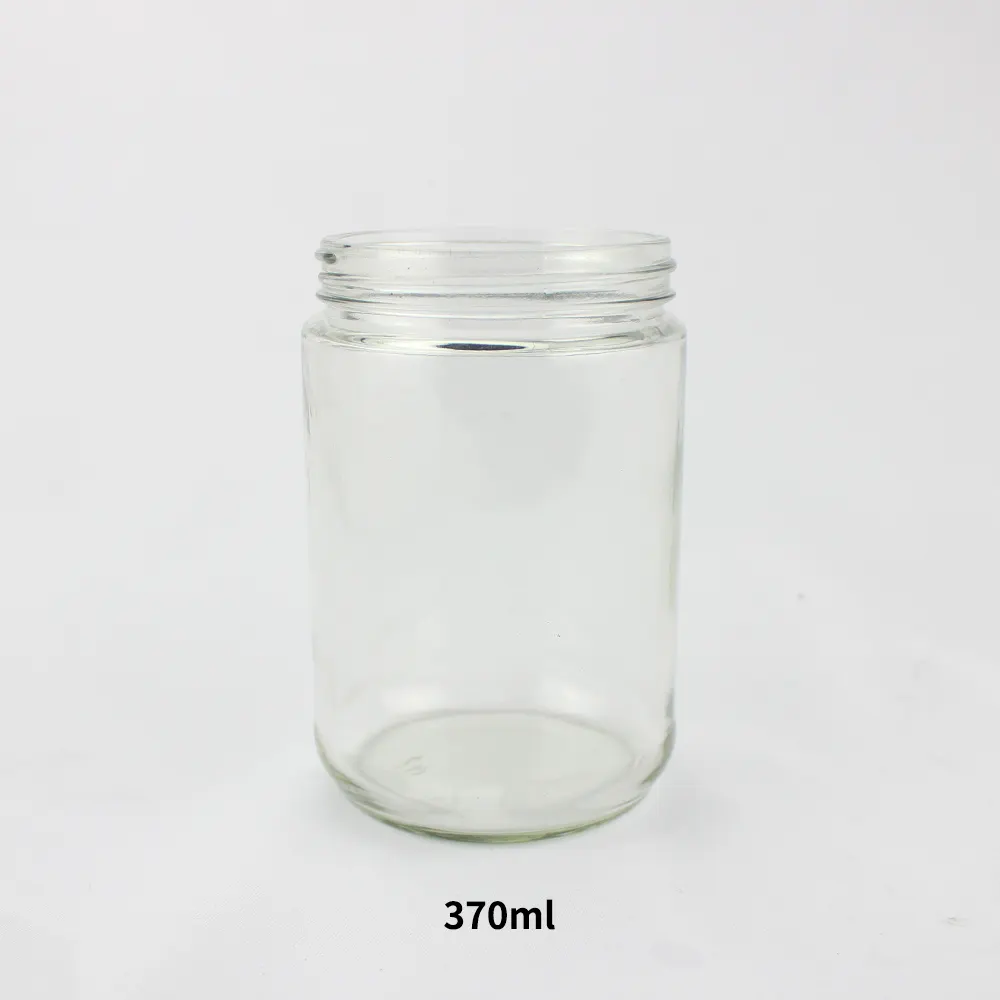
Moisture test and shipping protection
Very few tea jar orders are released against a moisture-ingress test, and every one should be. The pass criterion is weight gain below 0.5g per jar, with a colour shift in the silica as the visual check. A jar that fails will let the tea down wherever the distribution chain is humid: retail in Southeast Asia, warehouses in the Gulf, or a summer sea shipment in which the air inside the container stays saturated for weeks.
A container crossing the equator goes through repeated condensation events that test every closure in the load. We recommend a desiccant liner in the master carton and, for clamp-lid jars, a gasket lot certificate confirming shore hardness.
If tea jars are being consolidated with a wider food range, the same dry-goods sealing requirements apply to the jars in our lidded glass jar collection and to glass jars for herbs and spices.
Decoration and food-contact compliance
There are two decoration routes. Direct ceramic print is permanent and survives dishwashing in tea-room service. Labels are the flexible option for small-batch blends and seasonal SKUs; they need a flat or gently curved panel, because a heavily curved shoulder wrinkles a standard label.
Tea jars are ordinary food and grocery packaging, with no medical or pharmaceutical positioning. They must meet FDA 21 CFR and EU 10/2011 for food-contact glass, and decorated surfaces need lead and cadmium release certification to ISO 7086.
When you are ready to send an inquiry, our RFQ checklist for glass bottles and jars lists the full set of specifications to include.
FAQ
Which lid holds its seal longest on loose-leaf tea?
A wire-bail clamp lid with a food-grade silicone gasket. It is the right choice for service and storage jars that are opened repeatedly. For a retail unit, a plastisol-lined screw lid applied at the specified torque is reliable and costs less.
Does green tea have to go in amber glass?
Only if the jar will stand under retail lighting. In light-managed channels, flint is acceptable, and it remains the better choice for herbal blends sold on appearance.
What jar size suits a 100g loose-leaf retail line?
About 200ml for dense rolled oolongs, 350ml for standard black and green teas, and up to 500ml for fluffy white teas and bulky fruit tisanes. Set the size from a fill test of the actual blend, not from the nominal weight.
What are the minimum order quantity and lead time for tea jars?
Both are quoted per project. They depend on the mould, the line it runs on, the decoration and the quantity.