A glass pantry line works when it is planned as a system: jar shapes matched to how each dry food is used, a seal chosen for what the food needs, and a ladder of sizes that share as few lid diameters as possible. A full range typically runs eight sizes from 150 ml to 2.0 L, while a lean launch can start with four. Glass suits the category because it is inert, transparent and dishwasher-safe, and because the jars sit on open shelves where shoppers treat them as decor.
Jar formats for each type of dry food
Dry goods behave in five different ways on the shelf, and each calls for its own geometry.
| Food | Jar format | What matters most |
|---|---|---|
| Grains and rice | Wide-mouth, 1.5–2 liters | An opening that takes a scoop and a strong seal against pantry moths |
| Flour and sugar | 2–3 liter, often square or rectangular | Shelf density and a mouth wide enough for a one-cup measure |
| Pasta | Tall spaghetti jar, 1.9–2.2 liters, 30+ cm body | Height |
| Spices and herbs | Small 100–250 ml jars with shaker or pour inserts | Uniformity across the row |
| Coffee, tea and snacks | 700 ml to 1.2 liter | The strongest seal in the range |
Two points behind the table are worth spelling out. Keeping weevils out of grain is a question of airtightness, not of how clean the kitchen is, so staples that are opened often still need a serious seal. And with spices, a row of identical jars is a visual system, which is why consistency counts for more than capacity; the usual sizes are listed on our glass spice jar page. Tall pasta jars fall into the large-format jar group. Aromatic goods such as coffee and tea are the first to suffer from a weak closure.
Seal tiers and which foods need them
"Airtight" means little until it is tied to a closure type. Pantry lids sort into four levels, and a sensible range assigns each food to a level instead of claiming one lid suits everything.
| Tier | Closure | How it performs | Suited to |
|---|---|---|---|
| Hermetic | Clip-top bail with a rubber gasket | Almost no air exchange, and it copes with humidity swings | Coffee, tea, brown sugar, grains prone to weevils |
| High barrier | Screw lid with an induction or plastisol liner | Excellent on first sealing; the liner wears with reuse | Long-term staples and backup stock |
| Everyday airtight | Bamboo or acacia lid with a silicone ring | Fine for goods in daily use; the ring relaxes over months | Flour, sugar, pasta and snacks in rotation |
| Basic cover | Cork, loose glass lid or press-fit lid with no gasket | Keeps dust out and nothing more | Wrapped goods and items used up quickly |
For a line positioned at the upper end, the working standard is a clip-top gasket or a well-made silicone-ring lid. Specify the gasket as food-grade silicone or natural rubber that complies with FDA 21 CFR 177.2600 or LFGB. The durability figure to ask for in test reports is compression set, meaning how far the seal flattens permanently with use. A good gasket keeps 80+ percent of its sealing force after a year of being opened and closed weekly, and suppliers of food glass packaging can generally provide gasket aging data when asked.
Choosing the lid platform
The lid decision shapes the whole range. Bamboo with a silicone ring is the current retail favourite for its warm look and environmental appeal, but it limits the line to everyday-airtight performance. Clip-top bails seal hermetically and bring a heritage look, at a noticeably higher lid cost. Stainless steel and powder-coated tinplate screw lids suit minimalist or industrial styling.
The strongest ranges combine platforms: bamboo across the core sizes, and clip-tops on the coffee and tea jars where the better seal earns its place.
Planning the size ladder
Shoppers buy into a system, so the sizes have to cover what a pantry actually holds without gaps or overlaps. An eight-size ladder that works for a full line is:
- 150 ml for spices
- 350 ml for baking ingredients and nuts
- 500 ml for tea and snacks
- 750 ml for coffee and muesli
- 1.0 L for rice and beans
- 1.5 L for mid-size flour and sugar
- 2.0 L for bulk flour and cereal
- a tall 2.0 L jar for spaghetti
A brand launching lean can open with four of these (350 ml, 750 ml, 1.5 L and the tall jar) and add the rest later. Whatever the count, hold as many sizes as possible on one lid diameter and aim for two or three diameters across the range. Interchangeable lids are the feature customers praise in reviews, and every extra closure size adds spare-parts complexity. Lines built this way are where storage jar programmes generate the most repeat purchases, because customers extend their set over time.
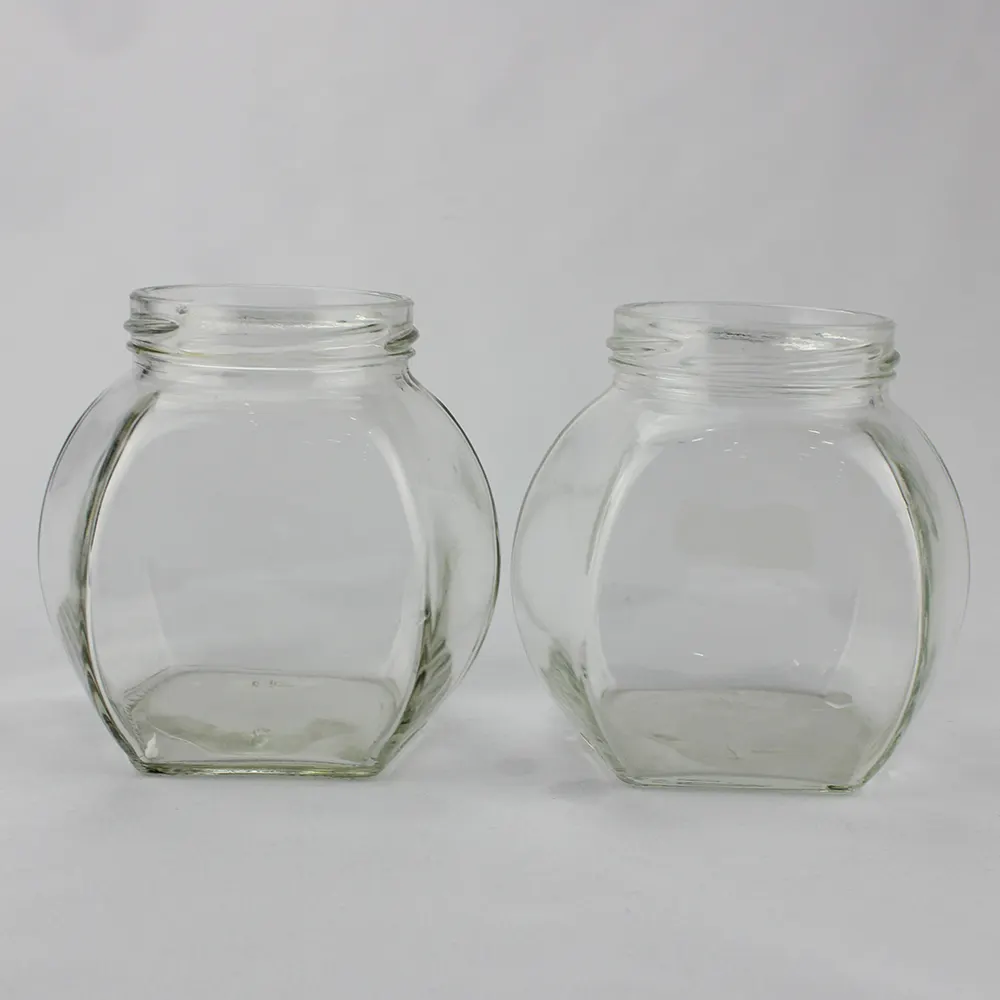
Shape is the other variable. Square and rectangular jars hold 15–25 percent more product per shelf metre than round ones and photograph well in a grid, but they are somewhat costlier to form and pack. Round jars are more economical and resist impact better. Many ranges use both, with squares for the display sizes and rounds for bulk. Taking the whole ladder from one plant's glass jar collection keeps glass colour, wall thickness and lid tolerances consistent from size to size, which is what makes the jars read as a set.
Sets, accessories and channel requirements
A pantry range can be sold three ways: open stock by individual size, curated sets of 6 to 24 matched pieces, or a system line in which jars share a lid platform. Each sales channel then asks for something different.
- Supermarket private label wants good, better and best sets in 6-, 12- and 24-piece configurations, in packaging that survives shelf stocking and shopping carts.
- Home-organization brands need the system story: shared lids, expansion sizes and accessories that keep customers adding to the range for years.
- E-commerce brands design for photography (square jars, uniform fills, label typography) and for parcel shipping, which means dividers and drop-tested cartons instead of shelf trays. Parcel breakage targets run under 0.5 percent and are reachable with properly engineered packing.
Accessories raise the value of each order: printed and blank label sets, chalk markers, shaker inserts for spice jars, pour spouts for oil and vinegar, and bamboo scoops. For supermarket private labels the label set on its own is a proven extra SKU.
Decoration stays simple, because the jar itself is the product. Branding goes on the lid (laser-engraved bamboo, printed tinplate), the labels and the gift box, not on the glass. That lets one jar platform serve several brand tiers and helps when volumes are combined across storage and spice jars. The same closure and decoration language can extend into honey jars and pasta sauce jars, and decorative fancy jars can sit at the top of the range.
What to put in the purchase specification
Because a pantry line spans many SKUs, small omissions multiply. Settle these points before booking container space.
- Glass quality. State the annealing grade, minimum wall thickness and rim flatness for every size. These jars are handled daily and go through the dishwasher repeatedly.
- Food-contact documents. For the US, FDA 21 CFR compliance for the glass and each lid component, including 21 CFR 177.2600 for silicone and rubber gaskets. For the EU, Regulation (EC) 1935/2004, with EU 10/2011 for plastic components, plus LFGB if German retail is planned.
- Retail-ready packaging. Individual kraft or printed boxes, or shrink-wrapped multi-packs, should be part of the same quotation. Repacking at destination erodes margin.
- Spare gaskets and lids. Confirm they will remain available for at least three years; replacement parts keep a customer in the system.
- Set configuration and case packs. Decide on open stock, gift sets or both, and get case-pack dimensions to your planogram team early.
- Container planning. A 40HQ holds 25,000–45,000 pantry jars depending on the size mix, so mixed-size loading is normal for these programmes.
Our notes on buying glass jars in bulk cover the wider sourcing process.
Quality checks that prevent mismatched sets
Multi-size ranges tend to fail in three ways. A lid ring fits one jar but not the next size. Glass colour drifts between production lots, so "matching" jars look different side by side. Gaskets vary, and coffee goes stale in a third of a customer's jars. Four checks, written into the purchase order and verified at pre-shipment inspection, deal with all three.
- Cross-fit testing. Each lid diameter is gauge-checked against every jar size it serves, on every lot.
- Colour-lot control. Jars in one programme ship from the same furnace campaign, or colour coordinates are specified with a tolerance.
- Gasket function. A water-inversion leak test on a 32-piece sample per lot catches most seal failures.
- Dishwasher validation. At least 50 cycles with no clouding, gasket degradation or print loss.
Frequently asked questions
Are bamboo lids airtight enough?
For flour, sugar, pasta and other goods used up in regular rotation, a bamboo lid with a silicone ring does the job. Coffee, tea, brown sugar and anything stored long term should go in clip-top bail jars with rubber gaskets, which seal close to hermetically.
What is the minimum order for a private-label pantry jar programme?
Minimums are quoted per project. They depend on whether stock shapes or new moulds are used, the number of sizes and lid diameters, decoration and packaging. Send the size ladder, lid preference and annual volume through the quote form and we will match it to a suitable plant.
Why choose glass over plastic for pantry containers?
Glass does not absorb odours or stain from spices such as turmeric, it shows contents and fill level at a glance, and it raises no concern about plasticizers near food. It is also infinitely recyclable and increasingly available with meaningful recycled-cullet content.
How do jars from separate orders stay consistent?
Write colour coordinates and a tolerance into the specification, ask for same-campaign production where possible, and keep the whole ladder with one plant. The glass quality figures set for each size should not change between orders.