One of our guides on honey jars wholesale; start there for the overview.
A glass honey dispenser stops dripping for one of two reasons: either its pour spout ends in a sharp drip-cut lip with an edge radius under 0.5mm, or it releases honey through a valve in the base that closes the moment the plunger is let go. Which of the two you buy depends on the channel. Hotels, diners and caterers lean on valve and press tops, while gift and grocery retail mostly take the simpler pour spout. The rest of the specification, from glass thickness to mouth finish to food-contact paperwork, follows from that choice.
Keep one distinction clear when writing the enquiry. A dispenser is a serving and dosing vessel for tables, buffet lines and counters. Shelf life and retail storage are the job of sealed containers, which we cover separately under lug-cap and twist-off honey jars.
Three dispensing mechanisms and what to specify on each
Gravity pour spout
A shaped spout in glass or stainless steel, with an internal baffle that meters the flow. Honey runs once the vessel is tipped far enough, and when it is set upright again the stream breaks at the sharp lower lip instead of trailing down the outside. Three figures matter: the lip radius, a spout bore of 6–10mm for honey of normal viscosity, and the baffle angle. A lip that has been rounded off or roughly ground will string every time.
Stopper valve in the base
This is the diner classic. A plunger on top lifts a stopper out of a hole in the base, honey falls in a steady stream, and a spring or silicone gasket reseats the stopper as soon as the plunger is released, so the flow is cut in mid-air. Ask for a gasket in food-grade silicone rated to at least 120°C if the honey will be served warm, a spring specified for a minimum of 50,000 cycles in hospitality use, and a base hole of 8–12mm, which copes with honey that has partly crystallized. Servers can work it with one hand over a plate, which is why it is so common in hotels and cafés.
Press pump
Pump tops deliver a fixed dose, usually 5–15ml per stroke, through a nozzle fitted with an anti-drip check valve. They fit portion-controlled service such as airline catering, room service and cafés that publish calorie counts. Check that the pump head comes apart completely. Honey trapped in a sealed head is a bacterial risk and the most frequent reason these units fail a health inspection.
Press or pour by sales channel
| Point of comparison | Press or stopper valve | Gravity pour spout |
|---|---|---|
| Drip control | Excellent, flow stops instantly | Good when the lip geometry is precise |
| Dose | Measured with each press | Depends on the user |
| Cleaning | Has to be taken apart | Simple, two parts |
| Relative unit cost | Higher, because of the metal or plastic mechanism | Lower, the unit is mostly glass |
| Typical channel | Hotels, diners, catering | Gift retail and upmarket grocery |
| How it fails | Worn gasket, tired spring | Chipped spout, rounded lip |
A honey brand that sells both gift sets and foodservice cases does not need two glass bodies. The usual answer is a single 300ml body with a standardized neck finish and two tops offered as separate SKUs, one stainless pour spout and one stopper valve. Only one body mould is needed, and both channels are covered. Many of the briefs we handle under custom honey jar and dispenser projects are set up this way.
Glass body, capacity and mouth finish
Glass type and wall thickness
Soda-lime flint glass is the default and shows off the colour of the honey well. Where dispensers go through a commercial dishwasher every day, ask for annealed glass with a wall of at least 2.5mm and thermal-shock resistance confirmed to a 42°C differential, which is the gap between a 65°C wash and a cool refill. Borosilicate takes rougher treatment and is the sensible choice for a dispenser sold on the promise that crystallized honey can be warmed in a microwave; the material is described on our borosilicate container page.
Capacity bands
- 150–200ml: individual table service and gift sets
- 250–350ml: café counters and family retail
- 400–600ml: buffet lines
- 1 liter and above: back-of-house dosing
Gift sets nearly always use a 250ml dispenser packed with a fill of honey. The set feels generous, yet the total pack weight stays under courier thresholds.
Mouth finish and closure
A wide mouth of 58mm to 70mm is the hospitality standard, because staff can refill straight from a bulk pail without a spoon and get a brush inside to clean. A narrower 43mm or 48mm finish suits sealed retail units that the consumer never opens from the top. Choose the finish together with the closure, whether that is a metal lug cap, a plastic screw top with a built-in spout, or a cork-and-wood top for the gift market. If you already buy glass jars with lids, holding the same finish across jars and dispensers lets one closure supplier serve both lines.
Pairing dispensers with matching honey jars
Honey producers need storage jars as well as dispensers, so it makes sense to plan them as one set. A workable architecture puts a 300–350ml dispenser at the centre and surrounds it with jars for 250g, 500g and 1kg fills that share its glass tint, its label panel geometry and closures that sit well together. For gift channels a hexagonal jar makes a good top tier, since its facets contrast with a smooth dispenser body in photographs. Buyers building a private-label grocery range can work through our notes on honey jar cost drivers before fixing how many of each item go into the assortment; the landed cost of a set is quoted per project.
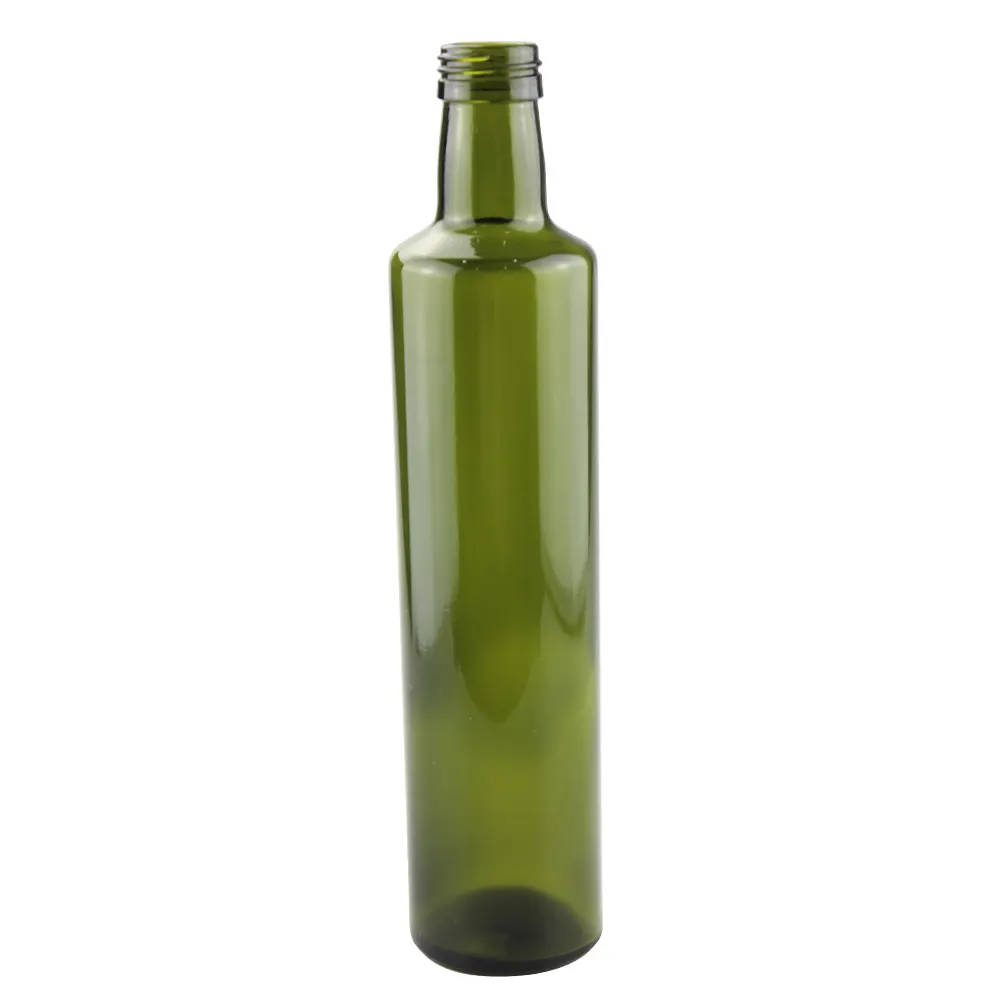
Shipping the two together changes the carton design. Jars pack densely, but a dispenser with a spout or plunger sticking out needs a partitioned carton or a molded pulp insert. A mix of 60% jars and 40% dispensers by case count typically fills a 40-foot container at 24–26 tonnes, which is close to the efficient weight for glass. Ask for a mixed-SKU loading plan before you settle order quantities. The same dispensing logic carries over to maple syrup bottles and syrup bottles bought in bulk, should the range grow into other breakfast condiments.
Food-contact documents for the US and EU
Dispensers are often sold empty as housewares, yet they remain food-contact articles, and responsibility sits with the importer of record.
- United States (FDA). Glass is generally recognized as safe. Every other component, including silicone gaskets, plastic plungers, spout coatings and decorative paint, needs food-contact compliance under 21 CFR. Ask for a supplier declaration that gives the CFR citation for each part, and for lead and cadmium leachability reports on any painted or printed exterior.
- Germany and the EU (LFGB). The stricter regime. It adds a sensory test, meaning the dispenser must pass no smell or taste to the food, and badly cured silicone sometimes fails it. Specify LFGB-tested silicone at the outset. The enquiry pack should also call for framework declarations under EU Regulation 1935/2004 and, for plastic parts, migration test reports to EU 10/2011.
Three working rules keep the paperwork honest. Accept only test reports dated within 24 months and tied to the materials actually used in production, never generic certificates. Name the destination markets in a compliance clause in the purchase contract. On large programmes, pay for independent verification testing of the first production run. Our glass packaging sourcing guides set out the document workflow, and food-grade jar projects go through the same checks.
Sample tests and pre-shipment inspection
Test samples with real honey at the temperature it will be served at. Water hides drip faults. For a pour spout, run the tilt-and-return cycle twenty times and look at the outside of the spout: any residue left there will turn into a hygiene complaint in foodservice. For the full approval, work the pour or press action at least fifty times, put the unit through ten dishwasher cycles, and test again. Swollen gaskets and weakening springs show up at this stage.
Before shipment, the inspection should cover:
- spout lip finish, checked by eye and fingertip for chips
- valve seal integrity, with the unit filled, inverted and held for two hours
- glass wall thickness on sampled pieces
- a carton drop test
AQL 2.5 for major defects is normal for the category. Hospitality contracts justify tightening functional defects to 1.5, because a single leaking dispenser on a white tablecloth costs the operator more than the unit itself.
Frequently asked questions
Is a glass honey dispenser dishwasher safe?
The body usually is, as long as the glass is properly annealed and the wall is at least 2.5mm. Metal spouts and silicone gaskets generally tolerate commercial machines too. Tops that contain a spring should be dismantled before washing, and the exact components of the top should be confirmed for each design.
Which size works for a retail gift set?
Most gift sets fall in the 250–350ml band. It looks right beside 250g and 500g storage jars and ships within common courier weight limits. Formats for individual table service are smaller, at 150–200ml.
What is the minimum order for honey dispensers?
Minimums are quoted per project. They depend on the mould, the line it runs on, the type of top and any decoration.
Can jars and dispensers travel in the same container?
Yes. Plan the mix with a loading plan that lists every SKU, and give dispensers with protruding parts partitioned cartons or pulp inserts.